
 It’s 1979. I’m at St. Louis Community College at Meramec, a suburb outside of St. Louis and it’s my turn to be the lead counselor in planning the fall semester orientation. All students are required to attend orientation, followed by a one-on-one session with an educational adviser or counselor in order to select their course schedule for the semester.
In satisfaction surveys across colleges and universities, orientation always fared poorly. Students didn’t want to take the time to attend and when they were required to attend, they often rated it as poor and a waste of time. Ever the optimist and striver, I wanted the orientation that I planned to be different than some of those I had suffered through along with students in previous years.
I had two objectives in mind as I planned the program. First, I didn’t want the program to be boring, so I needed something that was a little unusual. Second, and most importantly, I wanted the program to meet students where I thought their heads were when they decided to attend the community college.
Although mostly white, the students were diverse in age and background. Similar to today’s students, the one thing they had in common was their desire to acquire the necessary credentials to meet their career aspirations although many had no idea just what that eventual career might be.
The setting for the orientation was a large meeting room on the second floor of the Student Center. Following the orientation presentation, students would sit across from educational advisers and counselors at long rectangular tables where they would discuss their desired courses and schedule.
As my colleagues entered the room prior to the students, they exchanged glances with one another; some smiled and some rolled their eyes upon hearing the theme song from the 1975 film Mahogany starring Diana Ross, Billy Dee Williams, and Anthony Perkins. I was sure the students would know the lyrics, since Diana Ross’ rendition of the theme song had been more popular and successful than the film, but just in case I had the opening and most pertinent lyrics on a screen at the front of the room:
Do you know where you’re going to?
Do you like the things that life is showing you?
Where are you going to? Do you know?
Do you get what you’re hoping for?
When you look behind you, there’s no open doors.
What are you hoping for?
I chose this song because I wanted to encourage students to think about their future goals and not just the immediate courses they would take during the semester.
Using a cassette tape recorder turned up to the highest volume, I clicked through images on a slide projector to encourage students to think about connecting what courses they were planning to take with what their eventual career might be.
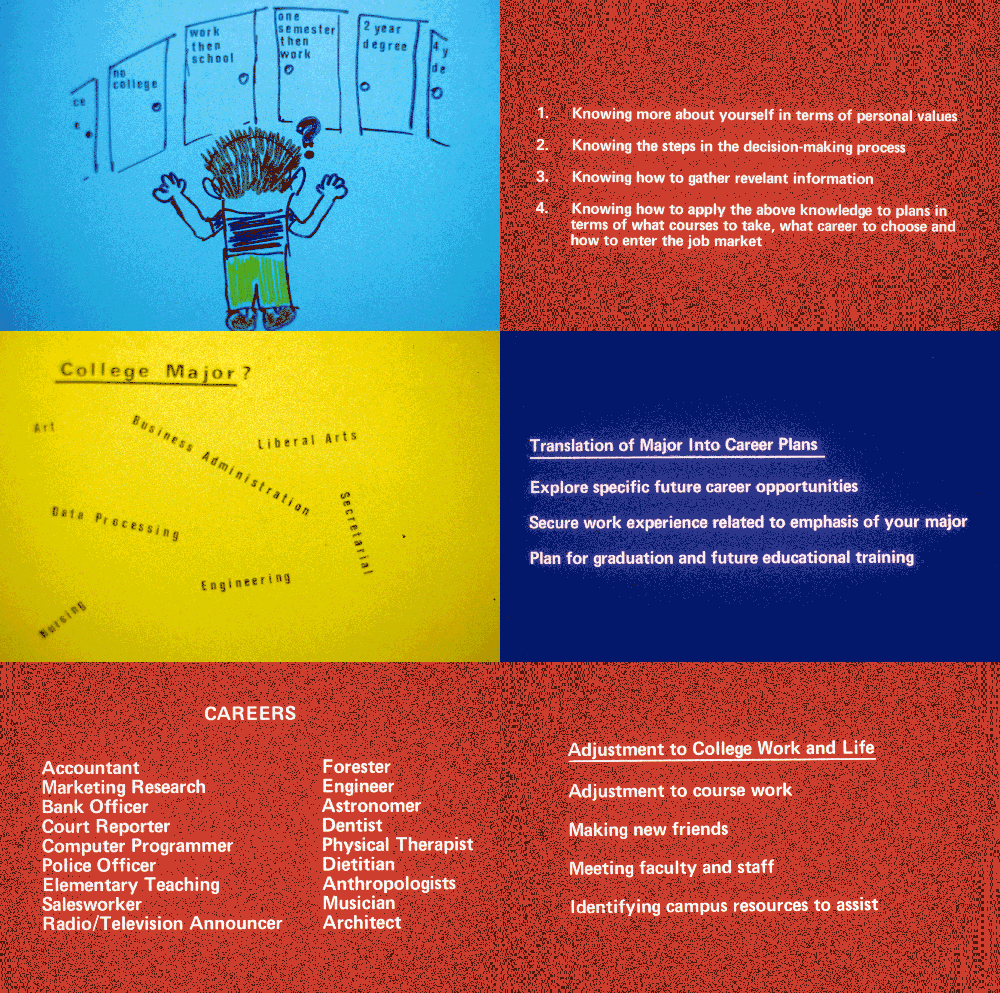
As antiquated, hokey, and uncool as this effort might have been, I believe that my intention was on target. If students could not yet imagine a career, my goal was to let them know that it was okay to feel confused and that there were specific steps they could take to better understand where they were headed.
After a decade of one-on-one and group counseling and career advising of community college students, I realized that many of our students had no previous help in connecting what they were being taught with how these courses would help them in attaining a career. Many students saw college as one of the hoops to jump through for a better life, after which they needed to figure out what career they wanted.
Although St. Louis Community College at Meramec was better resourced with staff than many community colleges, counselors could not serve all the students who sought career counseling help when they were well into their college career. In addition to offering one-on-one and group career counseling, the Counseling Center created an efficient self-serve career resource center that included one of the first in the nation experiments with computer-assisted career counseling. Even with all these resources committed, there were still long waiting lists for students to see counselors about their career goals.
We know that when students can connect what they’re learning with what they need to know for a possible career, their confidence in their own abilities and their motivation to learn increase. Colleges today with reduced resources and increasingly high demand for career services will need to decentralize the responsibility for the career support process. This decentralization needs to be done broadly and consistently, enlisting a combination of personnel and online tools to help students organize their steps to decision making, preparation, and implementation of plans.
Helping students along their journey to work–life fulfillment is a continuing and ongoing process with better tools and more evidence of the need today than we had in 1979.
 Andrei Santos, Environmental Science and Public Policy major at Duke University, shares in the following thoughtfully reasoned essay ideas and suggestions about how students can sustain the passion and momentum of the summer of 2020 from where they are as students.
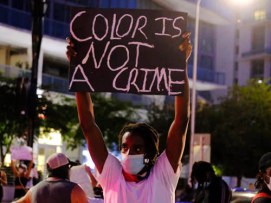 Over the last couple of weeks, protesters have responded to the death of George Floyd with demonstrations in all fifty states. Although the protests were started in response to Floyd’s death, they have quickly transformed into protests surrounding the broader issue of racism in police forces across the country and systemic racism in the country as a whole. While youth organizers have been responsible for many of the protests throughout the country, students must carry this momentum into the fall semester. The systemic abuse of people of color is not localized to their interactions with the police. In order to progress towards a truly just society we must confront the racial disparities not only in policing, but also the environmental sector.
 People of color are more likely to
 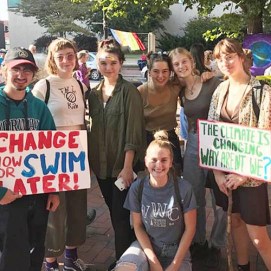 It’s normal to feel angry, frustrated, and ready for a change. For students, these feelings are an opportunity to act in socially responsible ways on campus. Systemic racism permeates everyday life, and university life is no exception. From educating oneself about injustices committed against people of color by enrolling in classes that challenge one’s perception of the world, to addressing diversity policies in the clubs one is a part of, students can educate themselves about inequality and work to improve the collegiate environment. Students can also look into the campaigns and companies that their universities and schools involve themselves with and promote divestment of groups that are socially irresponsible. Questioning the role and efficacy of police officers in schools is additionally important. Every school is different, but no school is perfect. Analyzing collegiate life and addressing, organizing, and protesting around the issues that affect people of color disproportionately is important to furthering the movement past calls for an end to police brutality. For students, bringing the protests from the streets into the classroom is important for keeping the movement alive.
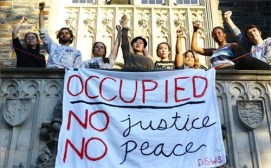 Campuses across the nation have seen a renewed push to change aspects of collegiate life, even during a time when students aren’t living on campus. At Duke University in North Carolina, students have started online movements to remove the police from peaceful protests on campus. In Charlottesville, activists demonstrated by marching through downtown in protest of police brutality and called for Confederate statues to be brought down.
 Current protests underscore the complexity of progress. Systemic racism is not just a single-faceted issue, but rather one with traces in every sector. Organizing work may look slightly different in the time of social distancing, but in this time of political upheaval, it could not be more important. While social distancing may keep us physically separate, now more than ever, we need to use the tools at our disposal to come together and fight injustice on all fronts. For students, upcoming semesters signify change, and this semester offers an opportunity to change their campuses for the better.
 A major role of commencement speakers at the culminating event of a lengthy and often arduous course of study is to inspire graduates to move positively and purposefully forward to the next phase of their lives.
 Gwen Dungy