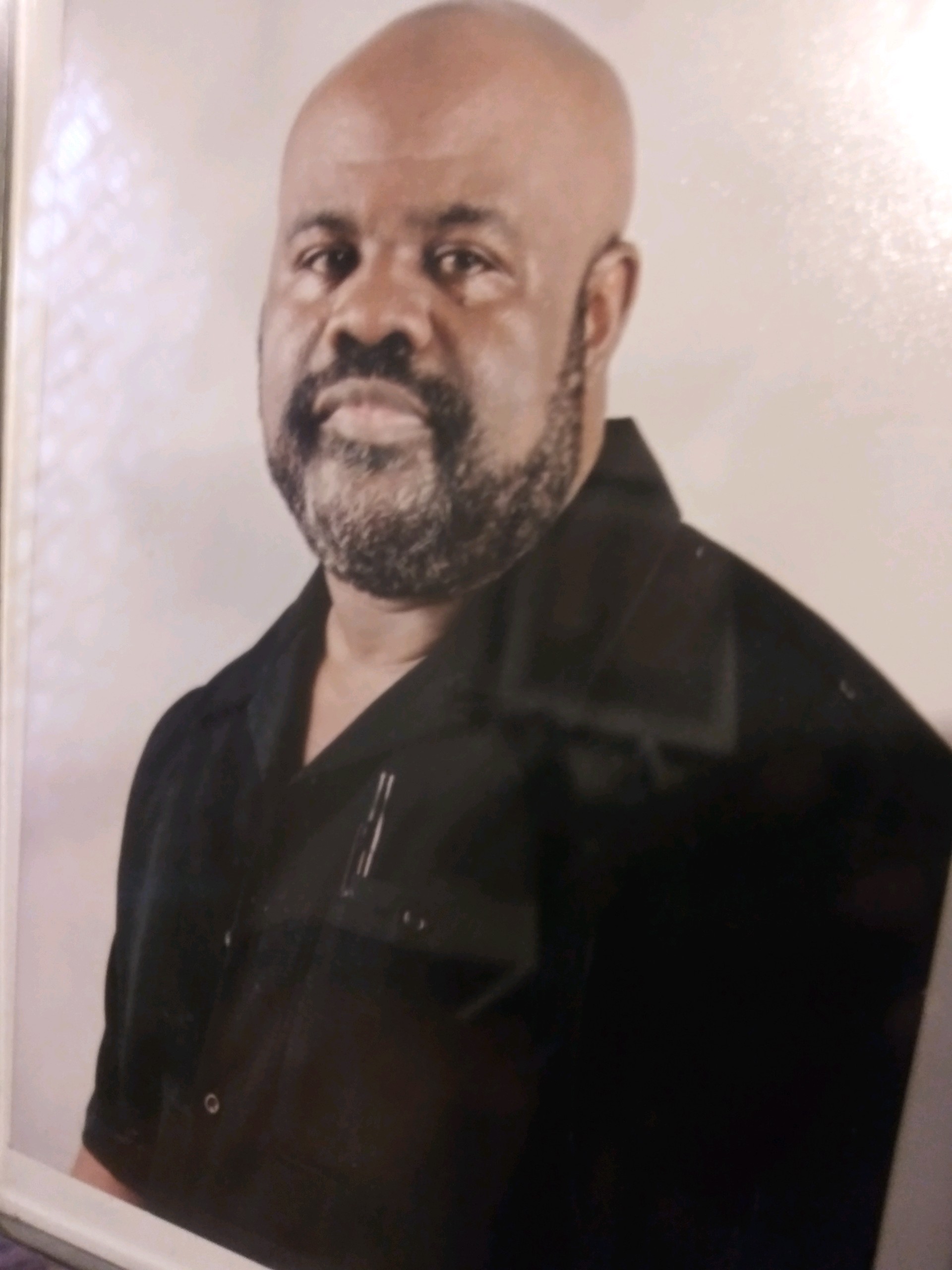
My brother-in-law—married to my baby sister, Regina, for 47 years—passed on Monday, June 26. My heart aches for all of us who knew and loved him. My hope is that we will all find comfort in knowing that he was a man who lived a good life as a loving husband, father, grandfather, and friend, to name just a few of his many roles.
I send a special prayer to my sister whose grief is inconsolable. Mack, who she knew from when they were in grade school, was the love of her life. And she was the love of his life, whom he loved steadfastly and with tenderness seldom witnessed.
He was the steady hand as they raised their children. He anchored the family with his calm dignity. He brought joy when he smiled with his eyes as his large, strong body shook with laughter.
Many community college students are true immigrants to higher education. To them, going to college is as foreign as finding themselves put ashore in a strange land.
Once they embark upon a college education at the community college, often their main concerns include how to pay for their course work and how to juggle their myriad responsibilities in order to find time to study.
Often, their plans include getting as many courses done as possible at the community college at lower costs before continuing toward their four-year degree.
They are proud of these hard-earned credits. However, too often they find their safe harbor disrupted when they discover that many of the credits earned at the community college will not transfer or be accepted by their choice of a four-year college.
More than 40 years ago when I worked at a community college, the most time-consuming and frustrating parts of my job as a counselor and academic adviser were to work with students who were being stymied in their progress because the community colleges and four-year colleges could not come to agreement on which courses taken at the community college were “equivalent” to courses at the four-year college. I think now as I did then: If community colleges are “colleges” and faculty who teach the courses are qualified and students meet the requirements, why are there questions about equivalences?
A recent story on Marketplace Morning Reportnoted that when transferring from a community college to a four-year college, about “43% of college credits don’t end up counting toward a new degree.” The reasons for this lack of cooperation and consistency between community and four-year colleges seem to be about money and hierarchy.
With less funding from states and counties and increasing infrastructure costs for colleges and universities, four-year colleges continue to raise tuition as a source of revenue. Done intentionally or not, having students repeat courses already taken at community colleges is another source of revenue.
Then there is the hierarchy. Community colleges that were created to give opportunities to a broader spectrum of students in their own communities are often described in unflattering terms. Rather than being seen as a way to level the playing field, the hierarchy is preserved when the gatekeepers at four-year colleges stand in judgment as to the worth of the credits earned at community colleges.
Students have little say or control about the transfer of credits and suffer the consequences of being stuck in the middle. If faculty from the two types of institutions cannot agree on what is acceptable in courses of the same or similar names and descriptions, then it may be time for outsiders to interfere further in the business of the professionals in higher education.
If outsiders are allowed to make decisions about what is appropriate to be in the curriculum, how teachers teach, and what books are in the library, why not take this interference further and mandate articulation on course transfer between community and four-year colleges? The time is long overdue for leadership to require that the roadblocks to complete articulation between community and four-year colleges be removed.
Many thanks and praise to Chris Hanlon, former professor at Eastern Illinois University (EIU) and then at Arizona State University. In 2010, he brought the idea of a name change for Douglas Hall to EIU President David Glassman, who in turn asked the Board of Trustees to consider the idea of changing the name.
Located in proximity to one another, Douglas Hall for men and Lincoln Hall for women were so named to memorialize the fact that Abraham Lincoln and Stephen Douglas held one of their debates in Charleston, Illinois, where Eastern Illinois University is located. The famous Lincoln-Douglas Debates were part of the campaign when both men were running for the Illinois State Senate. A point of contention regarding honoring Douglas is the fact that he was a strong advocate for slavery.
When the reconsideration of a name change became known, some African American alumni gratefully reached out to some of us to write letters of recommendation to support a proposal for having the residence hall named Norton in honor of Ona and Kenneth Norton. When the 10-year campaign and deliberations ended and a vote was before the Board of Trustees, the Nortons received more letters of recommendation than the other worthy candidates.
The competition to be so honored was stiff with the 205 names submitted including notables such as a former Governor of Illinois, a student-athlete and Tuskegee Airman, a former student and later President of EIU, a Black professor who became the first director of the Afro-Studies Program, and Zella Powell, who is believed to be the first Black graduate of EIU. Ultimately, the Board of Trustees voted unanimously to rename the residence hall Powell-Norton Hall.
Powell graduated from EIU in 1910. Her family lived in Mattoon not far from Charleston. One of only two Black families in Mattoon, her family had means to afford them middle-class status. Nevertheless, the family suffered the indignities common then in small rural towns of the United States. Enduring the stress of being the only Black student on campus and then graduating is a victory not many can boast. Powell taught in Mattoon before moving to Chicago, where she continued her career as a teacher and raised a family with her husband.
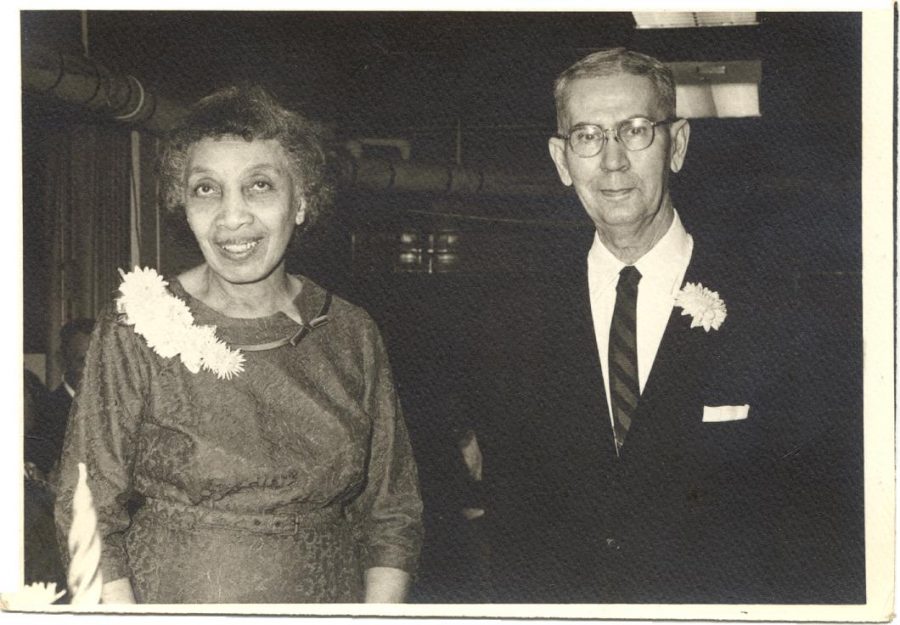
By appearance, Ona Norton and her husband Kenneth were not apparently Black, but they apparently were considered to be Black in their community. Their involvement with EIU began in the 1950s when they were asked to “open their home to Black athletes who could not find housing on campus” (The Daily Eastern News, November 24, 2021).
Providing housing for athletes who were Black led to Mrs. Norton becoming the go-to person for other Black students who found their way to EIU. The Nortons rented two modest houses to accommodate Black students—one for women and one for men. I was in the group of Black women who lived in a Norton House on Second Avenue. If it were not for the agency of the Nortons, I would not have been able to attend the university. I didn’t have money to live in the residence halls and even the $28 a month that the Nortons charged was often hard to come by. Some of the other women were in similar circumstances, but I never knew of anyone who was asked to leave the Norton house for lack of funds for rent.
Although Mrs. Norton has been honored for other acts of charity, and EIU has a scholarship in her name for Black students, the honor that she shares with Powell is the most fitting because of its connection to housing students who, without her help, would never have had the opportunity to attend EIU.
I have been a participant observer in my own life for a very long time. My first written notes about what I observed were in a diary that I received as a gift when I graduated from eighth grade. I was diligent about writing in my diaries. When I left home to attend college, my mother found my diaries, read them, and trashed them. I never could understand why she would do such a thing.
Except for brief periods, I continued to be a participant observer in my life. I kept journals of my every day as well as extraordinary experiences. Now, at this stage of my life, I have decided that time is too precious to write daily about what I observe and experience. It’s time to reflect on what I’ve observed over the years, to realize what I’ve learned, and to embrace all parts of the experience.
I wrote my journals to be aware of what was happening around me, to be my companion, to be my confidant. I didn’t write them to be read. So now that I am doing just that, I can take the time I did not have previously to discover patterns and themes. Reading my journals now, it is as if I’m excavating precious pieces of history that when put together will define my life as only I could observe it.
An obvious pattern is that change is constant. One day all is right with the world, and not long after that, the opposite is true. Sometimes the rise and fall of circumstances occur within a day or two, or within a week.
And, whether I use the word or not in my writings, love is a theme. When I read entries that I interpret as the love theme, I empathize with the self that I described then by being tender, kind, and loving to the self that I am now. I’m so glad that I have lived long enough to show myself the love that I think no one else could have given me.



 Gwen Dungy