
Monthly Archives: September 2023

WORD

In the beginning was the Word, and the Word was with God, and the Word was God.

John 1:1

As the Writers’ Strike continued toward the 100-day mark, I thought, “If the industry cannot afford to compensate writers adequately and provide new rules regarding work requirements and the industry’s use of AI in the future, they should just shut down.”

I understood the need to withhold the goodsthe talentif those who use the talent do not compensate in what the writers think is a fair and just exchange.

It’s not just the strikers and their kindred supporters, we consumers have a role in this tug-of-war between the talent and the industry. As the box office revenue from summer 2023 demonstrates, we love the movies. If we can’t go to the movies, what’s the use of having time off work or being retired?

Our big screen televisions bring us a cornucopia of entertainment choices. Now that we have brought these streaming services and networks into our homes and on our portable devices as essential parts of our lives, we imagine ourselves yoked to them. Whether we are consciously aware of it or not, the television has become as necessary and normal in our homes as a bathroom. We just take both for granted until the toilet is stopped up and the writers stop writing.

As the Strike dragged on and there were stories about the hardship writers and attendant talent were experiencing, it may have appeared that the writers were at a disadvantage in the negotiation struggles. But you and I knew it would be just a matter of time before the tug-of-war would end.

Because “…in a culture where words are all that is left as weapons, it’s words that make the universe.” (How the Authors of the Bible Spun Triumph from Defeat. Book Review of “Why the Bible Began: An Alternative History of Scripture and its Origins” in The New Yorker, August 28, 2023, by Adam Gopnik)
Broken Promises, Shattered Lives, and the Pursuit of Happiness

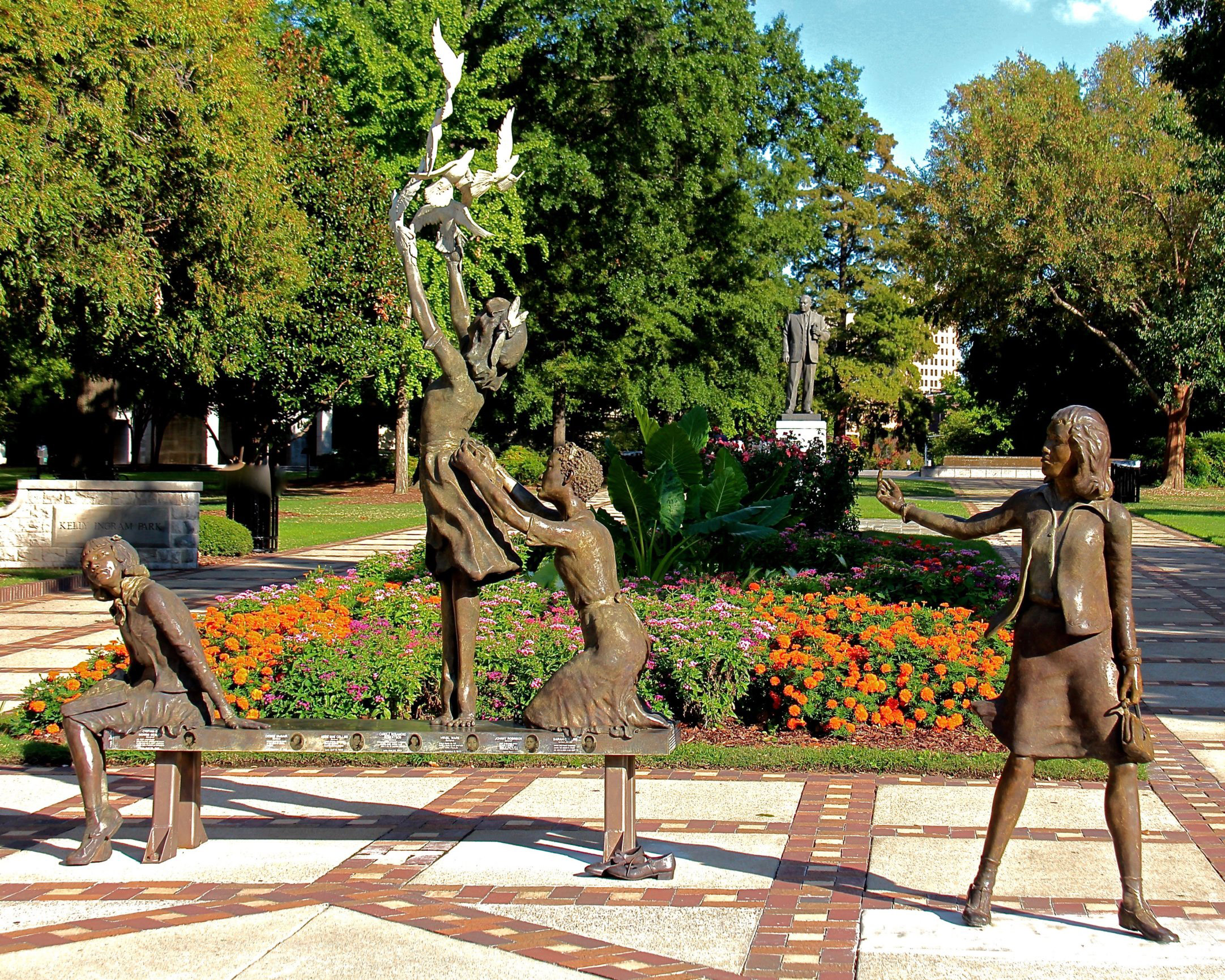
On September 15, 2023, Supreme Court Justice Ketanji Brown Jackson spoke at the 16th Street Baptist Church in Birmingham, Alabama, to commemorate the 60th anniversary of the church bombing that killed four Black girls–ages 11 and 14–and caused another 12-year-old girl to lose her eye.

Some of Justice Brown Jackson’s remarks were particularly poignant for me because I had listened to a Smithsonian Associates lecture just the day before entitled, “The Pursuit of Happiness,” by Dr. Richard Bell of the University of Maryland.

Justice Brown Jackson said, “Yes, our past is filled with too much violence, too much hatred, too much prejudice, but can we really say that we are not confronting those same evils now? We have to own even the darkest parts of our past, understand them, and vow never to repeat them.”

In his lecture, Dr. Bell recounted the shattered lives of Black people who pursued happiness during a time of great discontent. He gave numerous examples of the struggles of formerly enslaved Black people who were used as pawns by the British and slaughtered by the Patriots of the American Revolution. Broken promises by the British who changed terms of agreements on certificates and rewrote laws that disenfranchised the freedom seekers resulted in unmitigated violence and treachery and needlessly ended the lives of our ancestors who fought for freedom. It’s asking a lot to understand these dark parts of the past.

Black people who in good faith pursued their freedom by fleeing the slave holders and siding with the British became refugees of the Revolution while fighting to create a post-slavery society. Between 1775 and 1808, freedom seekers continued to petition and pursue their liberty even while fleeing from New York to Nova Scotia to Sierra Leone. Given the magnitude of their sacrifice and the depths of their despair, I don’t think they would see cause for our celebration of what Justice Brown Jackson described as “great strides that have been made since 1963.”

The bombing of the church came just two weeks after the March on Washington and the Rev. Dr. Martin Luther King’s “I Have a Dream” speech—a speech in which King spoke of the “promissory note” spanning from the Declaration of Independence that still had not been made good even 100 years after the Emancipation Proclamation. The bombing—and perhaps tellingly the two boys who also were killed in the chaos of that day in Birmingham, but who are largely still unknown outside of the Black community in that city—reinforces the pattern that our destination to freedom invariably takes us back into the caves of those who seek to enslave us.

Sadly, recurring attitudes of supremacy make the lure of freedom ever so elusive.

bronze art installation at Kelly Ingram Park representing the four girls killed in the 16th Street Baptist Church bombing on September 15, 1963, in Birmingham Alabama. The girls are depicted in play with one reaching for a group of ascending doves.

The public memorial for the children killed on September 15, 1963, sits across from the 16th Street Baptist Church in Birmingham, Alabama, at an entrance to Kelly Ingram Park.

Mr. Fantastic

Laurence N Smith

Once in a lifetime, if you’re lucky, you will know a Mr. or Ms. FANTASTIC!

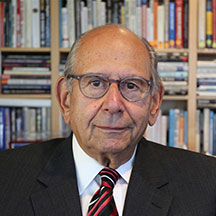
Laurence N. Smith is my Mr. Fantastic! He was the vice president for University Marketing and Student Affairs at Eastern Michigan University from 1975–2000.

I give him this title because he stands out from the rest in every way. He’s always the tallest in the room and the smartest in the room. And when asked how he’s doing, invariably, he responds, “FAANTASTIC!”

Leadership in a volunteer organization based in higher education can be a different experience than what a leader might be able to do in a top-down organization where the people responsible for making the trains run on time are paid and can be released at-will.

When I was in such a leadership position, willing volunteers were the key to success. Many stepped forward to let me know that I could count on them to help me achieve the goals of the organization. They used words like “help you,” “support you,” “here when you need me.”

In my imaginative recall, Larry Smith, towering over the heads of his colleagues, fixed his eyes on me, made a beeline to me, and asked, “What is your vision for this organization?” With confidence, I summarized my mandate from the volunteer board of directors and added my own vision, which could be described as fantastical given the structure and history of the organization. Mr. Fantastic’s eyes communicated, “Are you sure?” The gaze I returned indicated that I was.

Lyrics from songs best describe his response: “Come along with me,” “I’ll take you there,” “I believe I can fly!” My leadership vision was the perfect vehicle for Mr. Fantastic to test drive his ideas about what student affairs administration in higher education could “truly be.”

On the journey with Mr. Fantastic, it was obvious that when we were talking about using listservs to bring our members together in conversation from various locations, he was already thinking about what we now call Zoom meetings. When we were talking about Palm Pilots, he was envisioning what is now Chat GPT. Always looking toward the possibilities for the future, never fearing failure, and always optimistic is my Mr. Fantastic.

And I’m not the only one that found Larry to be fantastic. In 1999, he was named a NASPA Pillar of the Profession, and in 2002, he was the recipient of the Fred Turner Award for Outstanding Service to NASPA. The equivalent of a Lifetime Achievement Award, the Turner Award recognizes NASPA members who have brought honor and dignity to the student affairs profession and to NASPA as an association for a sustained period. Among Larry’s extensive activities, he was founder and chair of the NASPA National Academy for Leadership and Executive Effectiveness and executive editor of NASPA’s online management magazine.

I spoke with Larry recently and told him that to have him as a colleague and friend during my time at NASPA was a blessing of pain and glory. The pain was tempering the projections of where the organization could go and modulating the speed of change in order to be in sync with the volunteer leadership. The glory was the innovations NASPA achieved through its volunteers when we were flying with Mr. FAANTASTIC!

Thank you, Larry. I am truly grateful for your colleagueship and friendship.