Monthly Archives: October 2023

Banned Books: A Response

Guest post by Marguerite M. (Maggie) Culp in response to “Banned Books” post (10/12/2023).

You got in trouble for reading Gone With The Wind in a physics class? Gone with the Wind?!? Although that is the last book I would expect you to be surreptitiously reading in school, the fact that the story intrigued you—and you were willing to take some risks in order to finish reading it—was a great way to make your point.

Children, young adults, and hopefully a significant number of adults are naturally curious. A good love story set against the background of a war captures everyone’s imagination, even if the story is an attempt to rehabilitate the image of the Confederacy and reframe the Civil War and Reconstruction. Your mother, by the way, showed admirable restraint in the way she handled the situation.

As you know, I was born, grew up, and attended college in the Boston area, so banned books were part of my life from the day I was born. The church to which my family belonged and various civic groups periodically published lists of banned books. When I was old enough, I was asked to raise my right hand in church and swear never to read a banned book. Naturally, the first thing I did was try to locate some banned books, but they were kept in the back room of the local library and unavailable to the general public.

At 14 years of age, I was hired to work part-time at one of the branch libraries in my hometown. After I worked there for a year or so, I decided to slip into the back room and explore a few banned books. I quickly discovered their quality and content varied. Some seemed an absolute waste of paper, others simply did not interest me, and a few were absolutely disgusting. For the life of me, though, I could not figure out why some people considered these books so dangerous that they had to be locked away and people forbidden to read them.

Yes, Catcher in the Rye was disappointing because it had nothing to do with baseball, but it did motivate me to ask my dad a lot of questions about how boys viewed girls and why a writer who presumably had a good vocabulary used so many swear words.

I flat out loved To Kill a Mockingbird and could not understand why anyone would want to stop me from reading it.

Although The Prince by Machiavelli was troubling on many levels, its content did not keep me awake at night the way the headlines in the evening newspaper did.

It was only when I stumbled on a banned summary of the works of Martin Luther during my senior year in high school that I realized there probably were four reasons that governments, churches, or community groups tried to control what other people read: the banned books contained ideas that threatened their world view, their power, their financial security, and/or their sense of self and place in the universe.

I cannot imagine today’s young people are any less resourceful or less curious than we were, which means I share your optimism that they will find their way to the truths contained in many a banned book. It may take them a bit longer, and I think the road will be a bit more complicated than it was for us, but enough will get there in the end to make a positive impact on this country and its future.


Marguerite M. (Maggie) Culp is a higher education consultant and former faculty member, counselor, dean, and senior student affairs officer. She is co-editor of six books including “Student Success in the Community College: What Really Works?

7 Interview Recommendations to Land a Top Leadership Position 

Guest blog by Laurence N. Smith

What does it take to land that coveted leadership position in a high-stakes job interview?

Over the years, I have been in the position to advise many ambitious professionals on how they should perform in interviews for top-level executive positions. 

My immediate response when asked for advice was to tell them to go online to see what others recommended. In some ways this was a mistake because they often came back to me questioning the validity of what they read.

So, serving on several boards and being connected to many successful corporate, university, and community service top executives, I took these recommendations to a great panel of experts for their review. Interestingly, their real-world advice differed from many of the online recommendations.

Their top recommendations follow:

  1. Know the difference between being a leader and a manager. This has been an almost universal reply. Being promoted from a successful management position to a top leadership role is not necessarily a good decision because the roles and skills required for each are not the same. Check the current professional literature on leadership to be well informed for questions about your leadership style.
  2. Have a clear understanding of how internal and external dynamics affect the position for which you are interviewing. Apparently, some executives were unaware when they signed on about shifting reporting decisions; and conflicts arose among and between investors, board members, and the organization’s executives.
  3. Know and appreciate the entire organizational ecosystem. Successful leaders recognize that the brains of an organization do not reside only in board members and executives, but also in employees throughout organization, as well as in clients, customers, students, and even vendors. Successful executives will need to know how to navigate and integrate this process into practice.
  4. Be aware that interviewers know all about interviewees. Many executives have been surprised by this. Professional consulting firms have thorough researchers on their team. Make sure you research the internet to see what they might have learned about you. Know that others in the organization may have friends who worked for or with you. Their opinions also influence interview questions.
  5. Create a conversational interview environment. Many search committees have not been coached on how to create a productive interview process. This also applies to others participating in the interview process.  Avoid becoming a consultant in the interview process or being trapped in an interview that takes the format of an interrogation.  An interview should be a two-way street: “Do you want me?” and “Do I want you?”  Prepare questions that require interviewers to share their insights about the organization’s current situation and future alignments. 
  6. Have a consistent message in your interviews with all groups and individuals. Avoid the trap of making statements to win over a particular group or individual that conflict with statements made to others.
  7. When asked what your leadership style is, make sure to include the following to the extent they are true for you. Based on post-interview comments, this recommendation has always been central to what helped make a major difference in the interview outcomes.
    • “People support what they help to create.”
    • “The ultimate test of our effectiveness will be the positive difference we make in the lives of the people our organization includes and touches.”

Laurence N. Smith is a founder and Senior Partner of New Campus Dynamics with 40 years of experience as a senior university administrator and as a national leader in higher education. He can be reached at smith@dixboroventures.com

Banned Books

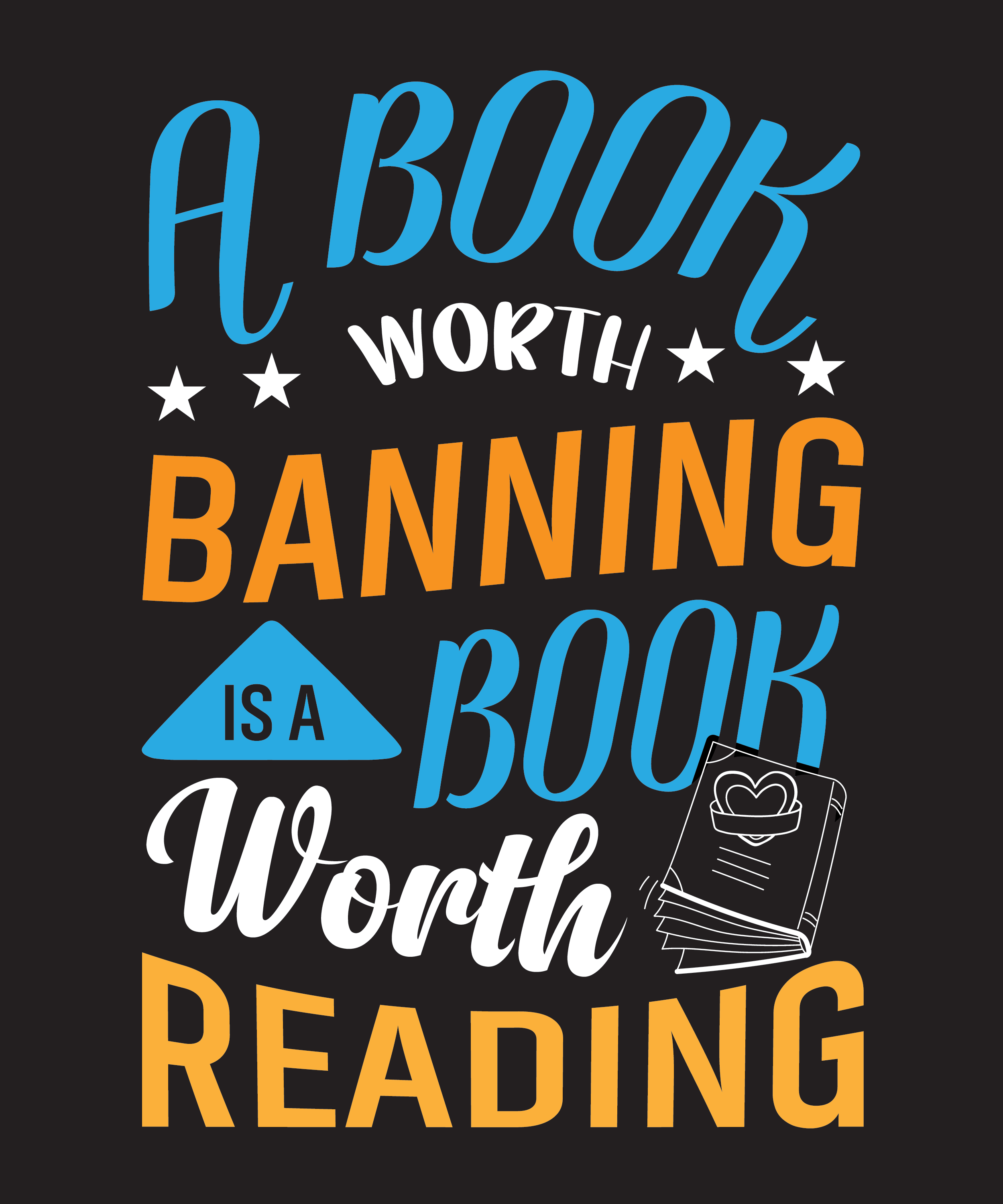
A book worth banning is a book worth reading

Last week was Banned Books Week. In my opinion, most books worth reading have been banned or censored at some time during their circulation. Notice that I preface the previous assertion with, “in my opinion,” because I don’t claim to be an arbiter of what others read. By contrast, it seems that those who seek to censor and ban books think that their opinions matter more than others’.

It’s more than troubling to think that in this century in the United States book banning and censorship are not only tolerated but increasingly sanctioned. I have no quarrel with those who want to restrict access to books, games, movies, or anything they deem inappropriate for those within their guardianship. I think it goes too far when outsiders seek to extend those judgments as to what is appropriate for those with whom they have no relationship.

When I was 16 or 17, I was suspended due to my insatiable desire to continue reading the library-restricted novel Gone With the Wind. The trauma of the suspension is probably blocking me from remembering the exact details of whether it was from school entirely or only from my physics class, but the condition for my return was for a parent to meet with my physics teacher. My mother couldn’t believe that she would have to miss a day of work to come to the school for some kind of foolishness that was so unlike me, who always followed the rules. Although my grades put me in excellent standing in my graduating class, not completing the physics course would have delayed my graduation.

After being warned more than once not to bring the book to class, I could not put it down. In an attempt to hide what I was doing, I positioned myself at a back table in the physics lab and held the book on my lap under the table. I was so engrossed in the novel that I didn’t realize when my teacher was standing next to my lab table. I can’t say what was most fascinating to me about the novel. Whatever it was, it was absorbing enough for me to risk the ire of my teacher.

In contemporizing the narrative of this work of fiction, by all accounts I should not have relished reading it. In retrospect, I wonder how my 16- or 17-year-old-self felt about the contrast between what I was reading and the factual reality of the American Civil War, the elaborately drawn nobility of rich White Southerners, and the portrayal of favored slaves. As damnable as the mythologizing is in this book, I would not be in favor of banning, censoring, or restricting it.

To truly educate for a changing and evolving world, many banned books ought to be required reading with analysis and discussion of the historical, social, and cultural context in which the book was written, as well as the more recent and contemporary thinking in regard to the subject. However, in the current climate of suppression and falsities, teachers dare not attempt to teach students what would certainly broaden their perspectives and require them to interrogate the truths that they have been led to believe. Despite the pessimistic outlook for the social, cultural, and political landscape, I continue to have faith that youth will clear the path to their own enlightenment. It may not come early because of access, but I’m encouraged to think that young readers are the same now as they have always been. Just as I took a risk to read Gone With the Wind, a library-restricted book, they, too, will find a way to read banned, censored, and restricted boo

What the “Fantastic” Thing Is All About

Guest blog by Laurence N. Smith

Since Gwen Dungy’s fantastic blog about me, I have heard from several former colleagues who just wanted to say hello and catch up, and some who wanted to know what the fantastic thing was all about. Among the callers were some who asked what I thought would be the best advice to a new or aspiring student affairs vice president. And since my daughter, a prominent business consultant, unknowingly to me shared Gwen’s blog with some individuals in her network, it opened the door for a few who asked for advice for their own future success.

My first vice presidency was at Chicago State University in 1969. At 29 years of age, I was the youngest administrator by many years. Times were difficult, and especially difficult for students of color who comprised 80 percent of the student body!

Among students, faculty, and administrators there existed a downbeat atmosphere concerning just about everything. The president was focused on bringing in new young talent to change that condition. The litany of what was wrong with the University was a long series of frustrations. I learned very fast never to ask my colleagues, “How are you?”  

It was then that I decided that when anyone asked \how I was that my reply would be “fantastic.” I realized that in the culture of the University it was an unusual reply. I decided to make it even more energized to have greater impact. The simple “fantastic” was replaced by a vigorous “FAANTASTIC!”     

In the early years the reply shocked people and opened the door to exploring change when they asked me why I felt fantastic. It didn’t affect everyone, but even those who thought it was an over-the-top reply were curious why I felt that way or wanted to test if I was in touch with reality.  It enlarged the view and discussion about the University.

Where it had the most significant impact was on students.  For student leadersthe student newspaper reporters and editors, the captains of athletic teams, and others—my feeling fantastic helped them feel fantastic. It fostered a new level of enthusiasm and discussion about the opportunities that were ahead if they embraced the efforts necessary for getting a college degree.   What they experienced, they shared.  It caught on.

And when I became vice president for university marketing and student affairs at Eastern Michigan University, it had the same impact. 

It still sparks curiosity and engagement. Try it out for yourself. When you are asked, “How are you?” respond “fantastic” or “FAANTASTIC.” No matter who you are and what you do, it still works.


Laurence N. Smith is a founder and Senior Partner of New Campus Dynamics with 40 years of experience as a senior university administrator and as a national leader in higher education. He is emeritus Vice President for University Marketing and Student Affairs at Eastern Michigan University. Among his extensive activities, he was founder and chair of the NASPA National Academy for Leadership and Executive Effectiveness and executive editor of NASPA’s online management magazine. In 1999, he was named a NASPA Pillar of the Profession, and in 2002, he was the recipient of the Fred Turner Award for Outstanding Service to NASPA, the equivalent of a Lifetime Achievement Award in the student affairs profession.