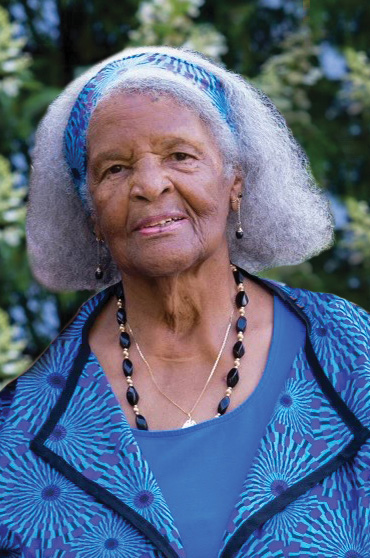
Since she was always in charge, I’m sure she told Gabriel it was time to blow his horn for her arrival because she had squeezed every ounce of living out of this life and then some at age 96.
Elizabeth B. Rawlins
Dean Emerita Elizabeth B. Rawlins of Simmons College mentored countless young people who thanked her by becoming leaders in their fields and role models for those who followed them.
Beyond Simmons College, Dean Rawlins was the sage who guided Black professionals in the National Association for Women in Education (NAWE) as they sought recognition through leadership to have their voices heard and their talents recognized.
To me, she was “Betty”—friend and role model. While I generally respect the day for family privacy, I called Betty at her home in Oak Bluffs on Martha’s Vineyard on Christmas Day 2023. I could hear the familiar sounds of the family gathering. I could tell by the joy and cheerfulness in her voice that she was elated and ecstatically happy as she told me who was at the house and what they were doing. I could picture the scene, and a feeling of rightness and peace overwhelmed me. I was so glad that I had been led to speak with Betty for what I felt might be the last time.
After we ended our call, I sat for a while and with a smile I recalled good times Charles and I had with Betty and Keith, her late husband, and mutual friends over the years:
African Meeting House in Boston
Betty’s rolls and Keith’s stuffed mushrooms
Inkwell Beach
The ferry crossings
Gingerbread houses
Great seafood
Annual Valentine’s Day in Florida all wearing red
Fireworks on the grounds of the Episcopal Church
Chilmark Chocolates
Literary readings on summer nights
Trips to Edgartown
Oak Bluffs famous-people spotting
Art and bookstore browsing
She had it all. She lived her life with confidence. She loved Simmons College and Simmons College loved her back. She loved and was proud of her family. They were proud of her and loved her. She left this life fulfilled.
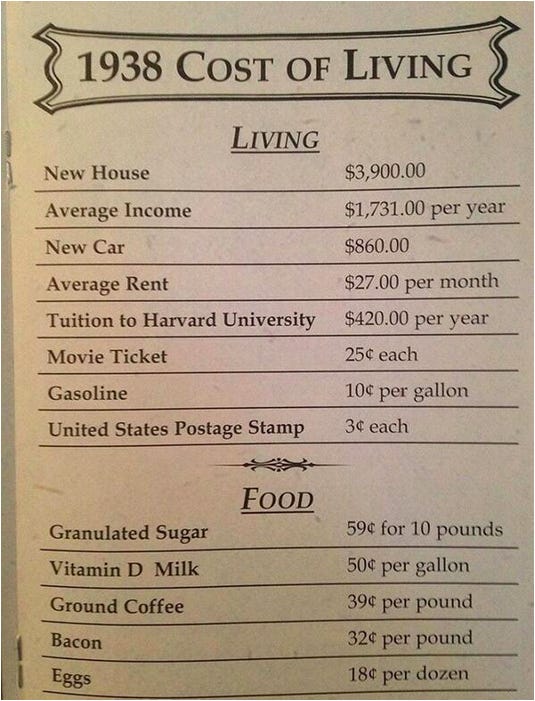
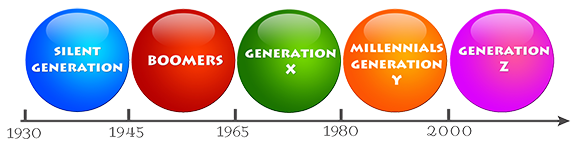
I was planning to write a short blog about the Silent or Traditionalist Generation, the name given to those born and coming of age between 1928 and 1945. They would follow the Greatest Generation and precede the Baby Boomers. To set the stage, I thought I would consider the cost of living in contrast to what it is today.
A loaf of bread was 10 cents or less. While Wonder Bread was a special treat, just having bread of any kind was a wonder during the Great Depression.
Thinking about bread, I began to search for photos that were taken of people during the Great Depression. There are a lot of photos of bread lines, but for the most part Black people are absent from these photos. I know from recorded history, as well as stories my own family told, that Black people were not the recipients of government programs created to ease the pain of economic hardship. It was as if White suffering was the tragedy of the times and Black suffering was business as usual—nothing new and, therefore, unworthy of sympathy or amelioration.
My family was in Memphis during these hard times, and though everyone suffered during the Great Depression, my people—in the specific and in the general sense—suffered a Greater Depression.In this time of great need, support was about who got fed first, and the prevailing rule was, “Last hired, first fired.”
Times were so hard that just keeping warm when the weather was cold was too much to expect. My Daddy’s mother lived in a literal shack in the Orange Mound community in Memphis. In a struggle to keep his mother and aunt from freezing, my Daddy, in his late teens and early twenties, would follow the train tracks to pick up pieces of coal that fell from the train cars and take them to my grandmother’s shack to fire the stove. One night, while scavenging for pieces of coal, someone with a shotgun shot my Daddy in the back.
As I recall how the old wound looked, the shot must have come from a distance and at an angle because it didn’t kill him. I could put my finger in the shiny sideways hole. My Mother used to get angry while telling the story about the pellets or buck shots that remained under Daddy’s skin.
I say that Black people experienced the Greater Depression because, while even low-level jobs were scarce for White people, they were non-existent for Black people who were not only trying to scratch out a living, but also trying to keep their heads down for fear of being lynched or enduring some other kind of cruelty. My family and other families of Black people who survived the Greater Depression truly are heroes.
These Silent Generation heroes would be inextricably tied to the spirit of the times of the Greater Depression. In them, one can sense the quiet strength and overwhelming desire to be and do more with the relative largesse following the Great Depression.
Much of what we know about Black history is the story of how the Silent Generation did not stay silent, taking action to change the trajectory of a people by organizing to fight for the civil rights of all people, training up the younger generation and seeing to it that their elders in the Greatest Generation, in particular, were afforded the rights and dignity too long denied them for their own contributions.
A few of the Silent Generation who raised their voices for civil rights:
Servant of God Sister Thea Bowman (1937–1990) was born in Yazoo City, Mississippi, and reared in nearby Canton. A Catholic convert and the only child of an African American physician and educator, Sister Thea was destined to inspire the Catholic world as a singer and spiritual reconciler.
A young Sister Thea Bowman (Franciscan Sisters of Perpetual Adoration | fspa.org/theabowman)
At age 15, Sister Thea became the first and only African American to join the Franciscan Sisters of Perpetual Adoration, a religious order in LaCrosse, Wisconsin. Their missionary work at Holy Child Jesus School and Church in her hometown of Canton, Mississippi, had inspired Sister Thea’s Catholic faith. Her love of African American culture and music guided how she expressed that faith.
In her essay, The Gift of African American Sacred Song, Sister Thea wrote, “From the African Mother continent, African men and women…carried the African gift and treasure of Sacred Song, Black sacred song is soulful… Black sacred song has been at once a source and an expression of Black faith, spirituality and devotion. By song, our people have called the Spirit into our hearts, homes, churches and communities.”
As an educator, writer, singer, evangelist, and cultural bridge-builder, Sister Thea used music to cross religious and social borders at places in the North and Jim Crow South that were not always welcoming to Black Catholics. Succumbing to her pleas to become a nun, her father had warned, “They’re not going to like you up there” at that White religious order in an all-White midwestern city. She replied, “I’ll make them like me.” She took that mission to the world.
After earning a B.A. in English from Viterbo College in LaCrosse, and masters and doctorate degrees in English from the Catholic University of America, Sister Thea taught at both universities, as well as at Holy Child Jesus School in Canton. Teaching at Xavier University in New Orleans, the nation’s only historically black Catholic university, she inspired Black students and seminarians to share their love and rich cultural heritage with the church and helped found the Institute for Black Catholic Studies. She coaxed White Catholics to accept the gifts God offered through their Black brothers and sisters, and to those who viewed Afrocentric liturgy and styles of worship as “not Catholic,” to open their hearts and minds.
At the height of the civil rights movement in the 70s, the growing diversity in Catholic liturgy and spiritual justice movements emboldened Sister Thea’s tireless efforts to advance cultural diversity and inclusion in the Church. She traveled and spoke in Africa, gaining new insights, friends, and mentors. Sister Thea began wearing African clothing and became an intercultural leader for religious and laity. She helped found the National Black Sisters’ Conference to support African American women in religious life and, in 1978, she accepted an appointment by then-Bishop Bernard Brunini to direct the Office of Intercultural Affairs for the Diocese of Jackson (Mississippi).
Sister Thea Bowman later in her ministry (Franciscan Sisters of Perpetual Adoration | fspa.org/theabowman)
A 60 Minutes interview with Mike Wallace in 1987 introduced Sister Thea’s social justice Gospel to millions and, in June 1989, she became the first African American woman to address the U.S. Conference of Catholic Bishops. She awakened the bishops to the need for inclusion and unity, asking, “What does it mean to be Black and Catholic?” Her initial response to the question was to sing the Negro spiritual, “Sometimes I Feel Like a Motherless Child.”
She went on to explain that being Black and Catholic “means I come to my church fully functioning…I bring myself, my Black self, all that I am, all that I have, all that I hope to become; I bring my whole history, my traditions, my experience, my culture, my African American song and dance, gesture and movement and teaching and preaching and healing and responsibility as a gift to the church.”
But, she told the bishops, the faith witness of Black Catholics is too often denied and devalued, creating feelings of alienation and anxiety in Black Catholics. She closed her address by having the bishops, priests, and all present link arms and sing, “We Shall Overcome,” explaining the history of the song and physical manifestation, and the importance of spiritual leadership and solidarity.
Even today, the Catholic University of America’s recent “Sister Thea Bowman Committee Report” is being used to advance racial equity and, in 2022, the university named a campus street for her. That same year, Georgetown University renamed a chapel in her honor. Similarly, as part of its recognition of the 60th Anniversary of the March on Washington, Howard University dedicated the Thea Bowman Student Center on its campus in a celebration with Cardinal Wilton Gregory, the first African American cardinal in the history of the American Catholic Church.
Before succumbing to breast cancer at age 52, Sister Thea annually fulfilled some 100 speaking and preaching engagements, produced the recordings, “Sister Thea: Songs of My People” and “Round the Glory Manger, Christmas Spirituals,” and helped develop the “Lead Me, Guide Me” Black Catholic hymnal.
“She had her spirituals, the music that was so beautiful,” recalled a classmate Sister Maria Lang in an interview with the Catholic News Herald. “Most of us had been living with little or no contact with anyone of African descent. But her voice was so beautiful, it was just a very rich experience.”
Sister Mary Ann Gschwind, Sister Thea’s roommate at the Catholic University of America during the summer of 1966, added, “It took a lot of nerve for her to join our community. I don’t think I could have done it if the situation was reversed.”
Joann Stevens is a freelance writer and program specialist promoting unsung and unknown African American jazz, faith, and cultural innovators who have influenced democracy and racial justice for the Common Good.
Boomers, Gen Xers, Millennials, Gen Zers. These labels have become popular ways to define generations. Before the common use of these labels, there wasn’t much public knowledge and discussion about who was born when and what their attitudes and values might be. Other than the term “Lost Generation,” the first popular label I recall is Baby Boomers. It was coined to describe the huge increase in population following WWII and the Korean War.
In addition to the term “Baby Boomers,” perhaps the publication that popularized the naming of generations was Tom Brokaw’s 1998 book titled The Greatest Generation. As a result of this book, there was a wave of nostalgia for war heroes and respect for patriots.
Naming generations promotes the idea that people born during an approximately 20-year span of time might have attitudes, characteristics, values, and sensibilities more similar to one another than to those born 20 years before or after. Because they experienced the same impactful events and presumably contributed to the spirit of the times in which they came of age, they may have a similar way of seeing the world and weighing the consequences of major changes in their environment.
As the naming of generations goes, I think that there is more integrity in the naming of Baby Boomers than the subsequent names given to generations. The label “Baby Boomers” is a short-hand description of the fact that there was a population surge during a particular span of time. The critical point I want to make is that the naming was based on a demographic fact that can be easily accessed.
It seems that the more recent generational names have creative hooks helping them to become sticky. These names capture the attention of those researching and writing about generations. The researchers begin with a hypothesis or an idea about what they think might be significant and distinctive about those born and coming of age during a particular time period. The name captures the interest of the public and over time enough people agree that this new generation is, indeed, different than any before.
I don’t think that there is anything wrong with the short-hand names for generational identity. What I wonder about is whether the names are not solely descriptive but are also prescriptive, and, therefore, could have an outsized influence on the way people see themselves.
The impact of the generational naming will not be the same for all within the designated group. However, some may adapt their attitude and lifestyle to the descriptions they hear about their group. They appropriate the descriptions as guides to understand and define their sense of self rather than relying on their personal experiences, unique backgrounds, special characteristics and, most of all, their own sense of agency.
Seeing oneself through the prism of how one’s generational cohort is described may allow one to take less responsibility for internal reasoning and personal control. Those who see themselves this way may get a pass for the way they react to their environment, and the way they respond to their life’s circumstances because there is consensus that the events that occurred during their time of development have influenced their way of interacting with the world, their way of being.
In conversations with people who are not Millennials or Gen Zers, it’s common to hear excuses for behaviors that may not have been seen as acceptable by past generations. With a metaphorical shrug, members of a particular generation are given a pass, attributing their behavior to their generation and not to the individual. Individuals are not responsible because they are influenced by events beyond their control. Rather than being held accountable, they are supported at best and pitied at worst.
As I come to the close of my thinking on this, it seems that generational labels and naming of signs in astrology have similarities. Both rely on the time of birth to ascribe characteristics or traits. Both are ostensibly descriptive but for some are prescriptive. Just as there are skeptics about astrology, I think there might need to be more skeptics about naming and describing generations, especially when the names come before some of the cohort comes of age.
Henriette DeLille (Image credit: National Black Catholic Congress)
Venerable Henriette DeLille (1812–1862) was portrayed by actress Vanessa Williams in The Courage to Love, a romanticized, historical drama that highlighted the Quadroon Balls and system of plaçage that DeLille and generations of her ancestors were born into and practiced. Accepted in North American French and Spanish slave colonies, plaçage allowed wealthy White men to live double lives—one as a committed family man with a White wife and children on a plantation, the other in a household with a mixed-race concubine and children. These unions could last for a year, decades, or until death.
DeLille was a fourth-generation free woman, born and raised under plaçage. Despite a complexion so light that she could have easily passed for White, she never opted for this as the rest of her family did. She entered into plaçage for a short time and bore two children who both died in infancy. By her early 20s, DeLille’s deepening faith and encounters with God compelled her to reject plaçage and encourage other mixed-race women to do likewise.
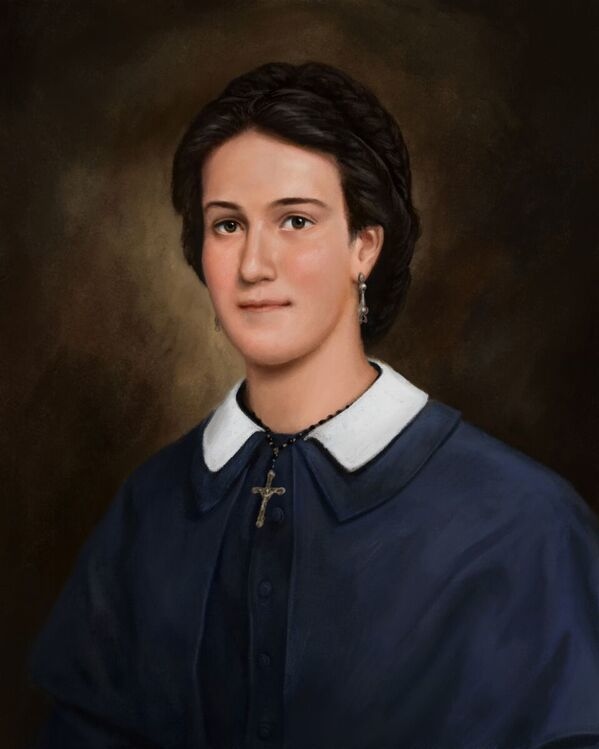
DeLille wrote in French on the flyleaf of a book centered on the Eucharist, “I believe in God. I hope in God. I love. I want to live and die for God.” Her work on behalf of God is evident in the religious order she founded, Sisters of the Holy Family, and the historical New Orleans Tour the order created to educate people about the life and works of their foundress and order. (The Sisters of the Holy Family are the second-oldest surviving congregation of African American religious, with the oldest being the Oblate Sisters of Providence founded by the Venerable Mary Lange.)
Using funds from the sale of property, her inheritance, and loans, DeLille created programs to teach Black children the Bible and academics, founded the first Catholic home for the elderly in the United States, and fed and cared for the poor.
In 1881, the order purchased the Orleans Theater property that includes the former Orleans Ballroom, the site of the Quadroon Balls, converting it into a school and convent, with the ballroom itself serving as the chapel for the sisters.
Julia Greeley (Image credit: National Black Catholic Congress)
Julia Greeley(c. 1840–1918) was born into slavery in Hannibal, Missouri, sometime between 1833 and 1848. She came to Colorado to care for the family of first territorial governor, William Gilpin, and it was here that she became known as Denver’s Angel of Mercy and Missionary of the Sacred Heart. Greeley’s life and legacy align with that of the unnamed woman that Jesus recognized and honored in the story of the widow’s mite (Luke 21:1-4) for anonymously giving all she had to serve God and others.
A formerly enslaved person blinded in one eye by an enslaver, Greeley arrived in Denver around 1879 or 1880 and was noted for freely giving of her faith, resources, prayer, and strength to all—regardless of race, ethnicity, or faith—until her death in 1918. When her meager resources as a domestic worker failed to provide, she begged for the needy, pulling a little red wagon containing food, toys, clothes, or even a mattress for someone in need. She never sought recognition for her acts of mercy and, sensitive to the possible negative consequences that might come to needy White people receiving assistance from a poor Black woman, she gave anonymously, leaving gifts at night.
A convert to Catholicism, Greeley was baptized at Sacred Heart Church on June 26, 1880. Neither poverty nor past trauma deterred her from evangelizing. Her devotion to the Sacred Heart (e.g., a Catholic devotion to Jesus’s love and compassion for all humanity) led her to attend daily mass at her parish Sacred Heart Church, pray for the Denver community, give alms to the poor, care for scores of children, sing in a small choir at Fort Logan, and specially minister to Denver’s fire fighters.
The Capuchin Franciscans of Denver recognized Greeley’s good works by accepting her into their fraternity as a secular Franciscan in 1901. She died in 1918 on the day of the Feast of the Sacred Heart (June 7) and was buried in the habit of the Third Order of Franciscans as Sr. Elizabeth of the Secular Franciscans. A Third Order is a group of unordained people who live by the ideals of a religious order. Jesuit Fr. Eugene Murphy said of Greeley, “Here was the secret of her influence. She had taken Christ literally, as had the Poverello of Assisi. Like him, she had given away all to the poor and had gone about making melody in her heart unto the Lord.”
At her funeral service, it took five hours for people from all walks of life to view her body and pay their respects. Denver organizations like The Julia Greeley Home for needy women continue to carry her name and mission.
Sources:
Colorado Encyclopedia, Julia Greeley (History Colorado)
Joann Stevens is a freelance writer and program specialist promoting unsung and unknown African American jazz, faith, and cultural innovators who have influenced democracy and racial justice for the Common Good.



 Gwen Dungy