Into my feelings as I drove the familiar streets in my neighborhood, I could still see videos of the aftermath of the brutal attack on innocent people celebrating the new year in New Orleans. I recalled the image I had seen on TV of the president-elect and a phalanx of White men all wearing black suits, black ties, and white shirts as they were leaving a meeting with members of the Senate. Images and news of the wildfires in California were so omnipresent that I imagined I could smell the smoke. For distraction I turned up the car radio and heard commentary on the farewell program for former President Jimmy Carter that was being held at the Washington National Cathedral.
After a few minutes of listening to the reporting, sounds from the radio began to change the vibrations of my body. Garth Brooks and Trisha Yearwood were singing President Carter’s favorite song, Imagine, by John Lennon. Unbidden and unexpected, tears rolled down my cheeks as I allowed myself to imagine.
Imagine by John Lennon
Imagine there’s no Heaven It’s easy if you try No Hell below us Above us, only sky Imagine all the people Living for today
Imagine there’s no countries It isn’t hard to do Nothing to kill or die for And no religion too Imagine all the people Living life in peace
You may say I’m a dreamer But I’m not the only one I hope someday you’ll join us And the world will be as one
Imagine no possessions I wonder if you can No need for greed or hunger A brotherhood of man Imagine all the people Sharing all the world
You may say I’m a dreamer But I’m not the only one I hope someday you’ll join us And the world will live as one
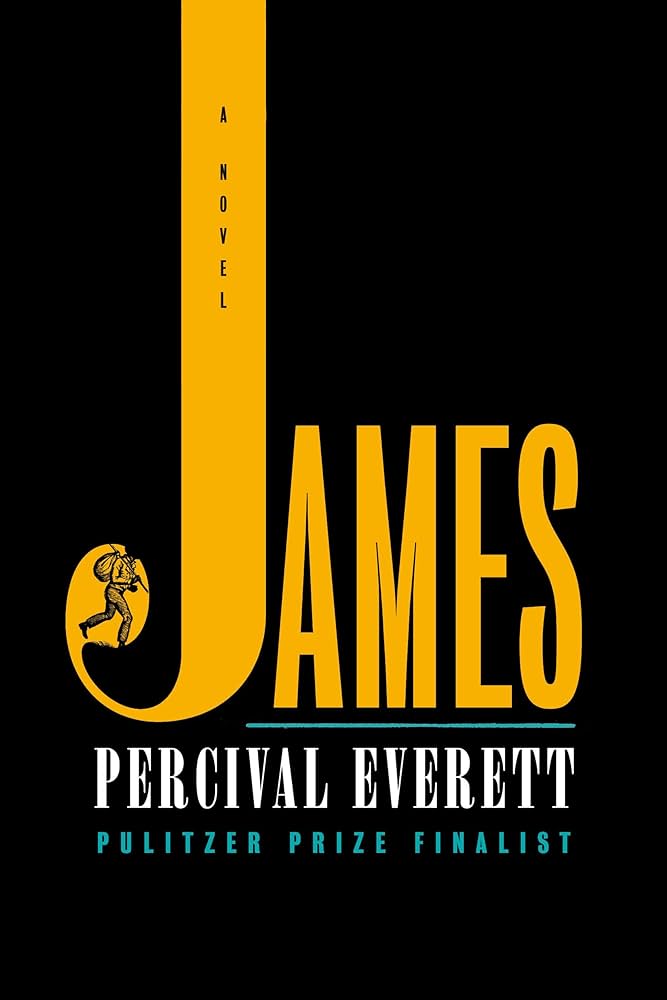
When I first heard about Percival Everett’s James, I thought rewriting Mark Twain’s Huckleberry Finn from the slave’s perspective was an inventive idea. When I finished reading the book, I thought exploring the interior life of and giving voice to the slave, Jim, was genius.
Evidently, I was not alone, as James won the National Book Award for 2024, and was selected by both The Washington Post and The New York Times Book Review as one of the best books of 2024.
It’s not only the idea of “translating” Huckleberry Finn that’s so incredible to me. It’s the rare and raw telling of what life was like for enslaved people just a couple of decades before the 20th century. Like many others, to more fully appreciate James, I felt compelled to reread Huckleberry Finn.
What struck me most intensely in Twain’s telling of the storywere the ordeals Jim had to suffer for the amusement of Huck Finn and Tom Sawyer. The boys were not being purposely malicious toward Jim. They—Tom Sawyer in particular—were having an adventure at Jim’s expense, seemingly ignorant of the physical hardship their plans required and apparently oblivious to Jim’s urgent need to rescue his family.
In contrast to Huckleberry Finn, in James, Huck and Jim were friends helping one another. Their trials were shared. Often it was essential for them to be united in plans and purposes to be safe from discovery.The human connection between Huck and Jim is deeper than their status as slave and White boy. Both were seeking their own respective freedoms and they relied on one another for what each could bring to their endeavor.
In Huckleberry Finn, Jim had no agency. If he wanted help he had to acquiesce to every whim of the boys. However, though he appears an unwitting victim in the games the boys played and served as their human toy, he knew the ways of White folks.
In James, it’s clear that knowing the ways of White folks was the best defense against some of the hard realities of being a slave. The next best defense was knowing White folks better than White folks knew the slaves.
In James, Everett expertly describes code switching as if it were a foreign language spoken by people who understood that to be seen as intelligent or even having the desire to learn—such as opening a book or harboring a pencil—could be the difference between life and death.
James is not only genius in its approach as a novel but does what art does best in challenging those who behold it and allow themselves to consider the important questions raised. In what ways do we continue to code switch and employ survival techniques? How can we be more responsible with our own agency, acknowledge and respect the inherent agency and dignity of others, and find balance in it all? How can understanding the varying perspectives of those with whom we travel different parts of life’s journey help all of the parties involved?
The explosion of Black creativity 100 years ago—known as the “New Negro Movement” or “Harlem Renaissance”—saw Black creatives boldly demonstrating their unique artistic gifts in traditional representations as well as in angry and political forms.
Aspiration, by Aaron Douglas (1936)
Though it may not have been the impetus for this explosion of creativity, it was occurring in the midst of the greatest migration of Black people from the South to other parts of the country. Pushed by poverty, injustices inherent in sharecropping, the prevalence of Jim Crow laws, and the constant threat of inhumane violence, Black people left the only places most of them knew as home and ventured on faith and a prayer into unknown lands that were also suspect.
Having found a refuge from sanctioned violence and a way out of abject poverty, many Black people were able to allow their creativity to flourish. Though many of the most prominent and celebrated creatives had not experienced first-hand the cruelest injustices their Black brothers and sisters from the South were fleeing, proximity and knowledge of suffering and resilience, alike, served as the impetus to create and invested the artists’ creativity with meaning.
Also, in utilizing these realities as subject matter, creatives were able to elevate and reveal to the world the state of most Black Americans fleeing the South. Out of pain came genius and culture in which Black artists seemed unified in purpose, if not style, in showing what the world of Black people was and what it could be.
With the recent release of The Six Triple Eight on Netflix, it seemed appropriate to reshare this guest blog by Carmen Jordan-Cox, PhD, shedding more light on this remarkable group of women too long overlooked…
I just finished listening on Audible to April Ryan’s book, Black Women Will Save The World: An Anthem. This is a powerful and emotional reflection on the toils and unwavering leadership of Black women in a world in which our contributions are not valued and, in fact, our very selves often are devalued.
This book made me think about those women—“hidden figures” —who, over the decades, have provided the very foundation for all the successes of subsequent generations of Black families. One such group of “hidden figures” is the 6888th Central Postal Directory Battalion from World War II.
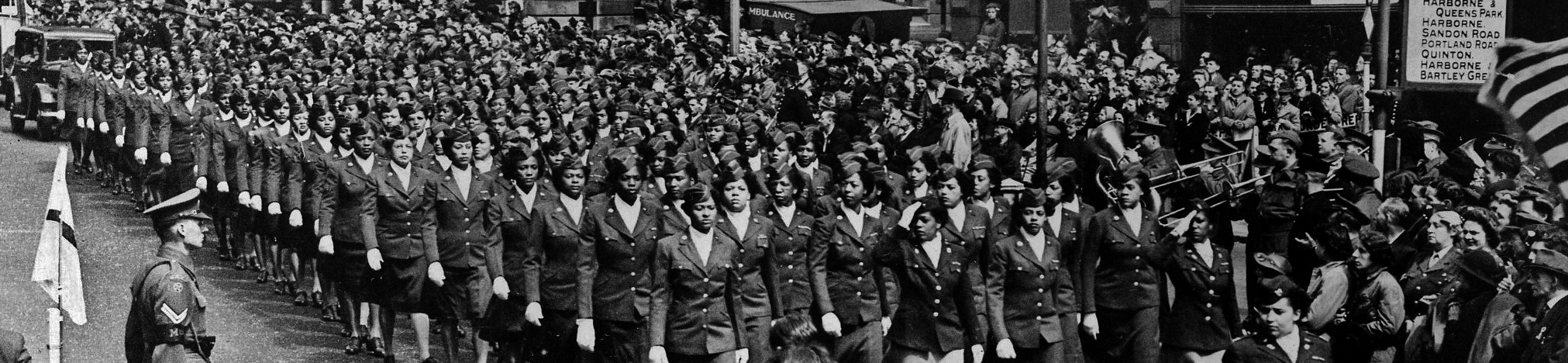
The 6888th was a unique U.S. Army unit that had the distinction of being the only all-female, African American battalion to serve in the European Theater of Operations during World War II. Made up of 855 women—824 enlisted and 31 officers—this Women’s Army Corps Battalion was commissioned in Europe between February 1945 and March 1946, and was led by 26-year-old Major Charity Adams.
The specific mission of the 6888th was to sort and clear a multi-year backlog of mail for the American Army, Navy, Air Force, the Red Cross, and uniformed civilian specialists who were stationed in Europe. This represented seven million people awaiting mail.
In February 1945, the first contingent of the 6888th embarked from Camp Shank, New York, to sail for Britain. They survived close encounters with Nazi U-boats and arrived in Glasgow, Scotland, where a German V-1 rocket exploded near the dock. The second contingent of 6888th soldiers docked in March 1945 in Gourock, Scotland.
Upon arrival by train in Birmingham, England, the Battalion confronted warehouses stacked to the ceiling with letters and packages. They endured inhumane working conditions, including dark, unheated, rat-infested aircraft hangars with broken windows and air raids. Despite these conditions, the Battalion created a new mail tracking system, worked 3 separate 8-hour shifts, 7 days a week to process an average of 65,000 parcels per shift (which is 195,000 daily), and cleared the 6-month backlog of mail in 3 months.
After resolving the immense mail backlog in Birmingham, the 6888th Battalion sailed to France for their next assignment in Rouen. They encountered undelivered mail dating back two to three years, which the Battalion again successfully processed and cleared in just three months.
Upon concluding their final assignment in Paris, the last of the Battalion returned to the United States by ship and was disbanded in March 1946 at Fort Dix, New Jersey. There were no parades, public appreciation, or official recognition of their accomplishments.
Adhering to the motto, “No mail, low morale,” the Battalion provided essential support to the U.S. military in the European Theater of Operations by linking service members to their loved ones back home. The 6888th achieved unprecedented success and efficiency in solving the military’s postal problems. The Battalion was the largest contingent of African American women to ever serve overseas, dispelling stereotypes and representing a change in racial and gender roles in the military.
It was not until nearly 80 years later that the 6888th received the well-deserved recognition for their service to the United States. In March 2022, the Battalion became the only women’s military unit to be awarded the Congressional Gold Medal, which was first awarded to General George Washington in 1776.
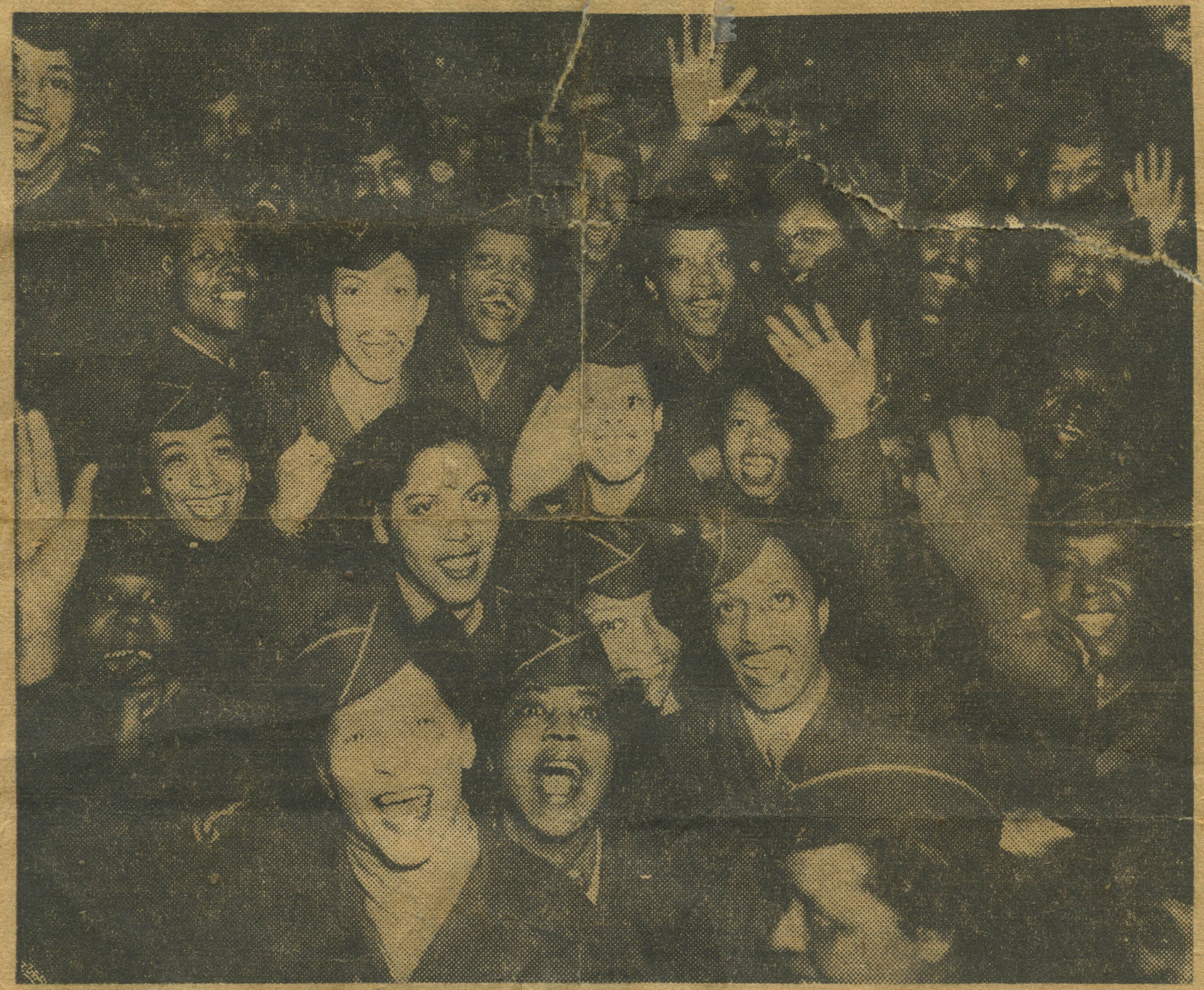
Iconic photo from when the last of the Women’s Army Corps (WAC) returned home from France. Annie Knight (Jordan) is the woman with the big smile in the top left corner.
The 6888th has a very special significance for me. My mother, Private First Class Annie Knight (Jordan), was one of those brave Battalion soldiers. As kids, my siblings and I always knew that she was in the Women’s Army Corps (something about which she was extremely proud). She mentioned to us that she did Morse code. We just thought of that as being like another language of sorts. It was not until Fall 2022 that we understood that her enlistment classification was not military postal worker. In fact, mom was in a special category called “Cryptographic Code Compiler.” Cryptographers, also known as code breakers, were secretly trained to crack code that provided intelligence information for the Army. Very little is known of the Black women who served in this capacity.
As I learned more about the 6888th, I began to think about how many ”hidden figures” there are and wonder how we might ensure that their stories are shared and their legacies known. I asked questions like, “What inspired these 855 African American women to enlist and pursue the 6888th?” “What gave them the internal fortitude to take on unknown ventures in a dangerous foreign land?” “What made them so different?” and “How did that very difference change the course of their lives post-military service and influence their legacies?”
So, in 2022, I became a first-time podcaster: NextUs818 Podcast is a reflective platform for connecting past successes with future progress in the African American community. There are many African American heroes—some known and many unsung men and women—who helped build this country. Some were the first or only in their fields of endeavor, like the 6888th. Yet little is known about how their unique journeys influenced the trajectory of their familial legacies…such as their children, grandchildren, nieces, nephews. The NextUs818 Podcast introduces the multi-generational descendants of these heroes. On the first and third Wednesdays of each month, I interview descendants of an African American hero and explore family lore, traditions, and values, and how the descendant’s journey was directly impacted.
The inaugural season of the NextUS818 Podcast features the descendants of the 6888th Central Postal Directory Battalion. [Four] themes have emerged to help me better understand what inspired the 6888th soldiers and how their service has influenced subsequent generations: patriotism, fearlessness, adventurousness, and unwavering commitment to lifelong learning.
Patriotism: Despite the rampant racial and gender discrimination of early 1940s America, these women were exceptionally patriotic. With the country at war, they felt that it was their DUTY to contribute to the war efforts against the Hitler regime. They eagerly embraced this chance to serve.
Fearlessness: The notion of a young African American woman going into war zones would be darn right scary, even today. Yet these brave women exhibited a remarkable degree of fearlessness.
Adventurousness: Not only did these women demonstrate fearlessness, but they were excited to explore the unknown. As kids, mom always spoke about her adventures, especially once the Battalion moved on to France. In all the stories I heard about the women, they saw serving in the Army as a way of giving them broad exposure and opening post-military opportunities otherwise unavailable to them.
Commitment to lifelong learning: Many of the women went on to attend college after their military service, some using the G.I. Bill when the opportunity was available. (See How the GI Bill’s Promise Was Denied to a Million Black WWII Veterans.) Their unwavering commitment to education deeply influenced their children and grandchildren.
In the NextUs818 Podcast, I enjoy hearing the stories of the soldiers’ civilian lives after World War II. The women of the 6888th were college graduates, teachers, nurses, college deans, and entrepreneurs. As important, they influenced the trajectory of their children and grandchildren who, among other things, are PhDs, physicians, engineers, lawyers, educators, professional musicians, and financial and advertising executives. All of the descendants with whom I have spoken emphasize that their successes are directly attributable to the foundation laid by the women of the 6888th. From them, they learned how to be focused, tenacious, and how to persevere under adverse circumstances. They learned how to survive and thrive. So when we are tempted to live in the moment and think we got here solely on our merit, we must never forget those shoulders on which we stand!
Five final notes:
Fort Lee Redesignation: The U.S. Department of Defense has made a commitment to rename military bases named after individuals associated with the Confederacy and other dark periods in American history. On April 27, 2023, Fort Robert E. Lee [was] renamed “Fort Gregg–Adams” in honor of two trailblazing African American officers: Retired Lt. General Arthur Gregg and the late Lt. Col. Charity Adams (commander of the 6888th Battalion).
6888th Legacy Tour: A group of 6888th descendants and advocates will return to Scotland, England, and France, walking on the grounds where the brave soldiers made history as part of an upcoming 6888th Legacy Tour [in October 2025].
Tyler Perry Studios and Netflix [released their] movie about the 6888th [on December 6, 2024].
Carmen Jordan-Cox, PhD, is a retired university vice president and judge/magistrate. Currently, she is producer and host of NextUs818 Podcast and a freelance curator of stories about descendants of World War II soldiers.


 Gwen Dungy