Author Archives: gwendungy

The Genius of Jordan Peele and NOPE

ominous looking cloud from movie nope

I’ve seen the Jordan Peele film NOPE three times. Each successive time, I discover something that I had not seen before. However, with all the possibilities for symbolism in the film, what stands out for me each time I’ve seen it is Peele’s use of a cloud as a focal point.  

I have become fixated on the idea that the cloud symbolizes our fears. We think we’ll be sheltered from harm if we just don’t look at them straight on. We reason that if we just keep our heads down and pretend that we don’t see the thing that scares us, we might be saved.  

Ultimately, one realizes that if you don’t look the thing that scares you in the eye, not only you, but those you love, will be destroyed.

No voice came from the cloud in NOPE as in the story of Jesus’ transfiguration, but some similarities and another difference struck me:

 [The disciples] saw Jesus’ glory and the two men standing with him. As Moses and Elijah were starting to leave…a cloud overshadowed them, and terror gripped them as the cloud covered them….When the voice [from the cloud] finished, Jesus was there alone. They didn’t tell anyone at the time what they had seen (Luke 9:32b-36, NLT, emphasis added).

While further reflecting on the film and Peele’s genius within this context, I found it particularly interesting that, while Jesus’ disciples “didn’t tell anyone.” By contrast, the characters in the film all seemed to want to get “the Oprah shot” in order to tell the world what they had seen for the profit they may receive.

Of the three main characters in the movie who were terrorized by the cloud, it was the brother, OJ, who was chosen to make the ultimate sacrifice. Emerald, the sister, was gifted with the Oprah shot. The guy from the camera store’s life was saved only by a fluke of luck.

Yet in the end, each one was alone.

The enduring soul of Black music

My background music for cleaning, dressing, cooking, grooving, exercising, and dancing is 70’s Disco/Funk and R&B. This music makes me feel alive! It makes me smile. It keeps me young. When I’m moving to the beat of this music, I feel free in every way.

These thoughts came to me while I was watching Episode 3 of The 1619 Project titled, “The Birth of American Music.” Black people interviewed for this episode used the word “freedom” in describing the effect of Black music on them. Artists talked about how Black music continues to be created and evolved by sampling and building on the styles and sounds of historic Black music.

During the episode on music in America, I learned why Disco music became less popular and nearly faded from the airways. The story, as revealed in this documentary, of the demise of disco music is a sad one that keeps being told in every phase of Black progress.

Nile Rogers saw the backlash against Disco as the fear of an integrated America. Co-founder of Chic and developer of some of the most popular music for White performers after disco was literally blown to pieces, Rogers said that at New York clubs such as Studio 54, when music such as “Everybody Dance” and “Freak Out” was played, literally everybody was on the dance floor, all getting along.

Wesley Morris, film critic and podcast host, noted that “funk and disco were revolutionary, sexy, rebellious, and politically unafraid. [Funk] was a rebellion against broken promises of the Civil Rights Era.”

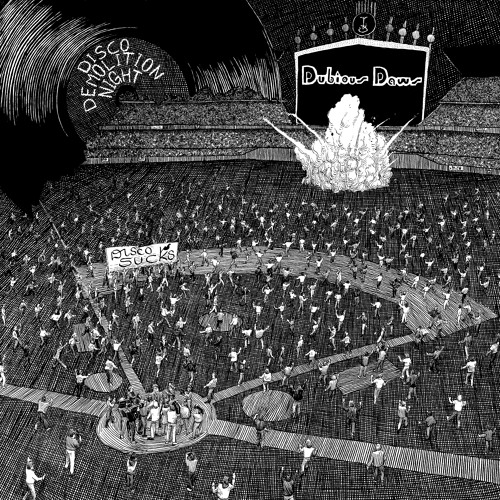
Disco Demolition Night at Comiskey Park with explosion, crowd on field, and "Disco Sucks" sign

What began as the antics of a White radio DJ—and spread to other radio DJs who didn’t want to play disco because it was not the music that they believed was real or pure—turned into “Disco Demolition Night” at Comiskey Park, home of the Chicago White Sox, on July 12, 1979. Hordes of White people brought records by Black people and gay people to the field and blew them up between the games of a scheduled double-header. The playing field was so damaged by the explosion and by the ensuing riot on the field of some 40,000–59,000 people that the White Sox were required to forfeit the second game to the Detroit Tigers. This violent act gave birth to the “Disco Sucks” movement.

In the interview with Nikole Hannah-Jones, Rogers said in reference to the riot at Comiskey Park, “It felt to us like Nazi book-burning. This is America, the home of jazz and rock, and people are now afraid even to say the word ‘disco.’”

Despite the attacks and the campaigns against Black music, according to Morris, the “soul of Black music is the soul of freedom, constantly moving, being transferred, a feeling, a spirit. You have to know it when you feel it. It’s too deep, too fast, too elusive, you can’t catch it.”

Violet

How do we gauge what we value? I’m not talking about abstract values such as freedom and independence. I’m talking about when the floods or fires come to destroy our material possessions, what do we take with us? What do we feel is our greatest loss?

During late January every year where I live now, there is a huge car auction. The auction brings back memories of cars I’ve owned over my lifetime. One might think that I would place sentimental value on my first car, the 1955 green two-toned Plymouth, or my second car, the 1956 huge two-toned blue and white Buick. No, they were pragmatic purchases with no sentimental value when I gave them up. There have been numerous cars since those first two.

Some of the cars my spouse and I owned were premium cars. In our more mature years, our purchases became more practical in regard to gas efficiency and monthly payments. While I had owned cars of my own during my single years, the cars bought after I was married were joint decisions between me and my spouse.

Except for one.

Have you ever seen something, and immediately known that it was yours? That it belonged to you, and if you didn’t possess it, you would never be the same?

We were living in a suburb of St. Louis on our way to an inexpensive restaurant because we were both too tired to make dinner after work. On this pleasant Fall evening, we were driving down the main drag of the town laughing about going to eat at what we called “the old-folks” restaurant. It was one of those restaurants that had a line like in a cafeteria and all the old people were there by 4:00 p.m. for dinner.

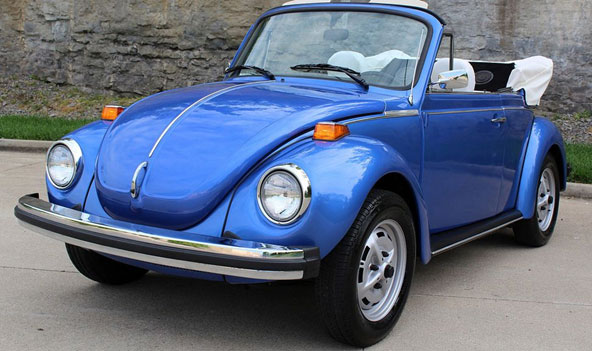
periwinkle 1978 VW converitble

On this street, there was one car dealership after another. I never paid much attention to them. On this evening, out of the corner of my eye, an electric blue flashed under the bright lights of the showroom. Calling me was a 1978 VW convertible with a periwinkle body and an off-white top. The top was down and in the back seat of the car was a huge teddy bear.

That was it! I said, “That’s my car!” Though we went on to get something to eat, I had no appetite. I was ecstatic about the car. I wanted us to hurry up and finish at the restaurant in order to get back to the dealership before someone else would see it and buy “my car.” My spouse used to tease me by saying that all my friends were crazy. Now he was saying that I, too, was crazy.

The short of it is that we traded in the stunning Grand Prix for “Violet.” This was certainly not a pragmatic decision. Though Violet was my baby, my spouse grew to love her as much as I did. The love for Violet never ebbed.

When I had to completely empty our house in Maryland in order to sell it and move West, I didn’t give material possessions much thought. Perhaps it’s because my grief was too fresh after losing my life-partner, my love, my friend. At that time, I could have walked away from the house and left everything. However, this was not a responsible option so, with the help of friends and our son, I was able to empty the house and garage to get it ready for sale. I kept very few material possessions and had no angst about what I gave up.

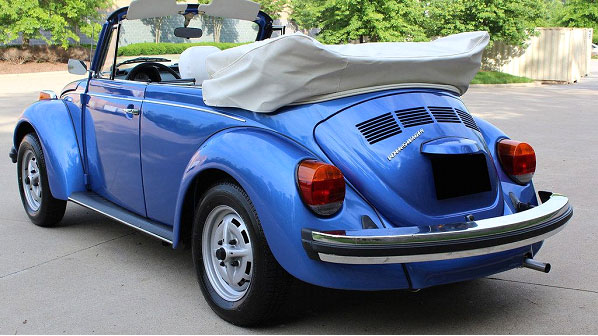
The saddest moment I had during this process was when I witnessed the truck pulling Violet up the hill away from the house and me. Standing in the driveway looking at the rear of Violet brought the only tears I shed in giving up a lifetime of possessions. Seeing the rear end of Violet moving away from me brought the feelings that I had not expressed about how the past was gone and a new reality was before me.

Our son suggested shipping Violet to my new home, where he prepared her for the annual car auction and a proper goodbye.

What a thrill it was to see Violet on a stage with lights on her as people bid on owning her. It reminded me of the first time that I saw her under the lights in the showroom of the dealership. This felt right. There was no sadness. Just joy in what she symbolized in our lives.

rear view of 1978 periwinkle convertible VW

I don’t want…

I don’t want to read another article about the Tyre Nichols and Black police officers tragedy.

I don’t want to hear another interview where experts explain why the tragedy occurred.

I don’t want to keep thinking about the tragedy.

I don’t want to wake up in the middle of the night with blog titles about the tragedy running through my mind:

We’re all victims
Race always matters
The hunters and their prey
All pawns in the game
Eyes everywhere
You can’t hide
There is no escape

Let there be light
Lord have Mercy
Change is gonna come

I don’t want to write about the tragedy.

Of Different Time Constructs and R-E-S-P-E-C-T

multiple clock faces seeming to melt or otherwise fall away

Last week I wrote about a story I heard on NPR regarding the different ways people use or react to time. While most people are not wholly one way or another in their relation to time, people do have habits regarding how they regulate their lives in relation to time.

Research suggests that there are clock-timers and event-timers. Clock-timers adhere to a schedule or clock when deciding to move from one activity to another while event-timers move when they “feel” it’s time. In last week’s blog, I shared that in view of this brief definition, I am a clock-timer.

As such, in listening to the story, I felt as if it was making a point that being on time was not a positive characteristic and that this general habit in the United States and Europe “unnecessarily weeded out people who have different talents.”

Though there was a nod to clock-timers—about our being “highly organized doers who get things done when we say we will” —being on time seemed to be problematized in several instances and contrasted negatively with being habitually late.

For example, a comment was made that those of us who are on time view this characteristic to be “clearly and in every way superior.” While I’ve not thought this, I do like to think that I have some characteristic that might be seen as positive while not necessarily superior, thank you very much.

Having a habit of being where I say I will be at a certain time I do not believe causes me to have, as indicated in the story, “a short-sighted view of history and a narrow view of world cultures.” I was also particularly interested in what was meant by one’s time orientation shaping “the way you think about the world and the way you make decisions.”

The conclusion of a couple of researchers quoted was that if one is a clock-timer “you’re basically surrendering control of your life to an external mechanism.” And event-timers “feel some control over the flow of their days, even if they can’t control everything that happens to them.”

On the contrary, I feel more in control of my life when I use the clock to regulate how I spend precious time. By using the clock, I accomplish what I plan to accomplish during a particular time period. To say that event-timers feel some control of the flow of their days seems counterintuitive: How can you have control over the flow when you have no plan on where you’re going and when you’ll get there?

Event-timers are described as being “more attuned to their emotions.” We clock-timers are said to be “more likely to compartmentalize tasks and distance [ourselves] emotionally from situations.” In my case, I wish I could distance more emotionally, especially when an event-timer is so late that the planned activity must be rescheduled or cancelled—often with no excuse given for being late. After all, more than one person’s feelings are involved with this meeting. And I am most definitely ‘in my feelings’ when I say that it feels like the event-timer’s feelings always seem to matter more.

Having gotten that out, rest assured that I’m smiling as I write these comments because the gist of the report is for all of us to have flexibility in accommodating people in our lives who have a different construct of time than we do. As I reflect on when I’ve been annoyed waiting or disappointed with the performance of an event-timer, it has depended on whether or not the other person and I have a trusting and amiable relationship. If there is distrust or friction between us, the difference in time-orientation causes negative feelings in me that go deeper than annoyance. It finds a place within me that smells like disrespect.

Clock-timer or Event-timer: Which Are You?

After several days of rain—unusual for Arizona—the sun was shining, and I felt great as I listened to All Things Considered on NPR. The reporter, Pien Huang, began the story “In Praise of Being Late” by asking rhetorical questions such as, “Are you like me, chronically late?” “Have you been told by your friends and family that you’re being disrespectful and not valuing their time?”

Having arrived at my destination, I was opening the car door when Huang said, “Maybe it’s partly their problem.” Hearing this, I closed the door and sat in the car to hear the rest of the story.

alarm clock in field of grass with dandelion

Huang quoted a number of researchers who supported the idea that some people are “clock-timers” and some are “event-timers” to a lesser or greater extent. According to this report, clock-timers use external time cues such as a schedule or clock and event-timers move when they “feel” it’s time.

For as long as I can remember, I’ve been criticized by friends and colleagues for being on time. I don’t know where the habit of being punctual came from, but I’m grateful for having such a characteristic. Because I have to struggle to be on time, I admit that I am often annoyed when I’m left waiting.

Having engagements and meetings with event-timers before cell phones was a real problem for me because I would usually worry that something bad happened to the person. I’d also vacillate between waiting another 15 minutes or abandoning the meeting. Now that there are cell phones, the event-timers can give notice of when they expect to arrive.

One research conclusion referenced is that your time orientation “shapes the way you think about the world and the way you make decisions.”

In my next blog, I will share some of the differences or contrasts that are purported to be related to whether you prefer to be on time according to the clock/schedule or whether you show up according to how you feel.

Joy (muted)

I love celebrating the back-to-back winter holidays! The celebrations make my cup of joy run over! I’m so happy and thankful for family, friends, life! Opening my eyes wide to take in the beauty of the many decorations, especially the lights everywhere on everything, is joy in all its splendor!

With my heart full of joy, I was stopped at a traffic signal. On the side of the street was a woman carrying a cardboard sign that read, “Please, we have no money for food.” On the ground behind her was a man half sitting and half lying down. A child about the size of a three-year-old was face down sprawled across the man’s lap.

My eyes welled up, my nose burned, my chest felt heavy, and I said out loud, “Have mercy.” Helpless to do something for this particular family, my joy is muted.

I was doing my exercise routine and the blood was warming me up. I felt the sheer joy of being alive. Then through my earphones I heard news about more civilian deaths in Ukraine, many needless deaths in Haiti due to the country’s implosion, increasing numbers of deaths worldwide because of a resurgence of COVID, and I said out loud, “Have mercy.” Helpless to do something to make it better, my joy is muted.

As I continued my exercise, I received a text from a friend telling me that Brittney Griner was coming home. It was just a few days before that I had told my friend that I was praying for Griner’s return. I was elated by the news that she was being released. Later I learned that Paul Whelan who has been detained since 2018 was not released. Helpless to do anything about it, my joy is muted.

Although it isn’t easy when joy intersects with the unfairness of life, I will continue to look for occasions to celebrate and feel joy even if it might be muted.

I wish you unmitigated joy, peace, prosperity, and love.

For the next couple of weeks, I will be busy seeking joy and will be taking a break from writing my blog.

A Trend in the Right Direction

Remember when everybody smoked cigarettes? 

My retrospective about smoking is informed by growing up in a family of smokers. It seemed that the folks who were chewing tobacco and dipping snuff in the 1940s switched to cigarettes as their main nicotine source in the 1950s. Smoking cigarettes was certainly more convenient and cleaner than the type of tobacco consumption that required spittoons, spit cups, and brown paper bags with the tops rolled down.

The television and magazine ads for cigarettes depicted glamor and cool for both men and women. While men historically indulged in a chew, cigar, or pipe, women were less inclined to be spitting tobacco juice, blowing smoke from cigars, or teeth-clenching a pipe, thus making women a targeted and ready market for cigarettes.

I imagine that the concept of “cool” along with the suggestion of menthol was what fired the imagination of advertisers to brand a cigarette with the name “Kool.” Perhaps one of the coolest things about smoking was that society allowed men and women to be on equal footing as they indulged their habit.

I can recall family members and friends of the family smoking all brands of cigarettes. My father smoked Lucky Strikes. My grandparents were partial to Camels. Realizing that folks were addicted and loyal to their own brand of cigarettes, my mother opted to switch brands often in an effort to avoid having to share hers with others.

Damages to the health of generations of people have been devastating over time. While our current times seem dark and pessimistic on so many levels around the world, I found a bit of optimism when I read an article from 2015 about the rate of smoking in the United States.

Likely because of bans on indoor smoking and effective messaging about the health perils of smoking, data showed that smoking had decreased from 45 percent of the U.S. population in 1965 to 15 percent in 2015. (Dennis Thompson reported data from the CDC in Healthy Days according to Erin Blakemore in Smart News, September 4, 2015)

In 2018,* the rate of U.S. adults aged 18 years or older who were current cigarette smokers was down to 13.7 percent, according to the Centers for Disease Control and Prevention, which is one trend in the right direction.


*most recent data available from the CDC

Let’s Talk About It…

Am I the only one who is still working on the same issues that have been concerns and sources of consternation most of my life?

As I read the journals that I have diligently kept over the years, I think it’s sad that I have not conquered the enemies, overcome the obstacles, and smashed through the roadblocks that have plagued and hindered me from being the best that I can be. I seem to be skirting around my great potential. Over the years, I’ve come close to it, and then I’ll just skitter back into the same habits that are not getting me closer to my goal of being as healthy as I could possibly be.

The obstacles are all of my own making. Am I the only one who is ashamed to say out loud what the problem is? I confess that I’m a glutton about food that I like. I admit that I’m addicted to sugar. I’ve overcome so much in my life, but these two—of my own making and through no fault of anyone else—have proved to be a tough match for me.

Given this, am I the only one who finds this time of year the most difficult? To be sure, November, December, and January are anticipated with joy, but realized with dread. The scenario of the upcoming struggle is clear to me: I will tell myself that I will be moderate and temperate in the way I eat, all the while knowing that I tell myself this every year and most of the time fail miserably.

As far back as high school, I’ve struggled with these twin demons. Back then, my best friend, Pat, and I would give up sweets for Lent. Invariably, Pat would tough it out and succeed while I would succumb to my weakness. I can’t count the times that my New Year’s resolutions about food and sweets were dashed before the end of January.

Like my father who told me that he was not addicted to alcohol because he could stop drinking whenever he wanted, I tell myself that I can stop eating too many sweets at any time. And, like my father who proved that time and time again but eventually would return to the alcohol so, too, have I proved able to not eat obvious sweets for several years. During these years, I even checked labels on everything I ate in order to avoid all sugar.

How was I able to do this for several years and other times I’m unable to go without sweets for more than a couple of days? The cessation in my addiction to sugar was prompted by my dear secretary, Linda, who was the most understanding person one could ever meet. But even these saint-like people have their limits.

One afternoon, Linda, with a serious look on her face, said, “I’d like for you to stop the flurry of what you’re doing and sit down. I need to say something to you.” I recall clearly the afternoon that we sat at the small conference table in my office.

I was apprehensive because I didn’t know what was coming. Linda said that she noticed that my behavior changed on the days that I went to the vending machine and bought a Snickers. I asked what she meant about a change in my behavior. She said, “To put it bluntly, you turn into a crazy person, moving fast, talking fast, flitting from one thing to another. You become easily annoyed. You have no patience with me or anyone else who comes into the office on those afternoons that you eat a Snickers bar.”

I was dumbstruck and didn’t know what to say. She went on, saying, “I like working with you and we have a good relationship, but if you continue to eat those Snickers resulting in a sugar high, I won’t continue working with you.” With this ultimatum from Linda, I stopped cold. No Snickers. No sugar at all. The price was too high. I didn’t want to lose her.

One would think that my overall health should be enough for me to make the change I want to make. But it hasn’t proven enough yet. Am I the only one struggling with the same issues of one’s own making year after year?

I find it easier to deal with the problem of gluttony because, at a certain point, my clothes don’t fit. Then I have no alternative but to cut back on food. I refuse to change the size of my clothes in order to accommodate a bad habit.

Sweets are a problem of a higher order. What I want is to be able to continue to eat sweets, but in moderation. Years ago, I met a woman who was in her nineties and looked fantastic! I don’t know what led to the revelation during our conversation, but she had a habit of having a dessert after every evening meal. If dessert was cookies, she would eat only one cookie. I don’t think that I even want to be that constrained, but I would like to not eat the entire box of cookies!

Am I the only one who has self-made demons that continue to plague over the decades?