Author Archives: gwendungy

Our Story, Our Song, Part 2: The Black Church in Chicago

(read pt. 1: Our Story, Our Song)

After living in Memphis with my Daddy, his wife, and my baby brother for several years, my Daddy sent me back to Chicago at the age of 12 to be with my mother and her family.

In Memphis, the two Black churches I knew were large, elegant, traditional religious structures in which members could feel a sense of pride. The first church I experienced in Chicago was a “storefront church” on the West Side of Chicago. It was on Fulton street surrounded by manufacturing industries and crisscrossed by “L” trains.

On my first visit to this storefront church, I thought it was not a real church because of its name and how it looked. There was a large showcase window to the right of the entrance with the name of the church painted on it. It read “West End Baptist Church.”

I soon came to realize that what West End Baptist Church lacked in traditional religious ambiance, it made up for in the religious fervor and dedication of its small and loyal congregation. Because of the loyalty of members such as my family who scraped together money, the congregation was able to rent a space shortly after my arrival in Chicago in a modest “real church” structure a few blocks away on the same street.

To say that my family was very involved in the church is an understatement.  My grandfather was on the Deacon Board and the Usher Board; my grandmother was in the choir and on the Mother Board; my mother was in the choir and the “poet laureate;” and I was in the choir. On Saturdays, my grandfather and I cleaned the church.

Some of the most exciting times at church were the Sunday afternoons when another church would visit. The choir, minister, and some of the members would represent their church. It was really fun when more than one church visited because it was like the battle of the choirs as each choir would have an opportunity to sing its best songs before the minister began the sermon. While I claim not to have any artistic talent now, I was quite proud of the banners I made to welcome visiting churches. Our dining room and car never seemed to be free of the glitter I used for my creations.  

On one occasion when West End Baptist Church was hosting visiting churches, the person who usually gave the formal welcome to visiting churches was not available. Since my mother was the resident poet who wrote poems for every special occasion, reciting them from memory most of the time, the thinking was that I, her daughter, should be able to give the “Welcome Address,” as it was called on the program. Apparently, the welcome I gave met expectations and, from that day forward, I was the most frequent designee to welcome visiting churches.

This storefront church challenged children in many ways. Church members were the encouraging audience for whatever any child wanted to try. The members praised my tacky welcome banners and responded to my welcome addresses as if they were something special. They gave me the courage to keep doing what I didn’t believe I could do. And, as challenges became successful efforts, my faith in myself and something bigger than myself continued to grow.
Our Story, Our Song

I recently watched “The Black Church: This Is Our Story, This Is Our Song,” a PBS documentary that creator and narrator Professor Henry Louis Gates, Jr., describes as a message of “race and resilience, struggle and redemption, hope and healing.” 

Indeed, my Black churches revealed me to myself. They helped me to see who I was in relation to others. They showed me models of women I could strive to emulate. They challenged me and gave me the opportunity to try. They gave me the concept of faith as an enduring value.

The first church I remember is Mount Gilliam Missionary Baptist Church in the Orange Mound community of Memphis, TN. My mother and her parents loved this church. It was the first church they joined after leaving the Mississippi Delta. To see how they dressed and the sophisticated manner in which they carried themselves when they attended this church, one would not believe that it had been only five or so years since they had been sharecroppers.

In addition to Sunday services and other religious programs and meetings, the church was also the meeting place for charitable fraternities such as the Masons of which my grandfather was a proud member. My grandmother and mother were members of the women’s counterpart to the Masons, The Eastern Star, to which they were dedicated and seemed to be always involved in raising money for one cause or another.

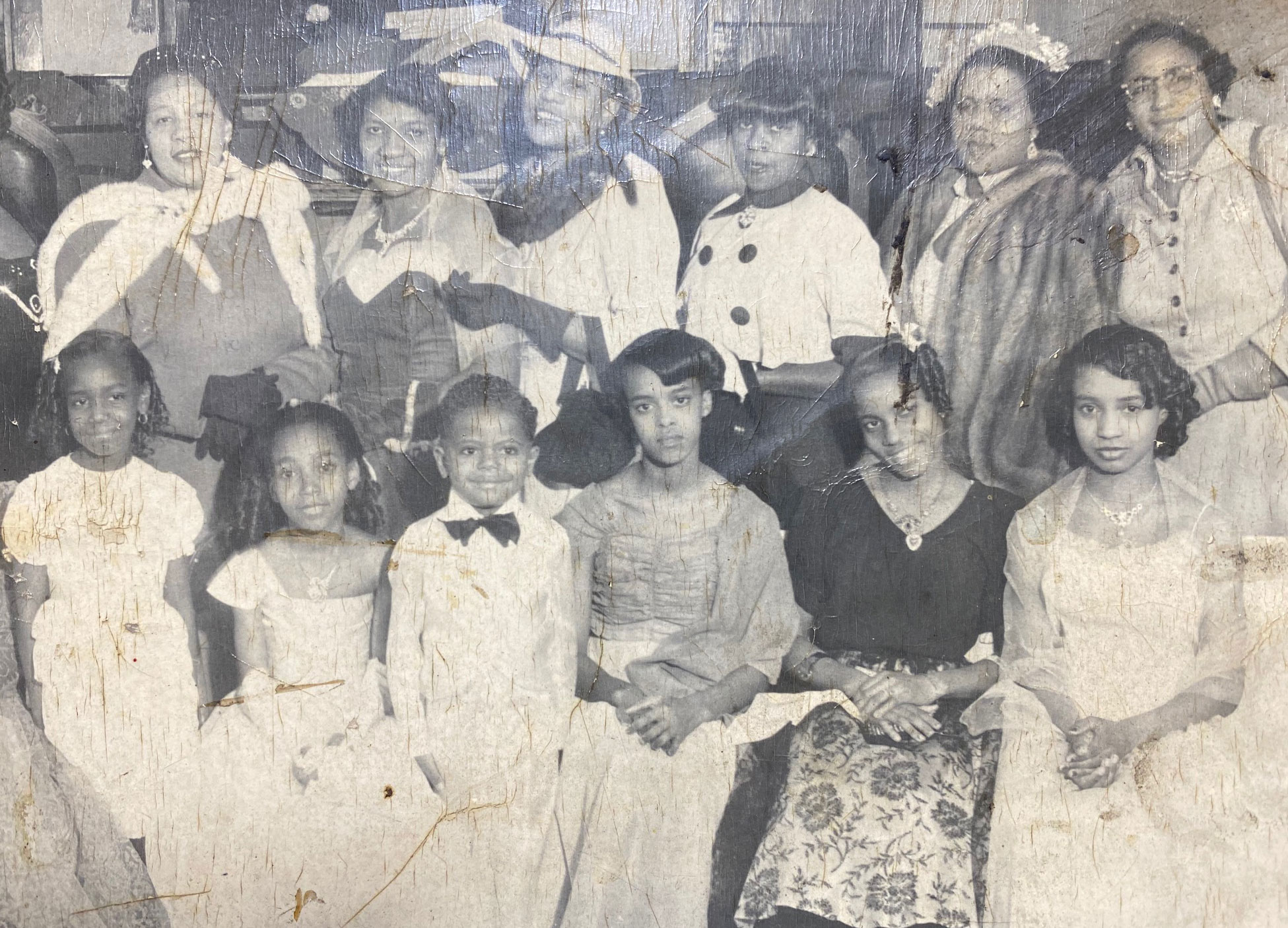
The “Royal Court”

One of these fundraisers was a pageant where a little girl was crowned princess and a little boy prince depending on how much money their sponsors raised. My most vivid memory of Mount Gilliam Missionary Baptist Church is the night of the pageant when I was six years old. I remember being sleepy and my folks kept me awake so I could be in the pictures that would be taken that night. Apparently, my folks had not raised enough money for me to be the princess, but I was part of the royal court standing next to the princess and prince. Being in the royal court and not the princess may have been the first experience that made an imprint about who I was in relation to others.

The other Black church in the Orange Mound community of Memphis I became familiar with was Mount Pisgah Church, where Miss Bailey attended. Miss Bailey had a standing taxi appointment for my Daddy to pick her up early in the morning to take her to work. I think she was a nurse. I could tell that my Daddy respected her a lot, and he asked her if I could go to church with her on some Sundays when he picked her up to take her to church.

Miss Bailey was a kind lady who had manners, dressed nicely, carried herself in what people called a “dignified manner,” and seemed to have the respect of all who knew her. I felt good standing next to her in church with hymn book in hand singing “Have Thine Own Way Lord,” “Blessed Assurance,” “The Old Rugged Cross,” and my favorite song, “I Come to the Garden Alone.” Singing these songs and being in the presence of Miss Bailey, though I was only nine years old, I could feel the love of God, and I knew that Miss Bailey was the type of woman that I wanted to be.

The Black Church is, indeed, “our story, our song.”

(Next Week: The Black Church in Chicago)

Affirming Educational Opportunity

In 1965, I—a descendant of enslaved persons—was the first in my family to graduate from college with a four-year degree. One can see this as a significant advancement over the course of several generations and/or see with the Rev. Dr. Martin Luther King, Jr., “Why [after 100 years] We Can’t Wait” to be able to exercise our full rights and take advantage of the opportunities afforded in this “land of plenty.”

It was around the time that I graduated from a state university that the policy of Affirmative Action began to gain traction in regard to hiring in federal jobs and awarding federal contracts to minority-owned businesses. Following the federal government’s lead in mandating hiring without regard to race, colleges and universities began the practice of acting affirmatively to increase the number of Black students admitted. This proactive behavior on the part of higher education, particularly among elite colleges and universities, began trending in the late 1960s.

The backlash against Affirmative Action in college admissions was swift and endures today. After 30 years of a national controversy, the California Board of Regents voted in 1995 to no longer consider race and gender in hiring and admissions decisions. This decision was the impetus for opponents of Affirmative Action in college admissions to increase the pressure to abolish the practice across the country.

In the meantime, Black students and professors were singled out as part of the problem and became victims of White backlash. For those who have not walked in these shoes down this same path, Ron Susskind gives a stunning biographical portrait of what student life was like for some “Affirmative Action” students. He records the following conversation overheard by Cedric, a Black student on one of his first days at an Ivy League university:

Cedric, settling at a table inside [the café], orders a ginger ale and trains his ears to a table immediately to his right. Two professors, both white, are leaning in…. ‘Are we doing a service to young people to boost them above their academic level and then not offer the services they need? Asks the squat one with flying gray hair. ‘Because who really can? Who can offer that sort of enrichment? You can hardly blame the university. It would take years, and money, and a whole different educational track to bring some affirmative action students to a level where they could compete. There’s no choice but laissez-faire, sink or swim. They should be going to middle-rung universities. There’s no right, as far as I can see, to go to an Ivy League institution. If they work hard, their kids can come here. Hell, it’s what everyone else had to do.’…

It’s all Cedric can do not to respond…. He imagines telling them about his long journey, that his struggle has built in him a kind of strength—a conviction about his ability to overcome obstacles—that other kids don’t have.  But of course, that strength is hard to measure, and lately he’s become uncertain if it will be enough to get him where he needs to be….

The professors, meanwhile, have moved on to the companion controversy about hiring minority faculty members. ‘It’s a mockery,’ said the other professor, a tall distinguished-looking guy, spits, ticking off the names of a few minority professors around campus. ‘A lot of them are good teachers, sure.  But they’re unpublished, not respected, not scholars. What do they bring? Their passion, oh-so personal ‘perspective.’ Nothing special about that. Jesus, everyone’s got one of those.’…

Throughout the day, the overheard conversations at lunch echo in Cedric’s head. More than specifics, he recalls the intensity of the dialogues. At this point, affirmative action is the last thing he wants to hear or think about…. So, he got in. If he fails, he fails; if he makes it, he makes it. Why does everyone have to draw conclusions about an entire race from that, or take sides. He wanted a chance, he got one (A Hope in the Unseen: An American Odyssey from the Inner City to the Ivy League, 191-193).

Unlike our ancestors who were given a hoe and forced to chop cotton, Cedric, myself, and many other Black students and Black professors were given a ladder of opportunity through higher education. The ladder, however, was covered with grease. It was slippery, and we were on the bottom rung.

Affirmative Action, to some extent and in some places, replaced the slippery ladder with real steps upon which new-to-college Black students could begin, but there were no handrails, and the steps were narrow and winding. There was no recognition and subsequent adjustment for the fact that preparation for college was often inadequate and the psychological toll of being “the only one” was more than just distracting. This combination of obstacles knocked many aspiring Black students off the steps.

Now, after 50 years of Affirmative Action being a “thing,” it is still being challenged with the subtext that indigenous and other disenfranchised students are not deserving, don’t belong, and are receiving an unfair advantage. The upside is that during these many years, some colleges and universities have realized that students who are the first in their family to attend college need not only steps but steps with handrails for support.

Progress is slow. One step forward and two steps backward is the norm. Hopefully, it will not take another 100 years for descendants of Black enslaved persons to realize true equal opportunity, full civil rights, and nondiscrimination in admissions to colleges and universities.

The Prime Need of the Hour

Mary McLeod Bethune

In promoting the importance of education, Mary McLeod Bethune (1875-1955)—educator, activist, African American hero, and founder of Bethune-Cookman University, among many other notable accomplishments—said, “Knowledge is the prime need of the hour.”

Whether in the 19th, 20th, or 21st century, knowledge continues to be the prime need of the hour. Considering the dark hours we have seen recently, it is particularly alarming to read that “Degree-seeking enrollments in U.S. higher education have been down for 10 consecutive years” (Brandon Busteed, “21 stats for 2021 That All Higher Ed Leaders Should Know,” Forbes, Jan 4, 2021).

Notwithstanding this ominous trend, and despite the criticism about how both K-12 and higher education are failing Black students, “almost half of Black high school students reported that they were ‘very sure’ they’d go to college to pursue a bachelor’s degree. Among students in the lowest income quintile, Black high school students were the most likely to express that certainty” (Sara Weissman, “ACE Supplementary Report Paints a “Stark Picture” of Higher Education’s Racial Inequities,” Diverse Issues in Higher Education, Nov 19, 2020).

Reading about Black students who, against all odds, have a desire for pursuing higher education should be the impetus for a shift in the dominant way of thinking about low-income Black students. If a student wants to learn and makes it to a campus, it must be the duty of higher education to create the conditions for the student to achieve. Of course, we must not ignore the barriers students encounter along the way, but we can, perhaps, take a moment to be encouraged and take a break from obsessing about statistics that focus only on achievement gaps and noncompletion rates of low-income Black students.  

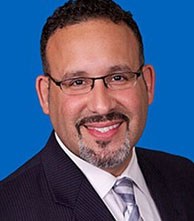
U.S. Education Secretary nominee Miguel Cardona

U.S. Education Secretary Nominee Miguel Cardona echoed these thoughts in his nomination acceptance speech, saying, “For far too long, we’ve let college become inaccessible to too many Americans for reasons that have nothing to do with their aptitude or their aspirations and everything to do with cost burdens, and, unfortunately, an internalized culture of low expectations.”

Abandoning perpetual psychological pessimism and encouraging hope at this hour are dimensions of a new reality for Black students and higher education.

Journaling: The Cure for Selective Memory?

Why is it easier to remember the hurt someone caused you than it is to remember something that they did that was generous and kind? Why is it easier to remember the good things you did for others than it is to remember the hurt you might have caused them?

There are some people I have encountered during my lifetime that bring negative feelings along with any memories I have of them. These people are prominent in my memories when I recall the times that I smiled or showed no emotion while gritting my teeth at the same time. It was at these times that I experienced shame and pride all balled up together in my chest. Shame because I didn’t respond in kind, and proud that I remained poised and focused on my purpose.

I recall the tears I shed in private as a result of the cruelty shown by these individuals. Yet, I don’t want to hold grudges. I never want to be the person who says, “I can forgive, but I can’t forget.” I truly want to forgive and forget the ugly situations and intense encounters. I never want to think of them again. Since I’m not able to completely avoid the memories of these people, perhaps I could have at least one good memory that might decrease the intensity of the lingering negative emotions.

What I’m discovering as I read journals I’ve kept over the years is that there is more to the stories of those I only recall in the dark places in my mind and heart. Although these people may be the topic of my journal writing mostly because of the negative things they did, every now and then I have found a lovely flower of kindness that they planted among the weeds that they cultivated in my garden.

The villains in my story were not awful all the time. Similarly, as I read these many journals, I learn that, contrary to what I want to believe about myself, I have sown some weeds in other people’s gardens, as well.

People ask me why I have written and kept journals. In the past, I believed that I wrote them to stand in for a best friend who could be trusted with my innermost feelings and my deepest desires. Today, I think I kept the journals for this time in my life when I can review them and relive all the good times and recall all the kindness that I’ve received from my encounters with both my villains and my heroes. 

I highly recommend keeping a journal during some period of one’s life.  

Jordan Dungy

by Gwendolyn Jordan Dungy

Jordan

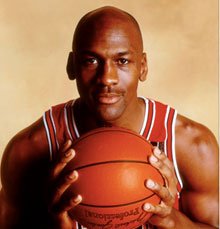
The last time I was in Chicago in the Willis Tower (previously the Sears Tower), there were murals on the wall of famous people affiliated with Chicago. The information attached to Michael Jordan’s likeness declared that MJ was the greatest basketball player of all time. When Jordan was in his heyday, Magic Johnson was quoted as saying, “There is Michael Jordan and then there’s the rest of us.” Larry Bird of the Boston Celtics said MJ was “God disguised as Michael Jordan.”

Michael Jordan

Dungy

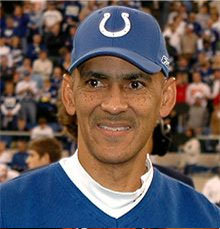
Coach Tony Dungy is famous for his record as head coach of the Tampa Bay Buccaneers and later of the Indianapolis Colts. He pulled the Buccaneers from a history of defeat to being poised to win the Super Bowl. In 2007, Dungy became the first (of still only two) African American head coach to win the Super Bowl when the Indianapolis Colts beat the Chicago Bears. It is said that Dungy is the winningest coach in franchise history.

Tony Dungy

These men—Jordan and Dungy—left indelible legacies in the world of sports and beyond. Through their astonishing achievements, they have become role models for countless people all over the world. When we think of them as role models, we may tend to think that they have achieved because of a clarity of purpose that allowed them to sacrifice all else to attain greatness in their respective endeavors.

However, no number of interviews or biographies will reveal the mystery and miracle of their uncommon competitiveness. Perhaps it is as simple and as complex as the actor Charlie Sheen was famous for saying in 2011—“WINNING.”

The Excitement and Curiosity of Having “No Plans”

Retirement is one of those events that some look forward to with eager anticipation while others feel sad about the prospect.  Then there are some—like me—who don’t experience either of these thoughts or emotions.

On February 22, 2012, about a month before I officially retired from NASPA, I wrote the following in my journal:

As I get nearer to the final days at NASPA, I feel no sadness. I feel satisfaction and pray that all continues to prosper with the organization.

On March 1, 2012, I wrote:

I don’t think I’m going to miss my role. I just want to keep doing something that is meaningful to move our world forward. I want to add my part, fulfill my purpose, live up to my potential.

These were goals for my life. I had no plans for what I would do in retirement.  

Being without the responsibility of a job and having no reason to get up, to get dressed, and to leave the house would be a little like a free fall. I had to rely on my faith that without these routines and trappings of identity, I would still be able to maintain confidence in myself and optimism about my future.

As I dropped through the space of what could be a professional void, unexpected safety nets and lifelines afforded me a soft landing in the field of retirement after my last day as NASPA Executive Director on March 30, 2012. At the same time as I was consulting, facilitating workshops, and making speeches (see boxed list), I was working on writing projects with 2012 deadlines and organizing and filing a career’s worth of papers and notes at home.

What gave me the energy to follow through on the activities and experiences I had during the year that I “retired” was my excitement and curiosity about the experiment of having “no plans.”

Since this experiment, I’ve stopped making New Year’s resolutions and I’ve begun each year with optimism and “no plans.”

  • 4/15-16: Indiana State University
  • 4/18: Skype with master’s class, DePaul University
  • 4/25: in person with graduate class, University of Maryland, College Park
  • 5/21-29: China on behalf of NASPA
  • 6/4: Taylor University in Indiana
  • 6/19-23: Portland State University
  • 7/9: conference, Los Angeles
  • 7/28: conference, Manhattan
  • 7/30-8/3: University of Vermont
  • 8/16: University of Southern California
  • 8/30-9/1: Evergreen State University
  • 9/17-19: California State University, Fullerton
  • 9/18: Skype with graduate students, Colorado State University
  • 9/19-21: conference, Washington, DC
  • 9/30: Skype with graduate students, Oregon State University
  • 10/16-17: Berkeley College, New York City
  • 10/19: conference, Baltimore
  • 11/1-2: Wake Forest University
  • 11/18-19: conference, Hawaii