Author Archives: gwendungy

Generations

Boomers, Gen Xers, Millennials, Gen Zers. These labels have become popular ways to define generations.  Before the common use of these labels, there wasn’t much public knowledge and discussion about who was born when and what their attitudes and values might be. Other than the term “Lost Generation,” the first popular label I recall is Baby Boomers. It was coined to describe the huge increase in population following WWII and the Korean War.

In addition to the term “Baby Boomers,” perhaps the publication that popularized the naming of generations was Tom Brokaw’s 1998 book titled The Greatest Generation. As a result of this book, there was a wave of nostalgia for war heroes and respect for patriots.

Naming generations promotes the idea that people born during an approximately 20-year span of time might have attitudes, characteristics, values, and sensibilities more similar to one another than to those born 20 years before or after. Because they experienced the same impactful events and presumably contributed to the spirit of the times in which they came of age, they may have a similar way of seeing the world and weighing the consequences of major changes in their environment.

image depicting generations on a timeline, with the Silent Generation between 1930 and 1945, Boomers between 1945 and 1965, Generation X between 1965 and 1980, Millennials Generation Y between 1980 and 2000, and Generation Z after 2000.

As the naming of generations goes, I think that there is more integrity in the naming of Baby Boomers than the subsequent names given to generations. The label “Baby Boomers” is a short-hand description of the fact that there was a population surge during a particular span of time. The critical point I want to make is that the naming was based on a demographic fact that can be easily accessed.

It seems that the more recent generational names have creative hooks helping them to become sticky. These names capture the attention of those researching and writing about generations. The researchers begin with a hypothesis or an idea about what they think might be significant and distinctive about those born and coming of age during a particular time period. The name captures the interest of the public and over time enough people agree that this new generation is, indeed, different than any before.

I don’t think that there is anything wrong with the short-hand names for generational identity. What I wonder about is whether the names are not solely descriptive but are also prescriptive, and, therefore, could have an outsized influence on the way people see themselves.  

The impact of the generational naming will not be the same for all within the designated group. However, some may adapt their attitude and lifestyle to the descriptions they hear about their group. They appropriate the descriptions as guides to understand and define their sense of self rather than relying on their personal experiences, unique backgrounds, special characteristics and, most of all, their own sense of agency.

Seeing oneself through the prism of how one’s generational cohort is described may allow one to take less responsibility for internal reasoning and personal control. Those who see themselves this way may get a pass for the way they react to their environment, and the way they respond to their life’s circumstances because there is consensus that the events that occurred during their time of development have influenced their way of interacting with the world, their way of being.  

In conversations with people who are not Millennials or Gen Zers, it’s common to hear excuses for behaviors that may not have been seen as acceptable by past generations. With a metaphorical shrug, members of a particular generation are given a pass, attributing their behavior to their generation and not to the individual. Individuals are not responsible because they are influenced by events beyond their control. Rather than being held accountable, they are supported at best and pitied at worst.

As I come to the close of my thinking on this, it seems that generational labels and naming of signs in astrology have similarities. Both rely on the time of birth to ascribe characteristics or traits. Both are ostensibly descriptive but for some are prescriptive. Just as there are skeptics about astrology, I think there might need to be more skeptics about naming and describing generations, especially when the names come before some of the cohort comes of age.
The Inspirational Six, Part 3: Venerable Henriette DeLille and Servant of God Julia Greeley

Guest post by Joann Stevens
(Read previous post: Venerable Mary Lange)

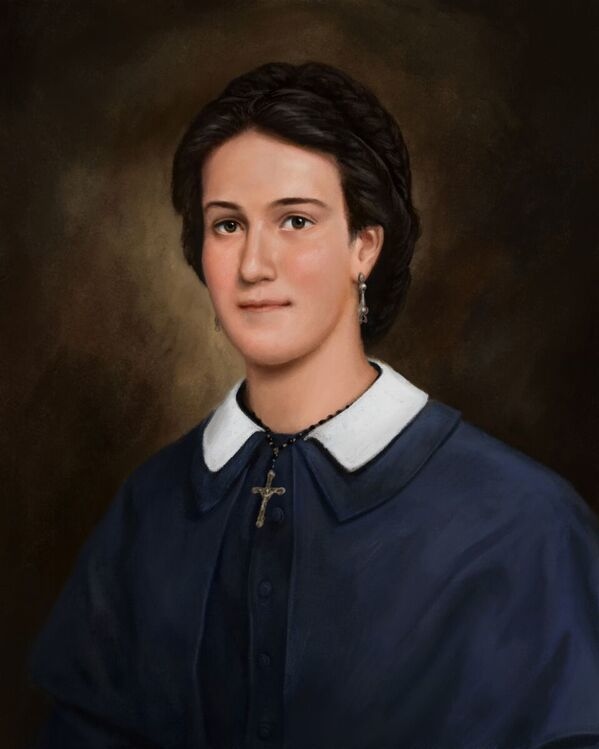
Henriette DeLille
Henriette DeLille (Image credit: National Black Catholic Congress)

Venerable Henriette DeLille (1812–1862) was portrayed by actress Vanessa Williams in The Courage to Love, a romanticized, historical drama that highlighted the Quadroon Balls and system of plaçage that DeLille and generations of her ancestors were born into and practiced. Accepted in North American French and Spanish slave colonies, plaçage allowed wealthy White men to live double lives—one as a committed family man with a White wife and children on a plantation, the other in a household with a mixed-race concubine and children. These unions could last for a year, decades, or until death. 

DeLille was a fourth-generation free woman, born and raised under plaçage. Despite a complexion so light that she could have easily passed for White, she never opted for this as the rest of her family did. She entered into plaçage for a short time and bore two children who both died in infancy. By her early 20s, DeLille’s deepening faith and encounters with God compelled her to reject plaçage and encourage other mixed-race women to do likewise. 

DeLille wrote in French on the flyleaf of a book centered on the Eucharist, “I believe in God. I hope in God. I love. I want to live and die for God.” Her work on behalf of God is evident in the religious order she founded, Sisters of the Holy Family, and the historical New Orleans Tour the order created to educate people about the life and works of their foundress and order. (The Sisters of the Holy Family are the second-oldest surviving congregation of African American religious, with the oldest being the Oblate Sisters of Providence founded by the Venerable Mary Lange.)

Using funds from the sale of property, her inheritance, and loans, DeLille created programs to teach Black children the Bible and academics, founded the first Catholic home for the elderly in the United States, and fed and cared for the poor.

In 1881, the order purchased the Orleans Theater property that includes the former Orleans Ballroom, the site of the Quadroon Balls, converting it into a school and convent, with the ballroom itself serving as the chapel for the sisters. 


Sources:


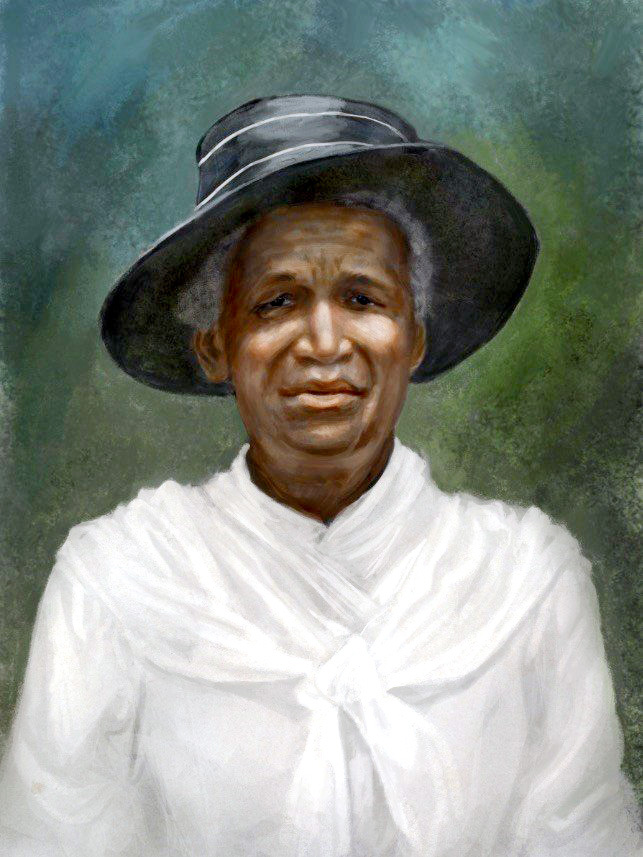
Julia Greeley
Julia Greeley (Image credit: National Black Catholic Congress)

Julia Greeley (c. 1840–1918) was born into slavery in Hannibal, Missouri, sometime between 1833 and 1848. She came to Colorado to care for the family of first territorial governor, William Gilpin, and it was here that she became known as Denver’s Angel of Mercy and Missionary of the Sacred Heart. Greeley’s life and legacy align with that of the unnamed woman that Jesus recognized and honored in the story of the widow’s mite (Luke 21:1-4) for anonymously giving all she had to serve God and others.

A formerly enslaved person blinded in one eye by an enslaver, Greeley arrived in Denver around 1879 or 1880 and was noted for freely giving of her faith, resources, prayer, and strength to all—regardless of race, ethnicity, or faith—until her death in 1918. When her meager resources as a domestic worker failed to provide, she begged for the needy, pulling a little red wagon containing food, toys, clothes, or even a mattress for someone in need. She never sought recognition for her acts of mercy and, sensitive to the possible negative consequences that might come to needy White people receiving assistance from a poor Black woman, she gave anonymously, leaving gifts at night.

A convert to Catholicism, Greeley was baptized at Sacred Heart Church on June 26, 1880. Neither poverty nor past trauma deterred her from evangelizing. Her devotion to the Sacred Heart (e.g., a Catholic devotion to Jesus’s love and compassion for all humanity) led her to attend daily mass at her parish Sacred Heart Church, pray for the Denver community, give alms to the poor, care for scores of children, sing in a small choir at Fort Logan, and specially minister to Denver’s fire fighters.

The Capuchin Franciscans of Denver recognized Greeley’s good works by accepting her into their fraternity as a secular Franciscan in 1901. She died in 1918 on the day of the Feast of the Sacred Heart (June 7) and was buried in the habit of the Third Order of Franciscans as Sr. Elizabeth of the Secular Franciscans. A Third Order is a group of unordained people who live by the ideals of a religious order. Jesuit Fr. Eugene Murphy said of Greeley, “Here was the secret of her influence. She had taken Christ literally, as had the Poverello of Assisi. Like him, she had given away all to the poor and had gone about making melody in her heart unto the Lord.”

At her funeral service, it took five hours for people from all walks of life to view her body and pay their respects. Denver organizations like The Julia Greeley Home for needy women continue to carry her name and mission. 


Sources:


Joann Stevens is a freelance writer and program specialist promoting unsung and unknown African American jazz, faith, and cultural innovators who have influenced democracy and racial justice for the Common Good.

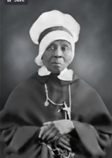
The Inspirational Six, Part 2: Venerable Mary Lange

Guest post by Joann Stevens
(View Part 1 of the series: Venerable Pierre Toussaint)

What is it about the lives of overcomers that inspire awe, even action?  

Learning about the four African American women among the six on the road to sainthood in the Catholic Church, I was in awe of their resistance to personal trials or societal turmoil dampening their faith, or defeating or defining their work to build a multicultural society and Church of love and hope. The women will be presented in chronological order over the coming weeks, concluding with Sr. Thea Bowman, whose evangelism I was privileged to witness at a revival service in Washington, D.C.

Four Women, composed by jazz pianist and singer Nina Simone, narrates trials of colorism and enslavement faced by women.  The stories of the four women on the road to sainthood show us the power of  love and hope as we strive to live and serve Christ in what the U.S. Conference of Catholic Bishops called “…a genuine conversion of heart, a conversion that will compel change and the reform of our institutions and society,” in its 2018 pastoral letter, “Open Wide Our Hearts.”


Venerable Mary Lange

Venerable Mary Lange (1784–1882) immigrated to the United States in the midst of American slavery to achieve the seemingly impossible. In 1818, she and a friend opened a home school to teach Black children in Baltimore. At the time, the city was home to some 1,500 French-speaking Haitian refugees—500 of them Black—fleeing social conflicts in Haiti and France. As a border state, Maryland neither prohibited nor encouraged educating Black children.

The women suffered many indignities, ranging from public insult to Catholic parishes refusing to let them receive communion as they pursued their mission. Lange took in washing to support Saint Frances Academy, which officially became the first Catholic school for Black children in the United States in 1828. The following year, the Oblate Sisters of Providence, the religious order Lange founded, became “the first successful Roman Catholic sisterhood in the world established by women of African descent,” according to Oblate history.  Nearly 200 years later, Mother Lange’s educational and spiritual legacy continues in Baltimore.

Born Elizabeth C. Lange in either Santiago de Cuba or Saint-Domingue, Lange was a French-speaking Creole woman whose plantation owner grandfather, Mardoche Lange, sent his family to Cuba to escape the Haitian Revolution. She once described herself as “French to my soul,” and allegedly immigrated to the United States in resistance to an 1808 law requiring non-Spanish residents of Cuba to make a loyalty oath to the Spanish king.

Most importantly, Lange rejected justifications for slavery made by some Catholic priests and church leaders who sought to appease wealthy White donors.  She knew slavery was wrong and believed keys to Black liberation included spiritual and academic education.  Seeking a White man in America who shared her beliefs, Lange found Father James Hector Nicholas Joubert, a Sulpician order priest and former French soldier and expat from Haiti who became an advocate and spiritual advisor until his death. 

Mother Lange taught at Saint Frances Academy, served as housekeeper to the Sulpician Seminary, extended education to Black adults before and after the Civil War, and managed to overcome social violence and poverty right up until her death. Help always seemed to arrive providentially in the nick of time.

On January 30, during Catholic Schools Week, the Archdiocese of Baltimore will hold a Mass to celebrate Lange’s elevation to Venerable.


(Sources: Elizabeth Clovis Lange, c 1784-1882, Black Religious Leader, by Elaine G. Breslaw and Joan A. Andersen, in Notable Maryland Women; Maryland’s Women Hall of Fame , Maryland State Archives). 


Joann Stevens is a freelance writer and program specialist promoting unsung and unknown African American jazz, faith, and cultural innovators who have influenced democracy and racial justice for the Common Good.

(Read next post: Venerable Henriette DeLille and Servant of God Julia Greeley)

Where Do We Go From Here?

Guest post by Kaaryn McCall

As we start a new year, particularly this new year, it is perhaps good to ask, “Where do we go from here?” The Rev. Dr. Martin Luther King, Jr., began bringing his 1967 Southern Christian Leadership Conference address by that title to a close with the following words we would do well to heed today:

“The road ahead will not always be smooth. There will still be rocky places of frustration and meandering points of bewilderment. There will be inevitable setbacks here and there. And there will be those moments when the buoyancy of hope will be transformed into the fatigue of despair…. But difficult and painful as it is, we must walk on in the days ahead with an audacious faith in the future.”

King’s book of that same title that year was aptly subtitled with the question “Chaos or Community?” This is a choice with which we are always faced and, as we enter 2024 that is, among other things, a presidential election year, and as we near the nation’s 250th anniversary even as some talk of the possibility of a second civil war, I, for one, choose community.

Too often, this can seem like an amorphous concept, so it’s helpful to understand the Beloved Community that was King’s ultimate aim, as reflected in remarks as early as 1956, following the Montgomery Bus Boycott: “The end is reconciliation; the end is redemption; the end is the creation of the Beloved Community.”*

From the religious perspective, King saw Beloved Community as the wholly achievable goal of realizing the kingdom of God on earth, “in which all human beings ha[ve] value in and of themselves, and [a]re subjects worthy of love.” This restored community is the ideal of creation—God’s intention for all of humanity living together in an “inescapable network of mutuality.”

Perhaps more concretely, and from a more universal perspective, this Beloved Community is one in which:

“poverty, hunger and homelessness will not be tolerated because international standards of human decency will not allow it. Racism and all forms of discrimination, bigotry and prejudice will be replaced by an all-inclusive spirit of sisterhood and brotherhood…. Love and trust will triumph over fear and hatred. Peace with justice will prevail over war and military conflict.”*

Achieving such community requires transformation on many levels. In his further remarks following the bus boycott, King noted, “It is this type of spirit and this type of love that can transform opponents into friends. It is this type of understanding goodwill that will transform the deep gloom of the old age into the exuberant gladness of the new age.*

It is important to note that King did not believe Beloved Community would be devoid of conflicts, but that these could always be resolved peacefully,* noting that “true peace is not merely the absence of tension [but] the presence of justice.”

silhouette of the Rev Dr Martin Luther King Jr with the words "BUILDING THE BELOVED COMMUNITY" and a colorful illustration with many components, including a river, trees, hearts, stars, hands, people, rainbow, and various decorative elements

So, “Where do we go from here?”

In a world increasingly divided, let us seek to build increasing levels of trust across difference.

In a world increasingly concerned with domestic and international terrorism, let us embrace the fact that “love [is the] most potent instrument available in humanity’s quest for peace and security.”

In a world increasingly complex and intertwined, let us seek to understand the “enemy-neighbor” as more than a given action on their part.

In a world where prejudices continue to manifest themselves, let us seek a true conception of self instead of “self-deception and … neurosis stemming from repressed truth.”

In a world of zero-sum games, let us demonstrate that there is no need to fear one’s own loss when advocating for justice. (As a popular meme puts it, “Equal rights for others does not mean fewer rights for you. It’s not pie.”)

In a world still plagued with brokenness, separation, suspicion, and deadly conflicts, let us find our points of commonality and shared humanity.

The choice between chaos and community remains for each of us individually and collectively. May this new year and MLK Day be about more than just platitudes. Let us answer the call to action and walk on together not in blind optimism, but an intentional hope and “audacious faith in the future.” Let us not fall into despair as a few loud voices are amplified across various media but recall how far we have come and set forth with renewed purpose to building Beloved Community.


SOURCES

† Hunt, C. Anthony. The Beloved Community Toolkit.

‡ Hunt, C. Anthony. Blessed are the Peacemakers: A Theological Analysis of the Thought of Howard Thurman and Martin Luther King, Jr. Lima, OH: Wyndham Hall Press, 2005.

* The King Center. “The King Philosophy.” thekingcenter.org/king-philosophy


Kaaryn McCall is a communications consultant who, in addition to supporting Dr. Dungy, works with nonprofit organizations across the social justice spectrum to most effectively leverage strategic communications to support their missions. Connect on LinkedIn

Attuning to Ourselves

I wasn’t feeling well and was tempted to stay in bed. By force of habit, I pushed myself to get up and get on with what I had scheduled for the morning, and that included some strenuous exercise. I completed the full hour of the exercise and was whipped at the end.

Usually, I would push myself to move immediately on to what was next on my schedule. But on this day, I took notice of the row of new comfortable-looking black leather chairs outside the space where I had been exercising. No one was sitting on the chairs, probably because—like me—no one understood why they were there and if it was alright to sit on them.  

black armchair in reclined position

I decided to sit on one of the chairs and adjust the back and footrest to my most comfortable position. I relaxed as if I were at home. People who passed looked at me curiously before rushing by to do their exercise routines. As I relaxed and watched people stress themselves with all types of exercises, I began to think about how we are unable to attune to ourselves if we’re in such a rush moving rapidly from one activity to another.  

As I became more relaxed and continued to observe, I wondered how any of us might respond to the question: What would you do today if you knew that today was your last day?

My habit at the beginning of a new calendar year has been to repeat and believe that “the best is yet to come.” I still believe this, but I might behave differently by doing more of what I think I would do if I knew it were my last day.

Unselfconscious Unfiltered Thoughts and Feelings

My trove of handwritten journals was rich with details of day-to-day happenings and interactions. The feelings I had when I wrote them were memorialized in my heart and bones. Sometimes I had to take a break from reading them because the visceral reactions were more than I wanted to re-experience.

When I wrote my journals by hand, my engaged emotions helped me see my inner self—that soft place that needed protection. I didn’t judge myself for having unpleasant emotions. As I wrote about the interactions or situations that caused these emotions, I allowed myself to feel merciful toward the “me” that only I understood.

These journals showed me that believing in myself was the kind of faith inculcated within me since I was a very small child. During my middle years, I would have been completely lost without this bedrock faith. In my journals, I recorded how my beliefs in the greater good sustained me time after time.   

It was in my handwritten journals that I thanked God for those I encountered who had a generosity of spirit and showed warmth when I needed it. It was in these handwritten journals that I was honest about my limitations and worked hard to be objective and fair in observing others and, more importantly, my responses to them. The real learning and change came from being wholly with myself in reflection and humbleness.

When I switched to keeping my journals online, apparently, I did not trust the medium with my deepest thoughts and tender feelings. For some reason I found myself not sharing my secret voice. In reading excerpts from my digital journals, it’s clear that I was not using them as a source of self-reflection. My journals became one dimensional. I recorded what can be thought of as a public record of what was happening and when.

My epiphany is that journaling is not simply the words recorded; it’s the meditation and process of writing one’s unselfconscious unfiltered thoughts and feelings.

The Generosity of Christmas Spirit

I love the tiny lights and decorated trees of Christmas. Recently, I took a journey through Charles’ and my photos, looking at the various Christmas trees we had over the years.

I remember our first tree. My mother was visiting us from Chicago. Although the tree had few decorations and was small, it was beautiful because it was our first.

As we were admiring our tree, my mother asked, “Where is the angel or star that goes on top of the tree?” Without a word, Charles left the room and came back with a photo of me. He held the photo up to the top of the tree and said, “Here is the angel that will be on the top of our tree.”

That was the moment that my mother fell in love with Charles. From that point on, every time she was with us at Christmas, she recalled the time that Charles put my picture on top of the tree.

Over the years, our trees gradually improved in scale and beauty. Many of the ornaments were made by our son, Dan. Other ornaments were ones we collected through our travels. It always took hours to decorate the trees because we had to tell the story of the ornaments every time.

As much as I love seeing the trees, the photos that give me the greatest joy are the ones in which Dan is opening a gift that he really wanted and, from the surprise and joy in his reaction, he didn’t think he was going to receive. I think most of us cherish that precious moment when we have fulfilled someone else’s wish.

My hope is that you will have your wishes fulfilled, whether material or emotional, and you will experience the warmth and amazement of knowing that you have made someone else happy through the generosity of Christmas spirit.

Illustration of Christmas tree comprised of words in shades of red and green. The trunk has the words "The Spirit of Christmas" with the tree topped with a red star and comprised of the words LOVE, FAMILY, BLESSINGS, TRADITION, GIVING, HOPE, PEACE, WONDER, JOY, MEMORIES, MAGIC, RAITH, CELEBRATION, LAUGHTER, HUGS, LIGHTS, GOOD FRIENDS, WARMTH

The Inspirational Six, Part 1: Venerable Pierre Toussaint

Guest post by Joann Stevens

In a series of posts, I’d like you to meet six Black Catholics from the 19th and 20th centuries on the road to sainthood in the global Catholic Church: Venerable Pierre Toussaint; Venerable Henriette DeLille; Venerable Augustus Tolton; Servant of God Mary Lange; Servant of God Julia Greeley; and Servant of God Thea Bowman. Ordinary people inspired by faith to serve the Common Good, they helped build and transform American Catholicism, advanced a democracy they couldn’t enjoy, and upheld Jesus’ commandment to “Love each other as I have loved you” (John 15:12).

Inspiration can be hard to find when celebrity and socioeconomic status define influence more often than character. But sainthood is an equalizer. Saints inspire people of all faiths or no faith. Saints are rarely sexy, beautiful, rich, or celebrated. They endure hardship, poverty, and social rejection. They sacrifice their bodies— sometimes literally, more often figuratively—to serve as agents of God’s righteousness and unconditional love. Saints don’t wear Chanel or Brioni but lift the spirit higher than a well-cut garment as they model essential elements of humanity: Love and Hope.

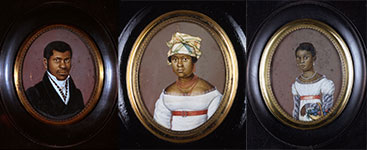
Pierre, Juliette, and Euphemia Toussaint as painted by Anthony Meucci, 1825

Venerable Pierre Toussaint (1766–1853) took his surname from the Haitian general Francois-Dominique Toussaint Louverture, a Black enslaved person turned enslaver turned slave liberator. Venerable Pierre Toussaint was trained as a house servant in his native Saint Domingue (Haiti). He was taught to read and write in French and English and had free reign of his enslavers’ library. Along with his sister Rosalie, his aunt, and two others, Toussaint arrived in New York in 1787, the property of Jacque Berard who had fled the Haitian rebellion with his family. Berard returned to Haiti to secure his property but died there of pleurisy in 1791, nearly destitute.

At the time, the United States was facing its first financial crisis. Although enslaved, hardship seemed to sharpen Toussaint’s resolve and entrepreneurialism. Apprenticed as a hairdresser, his success enabled him to support the Berard family and household, caring for Berard’s widow, Marie, until her death in 1807, after which he gained his freedom. Toussaint’s success also enabled him to purchase the freedom of his sister—whose daughter he would adopt upon Rosalie’s death—as well as the freedom of others who were enslaved. Among those was Juliette Noel, a Haitian woman Toussaint married in 1811. That same year he bought a house in Manhattan to shelter Black orphans and teach them trades.

Hairdressing was Toussaint’s profession, but his intellect, faith, and love for humanity established his character.  In addition to working more than 12 hours a day dressing hair, followed by household chores and community service to feed the hungry and nurse the sick, Toussaint was a daily communicant of St. Peter’s Church on Barclay Street, attending Mass at 6:00 a.m. He served the public another 36 years after gaining his freedom and was known to quote from the Sermon on the Mount in French. “The Beatitudes seemed to have found a way into his heart,” wrote his first biographer.

Toussaint inspired all who knew or heard of him. His clients were elite society women. Among them the wife and daughter of Alexander Hamilton. They welcomed him into their estates, sought his counsel and admired his kindness, piety, and charitable works. Many were Protestant socialites like Mary Anna Sawyer Schuyler, a close friend who called him “my Saint Pierre.” Under their patronage, Toussaint earned as much as $1,000 a client annually at a time when the average annual salary was $65.

Pierre and Juliette Toussaint spread their philanthropy widely and diversely, creating a credit bureau and employment agency to help Black people and support the resettlement of Haitian immigrants to New York; founding the First New York City Catholic School for Black children; helping raise funds for Elizabeth Seton’s Sisters of Charity to open an orphanage in New York City even though it only served White children; funding the nation’s first religious order of Black nuns, the Oblate Sisters of Providence; providing aid for retired priests and destitute travelers; and contributing to the founding and building of St. Patrick’s Church that became St. Patrick’s Cathedral.

As his health failed with age, friends pressed the elderly Toussaint to retire and enjoy his success. He responded, “I have enough for myself, but if I stop working, I have not enough for others.” His last recorded words, two days before his death, were, “God is with me.” Asked if he wanted anything, he replied, “Not on this earth.”

Pierre Toussaint died at age 87, two years after his beloved Juliette. Friends and media praised this man defined by his faith, heart, and character and not external circumstances.

An act of racism once barred Toussaint from attending the St. Patrick’s Church he helped found. In a testament to God’s grace and remembrance of Toussaint’s servanthood, Cardinal John O’Connor arranged for Toussaint’s reinterment in 1959 to a vault under the altar of St. Patrick’s Cathedral on Fifth Avenue. He is the only layperson buried among bishops and cardinals.


Sources: George Washington’s Mount Vernon, Ten Facts About the American Economy in the 18th Century; Archdiocese of New York; Archways, the online Magazine of the Archdiocese of New York; Cathecist Cafe


Joann Stevens is a freelance writer and program specialist promoting unsung and unknown African American jazz, faith, and cultural innovators who have influenced democracy and racial justice for the Common Good.