Category Archives: Identity

Unselfconscious Unfiltered Thoughts and Feelings

My trove of handwritten journals was rich with details of day-to-day happenings and interactions. The feelings I had when I wrote them were memorialized in my heart and bones. Sometimes I had to take a break from reading them because the visceral reactions were more than I wanted to re-experience.

When I wrote my journals by hand, my engaged emotions helped me see my inner self—that soft place that needed protection. I didn’t judge myself for having unpleasant emotions. As I wrote about the interactions or situations that caused these emotions, I allowed myself to feel merciful toward the “me” that only I understood.

These journals showed me that believing in myself was the kind of faith inculcated within me since I was a very small child. During my middle years, I would have been completely lost without this bedrock faith. In my journals, I recorded how my beliefs in the greater good sustained me time after time.   

It was in my handwritten journals that I thanked God for those I encountered who had a generosity of spirit and showed warmth when I needed it. It was in these handwritten journals that I was honest about my limitations and worked hard to be objective and fair in observing others and, more importantly, my responses to them. The real learning and change came from being wholly with myself in reflection and humbleness.

When I switched to keeping my journals online, apparently, I did not trust the medium with my deepest thoughts and tender feelings. For some reason I found myself not sharing my secret voice. In reading excerpts from my digital journals, it’s clear that I was not using them as a source of self-reflection. My journals became one dimensional. I recorded what can be thought of as a public record of what was happening and when.

My epiphany is that journaling is not simply the words recorded; it’s the meditation and process of writing one’s unselfconscious unfiltered thoughts and feelings.
Sharing as Connecting

Is it my imagination or are there more memoirs today than there were 20 years ago?

The last couple of books I listened to on Audible were memoirs—one about a current celebrity and one about a very rich woman from two generations ago. While we used to call books like these autobiographies, it seems that people who want to tell their story today write memoirs instead. The definitions of autobiography and memoir highlight a distinction between the two, but not enough to quibble over.

In a conversation with a friend about the two recent memoirs I listened to, I mentioned that I had planned to write an autobiography or memoir when I retired. My friend asked me why I had changed my mind. Without hesitation, I responded: “I didn’t want to hurt people who would not want the negative parts of their lives shared. I thought it would be selfish of me to sacrifice the feelings of others to tell my story.”

Why did I want to tell my story? Why do those who write about their lives feel compelled to tell their stories?

When I think about why I wanted to create a book about my life, I want to think that it’s because by sharing my story—that of being an ordinary person who exceeds expectations— others may gain some insights and be encouraged. Stories about transcending obstacles and limitations and triumphs over despair have always appealed to me because they signaled that if someone else could do the extraordinary, then I might also aspire for something more.

Truthfully, I really don’t know why I have felt the need to write about my life. Being an observer and notetaker is just who I am. I like to reflect on what happened, how I felt, and possible meanings of the events. When I read notes or remember the significant and often insignificant events in my life, I think they make a story. Sometimes they make me smile and sometimes they make me sad. These memories are the ingredients that make up my life. I hold them as precious and want to share them generously.

Holding the events of our life as precious is probably a human thing. Wanting to share them with others is perhaps more idiosyncratic. Ultimately, for me, sharing is connecting.

First-Generation High School Graduates

Maybe you attended a high school reunion recently or talked with someone who attended one. Most likely these reunions are commemorating graduations that occurred 20-50 years ago. It’s likely that the majority of those classmates attending these reunions were the first in their families to receive a high school diploma. Graduating from high school was quite an accomplishment and source of pride for these graduates’ families.

What is stunning and puzzling to me is the number of young people born in the United States who—in 2023—are the first in their family to graduate from high school.

These thoughts led me to these notes from my mother:

What Gwen’s Graduation from High School Meant to Me

Yes, her graduation meant much to me in terms of my life and the chance to make up for disappointments and lost opportunities. It meant that the naysayers and name-callers were wrong about me and my child. It meant that despite the circumstances of her conception and the mess her father and I made of our lives together after her birth, through faith, I knew that God was watching over her. His eyes were on her as he watched over the sparrows.

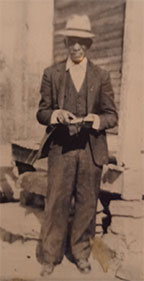
What Gwen did not know was on the occasion of her high school graduation, I remembered my Grandpapa Agnew, my daddy’s father, who was a slave. With joy in my heart, I thought about how far we had come to finally have someone in our family graduate from high school.

Grandpapa Agnew in a suit and hat with a building in the background
Grandpapa Agnew

I recalled the times when I was a little girl and Grandpapa Agnew stayed with us. I would sit on his lap and he would tell me stories about when he was growing up. The message I got from his stories was about how much better things were for us Negroes now than when he was born and how it was so important that we worked hard to find opportunities to better ourselves and our race.

When Mama and Daddy moved to Memphis, Grandpapa Agnew stayed in Mississippi with his daughter. He visited us when we lived in Memphis and Gwen was a little girl. He had the most beautiful silver, not gray, hair; walked with a cane, and wore a suit and a dress hat. It was such a blessing that he could see his great grandchild, one who would accomplish what he could not have had the imagination to realize.

Broken Promises, Shattered Lives, and the Pursuit of Happiness

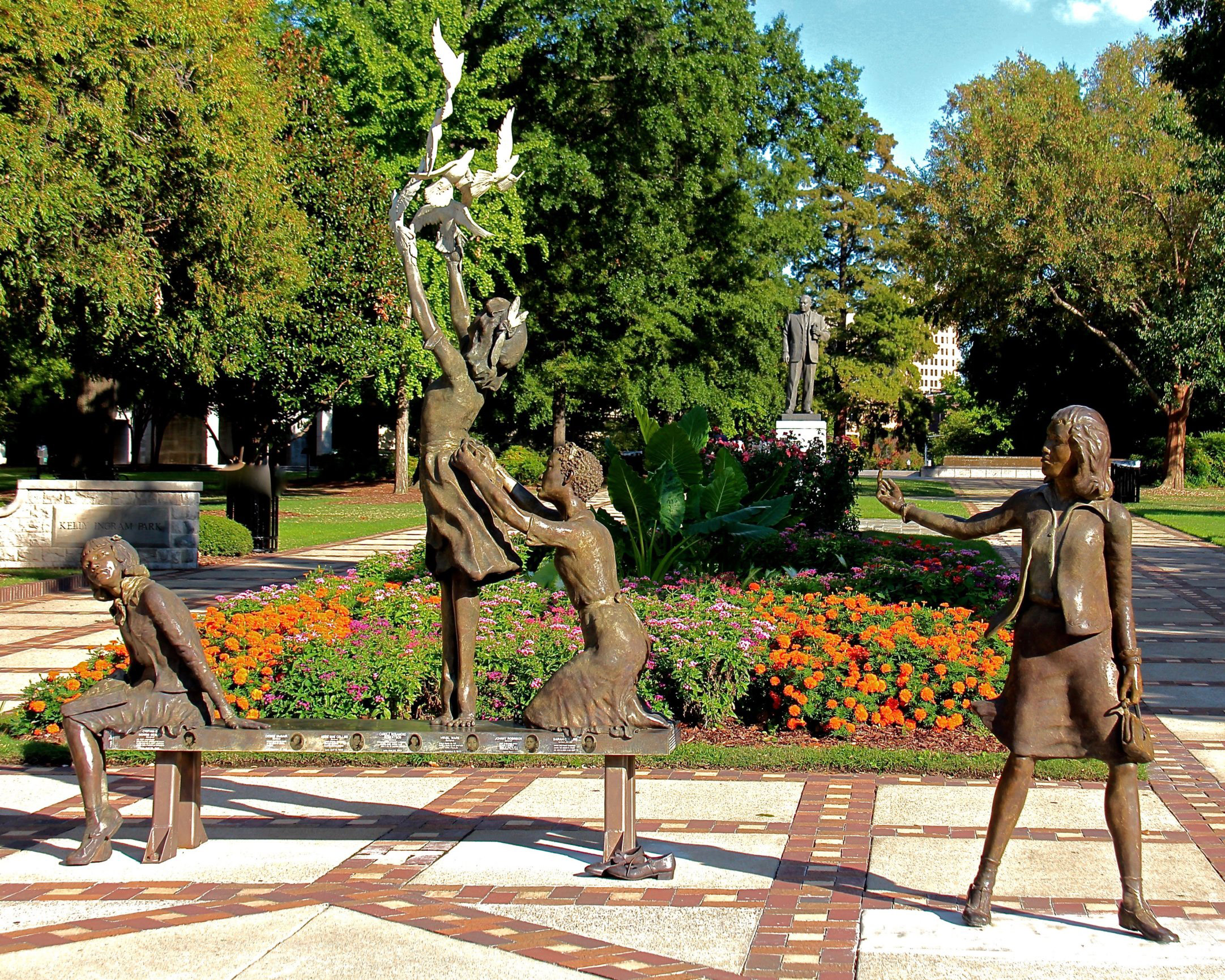
On September 15, 2023, Supreme Court Justice Ketanji Brown Jackson spoke at the 16th Street Baptist Church in Birmingham, Alabama, to commemorate the 60th anniversary of the church bombing that killed four Black girls–ages 11 and 14–and caused another 12-year-old girl to lose her eye.

Some of Justice Brown Jackson’s remarks were particularly poignant for me because I had listened to a Smithsonian Associates lecture just the day before entitled, “The Pursuit of Happiness,” by Dr. Richard Bell of the University of Maryland.

Justice Brown Jackson said, “Yes, our past is filled with too much violence, too much hatred, too much prejudice, but can we really say that we are not confronting those same evils now? We have to own even the darkest parts of our past, understand them, and vow never to repeat them.”

In his lecture, Dr. Bell recounted the shattered lives of Black people who pursued happiness during a time of great discontent. He gave numerous examples of the struggles of formerly enslaved Black people who were used as pawns by the British and slaughtered by the Patriots of the American Revolution. Broken promises by the British who changed terms of agreements on certificates and rewrote laws that disenfranchised the freedom seekers resulted in unmitigated violence and treachery and needlessly ended the lives of our ancestors who fought for freedom. It’s asking a lot to understand these dark parts of the past.

Black people who in good faith pursued their freedom by fleeing the slave holders and siding with the British became refugees of the Revolution while fighting to create a post-slavery society. Between 1775 and 1808, freedom seekers continued to petition and pursue their liberty even while fleeing from New York to Nova Scotia to Sierra Leone. Given the magnitude of their sacrifice and the depths of their despair, I don’t think they would see cause for our celebration of what Justice Brown Jackson described as “great strides that have been made since 1963.”

The bombing of the church came just two weeks after the March on Washington and the Rev. Dr. Martin Luther King’s “I Have a Dream” speech—a speech in which King spoke of the “promissory note” spanning from the Declaration of Independence that still had not been made good even 100 years after the Emancipation Proclamation. The bombing—and perhaps tellingly the two boys who also were killed in the chaos of that day in Birmingham, but who are largely still unknown outside of the Black community in that city—reinforces the pattern that our destination to freedom invariably takes us back into the caves of those who seek to enslave us.

Sadly, recurring attitudes of supremacy make the lure of freedom ever so elusive.

bronze art installation at Kelly Ingram Park representing the four girls killed in the 16th Street Baptist Church bombing on September 15, 1963, in Birmingham Alabama. The girls are depicted in play with one reaching for a group of ascending doves.

The public memorial for the children killed on September 15, 1963, sits across from the 16th Street Baptist Church in Birmingham, Alabama, at an entrance to Kelly Ingram Park.

Image

No Context and No Analysis

Ultimate (and Unanswerable?) Questions

white outlined questions marks on dark blue background

In the introduction to her Selected Poems, former Poet Laureate Rita Dove posed the following “ultimate—and ultimately unanswerable—questions” regarding the “mystery of what destiny boils down to”:

  • How does where I come from determine where I’ve ended up?
  • Why am I what I am and not what I thought I’d be?
  • What did I think I’d be?
  • Where do I reside most completely?

It is at this stage of life that I have time to search for answers to these heretofore unanswerable questions and to begin the task of solving the mystery of my own destiny. I invite you to take the journey with me.

Appreciation

This is appreciation day for all of you who read my blog. And for those of you who take the time to comment, a very special, “Thank you!”

I appreciate comments about my blog. Sometimes when there are long stretches without any comment, I want to ask if there is anyone out there. And, for a fleeting moment, I tell myself that I should stop writing.

However, this feeling is fleeting because…

I write to give my opinions on topics of the day.
I write to share my thoughts on culture.
I write to express my thoughts and feelings similarly to when I kept a journal.
I write to fulfill some part of my desire to write a memoir.
I write to share personal anecdotes that may resonate with another person.
I write to exercise my mind.
I write to have the discipline to prepare something each week. 
I write to feel seen and heard.
I write to enshrine my identity.
I write to assure myself that I’m still here.

In a recent interview, Harrison Ford summed up my reason for writing when he said, “I’m editor in charge of my life.”

Although I rarely respond to comments online, I am deeply grateful to you who do let me know that you hear me. Please accept my gratitude. Thank you.