Many thanks and praise to Chris Hanlon, former professor at Eastern Illinois University (EIU) and then at Arizona State University. In 2010, he brought the idea of a name change for Douglas Hall to EIU President David Glassman, who in turn asked the Board of Trustees to consider the idea of changing the name.
Located in proximity to one another, Douglas Hall for men and Lincoln Hall for women were so named to memorialize the fact that Abraham Lincoln and Stephen Douglas held one of their debates in Charleston, Illinois, where Eastern Illinois University is located. The famous Lincoln-Douglas Debates were part of the campaign when both men were running for the Illinois State Senate. A point of contention regarding honoring Douglas is the fact that he was a strong advocate for slavery.
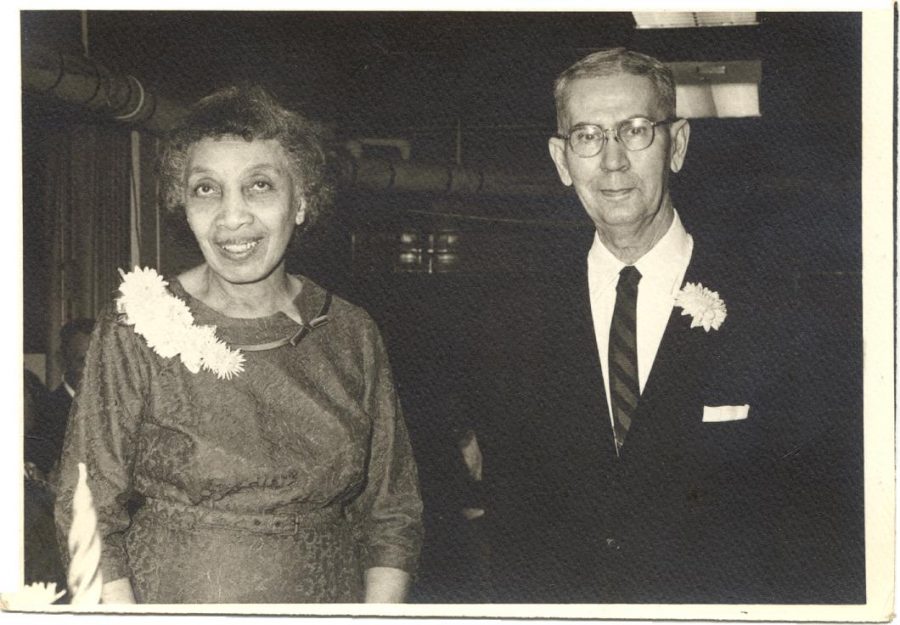
When the reconsideration of a name change became known, some African American alumni gratefully reached out to some of us to write letters of recommendation to support a proposal for having the residence hall named Norton in honor of Ona and Kenneth Norton. When the 10-year campaign and deliberations ended and a vote was before the Board of Trustees, the Nortons received more letters of recommendation than the other worthy candidates.
The competition to be so honored was stiff with the 205 names submitted including notables such as a former Governor of Illinois, a student-athlete and Tuskegee Airman, a former student and later President of EIU, a Black professor who became the first director of the Afro-Studies Program, and Zella Powell, who is believed to be the first Black graduate of EIU. Ultimately, the Board of Trustees voted unanimously to rename the residence hall Powell-Norton Hall.
Powell graduated from EIU in 1910. Her family lived in Mattoon not far from Charleston. One of only two Black families in Mattoon, her family had means to afford them middle-class status. Nevertheless, the family suffered the indignities common then in small rural towns of the United States. Enduring the stress of being the only Black student on campus and then graduating is a victory not many can boast. Powell taught in Mattoon before moving to Chicago, where she continued her career as a teacher and raised a family with her husband.
By appearance, Ona Norton and her husband Kenneth were not apparently Black, but they apparently were considered to be Black in their community. Their involvement with EIU began in the 1950s when they were asked to “open their home to Black athletes who could not find housing on campus” (The Daily Eastern News, November 24, 2021).
Providing housing for athletes who were Black led to Mrs. Norton becoming the go-to person for other Black students who found their way to EIU. The Nortons rented two modest houses to accommodate Black students—one for women and one for men. I was in the group of Black women who lived in a Norton House on Second Avenue. If it were not for the agency of the Nortons, I would not have been able to attend the university. I didn’t have money to live in the residence halls and even the $28 a month that the Nortons charged was often hard to come by. Some of the other women were in similar circumstances, but I never knew of anyone who was asked to leave the Norton house for lack of funds for rent.
Although Mrs. Norton has been honored for other acts of charity, and EIU has a scholarship in her name for Black students, the honor that she shares with Powell is the most fitting because of its connection to housing students who, without her help, would never have had the opportunity to attend EIU.
“I grew up in Orange Mound in the 1950s, and I lived right across the street from a park, which had a great swimming pool, a great recreation program and that’s where we went to have fun because every day all I had to do was walk across the street. I could either swim, I could play softball, I could play volleyball, I could do any of these things every day of the week except Saturday and Sunday.”
No, this was not my experience. I found this story narrative online as part of the Smithsonian Institution Traveling Exhibition Service’s Museum on Main Street program designed to provide “access to the Smithsonian for small-town America.“
Orange Mound, six miles from Memphis city center, is purported to be one of the first subdivisions built specifically for Black people. Created in 1890, it is said to be second only to Harlem in having the largest concentration of Black people in the United States.
My own experience must have been in the very early 1950s, and I’m sure that there was only one park in Orange Mound. That park was across the street from the cabstand where my Daddy had a taxi. On the days that I was with him, when I wasn’t in the little shack that housed the telephone and operator to receive calls requesting a taxi, I would be at the park across the street. Having never seen another park, I didn’t know that our park with its two sets of swings side by side, one glistening sliding board, a big pool, and a little pool was pitiful compared to the parks just a few miles away.
I recall the creaking noise the swings made that created a rhythm that matched the velocity of my swinging. I remember that when I reached my legs back under the swing and pushed myself off, I couldn’t go very high. But if someone was giving me a push, I could eventually swing so high that the chains that I held onto on both sides of the swing would buckle.
This was both a thrill and a fright for me. I would scream “higher, higher, higher!” When my sight line was just about to skim the top of the cross bar, I would get scared and want to slow down. I would stretch my legs straight out in front and lean back pulling the chains to slow down. Always careful not to let my shoes drag in the dusty grooves at the foot of the swing,
I would disembark smiling, laughing, happy. Skipping to the side of Carnes Avenue, I would look both ways before crossing the street and return to the little shack where I would wait for my Daddy to return from a trip.
What I fear about aging is becoming conspicuously and stereotypically old. I’m not talking about the natural physical and mental changes that accompany aging. What I fear is the calcification of my attitude and outlook on life. I want to avoid falling into the trap of thinking according to a generational divide and believing that I must stay on my side of the generation gap.
Each generation has its place in the continuum of time, and unfortunately there are negative comparisons coming from both directions. Past generations create myths that support their belief that they were stronger, smarter, bolder, cooler, braver than succeeding generations.
The younger generations, because they are more technologically advanced than previous generations, see a mirage that indicates to them that they are more savvy and capable than the generations that came before them.
I want to know what I need to do to continue to be relevant and engaged in the continuation of human prosperity for all generations. I want to take a walk in the athletic shoes of younger generations to try to feel what it must be like to be facing an uncertain economic and social future in today’s world. I want to meet younger generations where they are in their interests.
I feel extremely lucky when I have the privilege to have conversations with the newer generations. I’m eager to understand their views on representation and culture; family and values; work and play; politics and human interactions. If they want to hear my perspective, I’m happy to share. However, I do not believe that because I’ve lived longer and have more experience in some things that I, and others like me in older generations, have the insights and knowledge to change the trajectory of the future. As in all things, I believe that shared knowledge among diverse groups is essential for optimal outcomes.
I do now believe–and always have–that our upcoming generations are our hope for the future. My hope for myself is that I can be a help and not a hindrance to the work that they must do. One way that I plan to avoid being conspicuously and stereotypically old is to be transgenerational. I want to cross the generational divide by accommodating to the new order of things. I want to lessen the distance of the generational gap by being in the moment with what’s happening now.
On Palm Sunday, April 2, 2023, I went to the Scottsdale Museum of the West to see a screening of the documentary film, Jews of the Wild West.
As I watched the film, I kept thinking about how the stories of Jewish people who immigrated to the United States and later to the Western United States appear to be missing from American history. The absence continues to be perpetuated in books and films today. A special thanks is owed to the nonprofit production company and to the filmmaker, Amanda Kinsey, for uncovering and sharing such a significant part of American history.
Notable Jewish migrants to the West are Levi Strauss, who we can thank for the jeans we wear; Isaac Shwayder, whose son, Jesse, founded the premier luggage line Samsonite; and Meyer Guggenheim, patriarch of the philanthropic Guggenheim family whose wealth came from the mining and smelting business. Women such as Golda Meir were also prominent in establishing a Jewish presence in the West. To say that these families had humble beginnings is an understatement.
They used their ingenuity, persistence, grit, and desire to make a life without persecution—one in which they not only survived the hardships of the frontier but thrived. They found that the Wild West had less antisemitism than New York City. In general, people who moved West had one thing on their minds: taking advantage of the riches the frontier would eventually offer.
The Jews who migrated West, for the most part, were not panning streams and mining for gold. They understood that people needed practical products and clothes as they pursued their dreams of a better life and their road to riches. The Jewish migrants may have started out as peddlers who made enough money to open a dry goods store as in the case of Shwayder. Eventually, they found markets within their communities and beyond that became their road to success. Because they were usually the only people in the community with a business, they often became the mayors of these frontier towns.
Jews of the Wild West is rich with the personal stories of the Jews who struck out for the Wild West and made good. Check out streaming platforms and American Public Television to see this film.
I just finished listening on Audible to April Ryan’s book, Black Women Will Save The World: An Anthem. #BlackWomenWillSaveTheWorld. This is a powerful and emotional reflection on the toils and unwavering leadership of Black women in a world in which our contributions are not valued and, in fact, our very selves often are devalued.
This book made me think about those women—“hidden figures” —who, over the decades, have provided the very foundation for all the successes of subsequent generations of Black families. One such group of “hidden figures” is the 6888th Central Postal Directory Battalion from World War II.
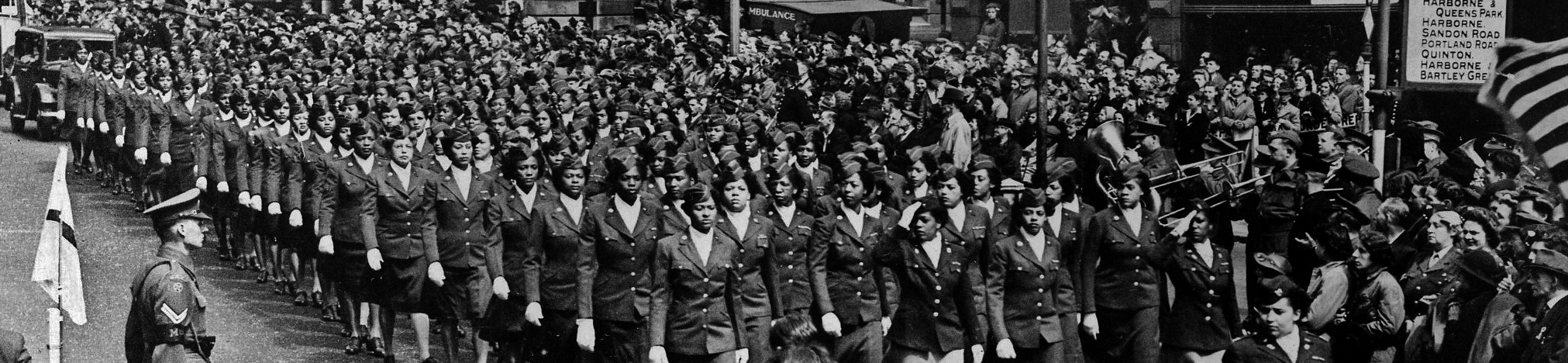
The 6888th was a unique U.S. Army unit that had the distinction of being the only all-female, African American battalion to serve in the European Theater of Operations during World War II. Made up of 855 women—824 enlisted and 31 officers—this Women’s Army Corps Battalion was commissioned in Europe between February 1945 and March 1946, and was led by 26-year-old Major Charity Adams.
The specific mission of the 6888th was to sort and clear a multi-year backlog of mail for the American Army, Navy, Air Force, the Red Cross, and uniformed civilian specialists who were stationed in Europe. This represented seven million people awaiting mail.
In February 1945, the first contingent of the 6888th embarked from Camp Shank, New York, to sail for Britain. They survived close encounters with Nazi U-boats and arrived in Glasgow, Scotland, where a German V-1 rocket exploded near the dock. The second contingent of 6888th soldiers docked in March 1945 in Gourock, Scotland.
Upon arrival by train in Birmingham, England, the Battalion confronted warehouses stacked to the ceiling with letters and packages. They endured inhumane working conditions, including dark, unheated, rat-infested aircraft hangars with broken windows and air raids. Despite these conditions, the Battalion created a new mail tracking system, worked three separate 8-hour shifts, 7 days a week to process an average of 65,000 parcels per shift (which is 195,000 daily), and cleared the 6-month backlog of mail in 3 months.
After resolving the immense mail backlog in Birmingham, the 6888th Battalion sailed to France for their next assignment in Rouen. They encountered undelivered mail dating back two to three years, which the Battalion again successfully processed and cleared in just three months.
Upon concluding their final assignment in Paris, the last of the Battalion returned to the United States by ship and was disbanded in March 1946 at Fort Dix, New Jersey. There were no parades, public appreciation, or official recognition of their accomplishments.
Adhering to the motto, “No mail, low morale,” the Battalion provided essential support to the U.S. military in the European Theater of Operations by linking service members to their loved ones back home. The 6888th achieved unprecedented success and efficiency in solving the military’s postal problems. The Battalion was the largest contingent of African American women to ever serve overseas, dispelling stereotypes and representing a change in racial and gender roles in the military.
It was not until nearly 80 years later that the 6888th received the well-deserved recognition for their service to the United States. In March 2022, the Battalion became the only women’s military unit to be awarded the Congressional Gold Medal, which was first awarded to General George Washington in 1776.
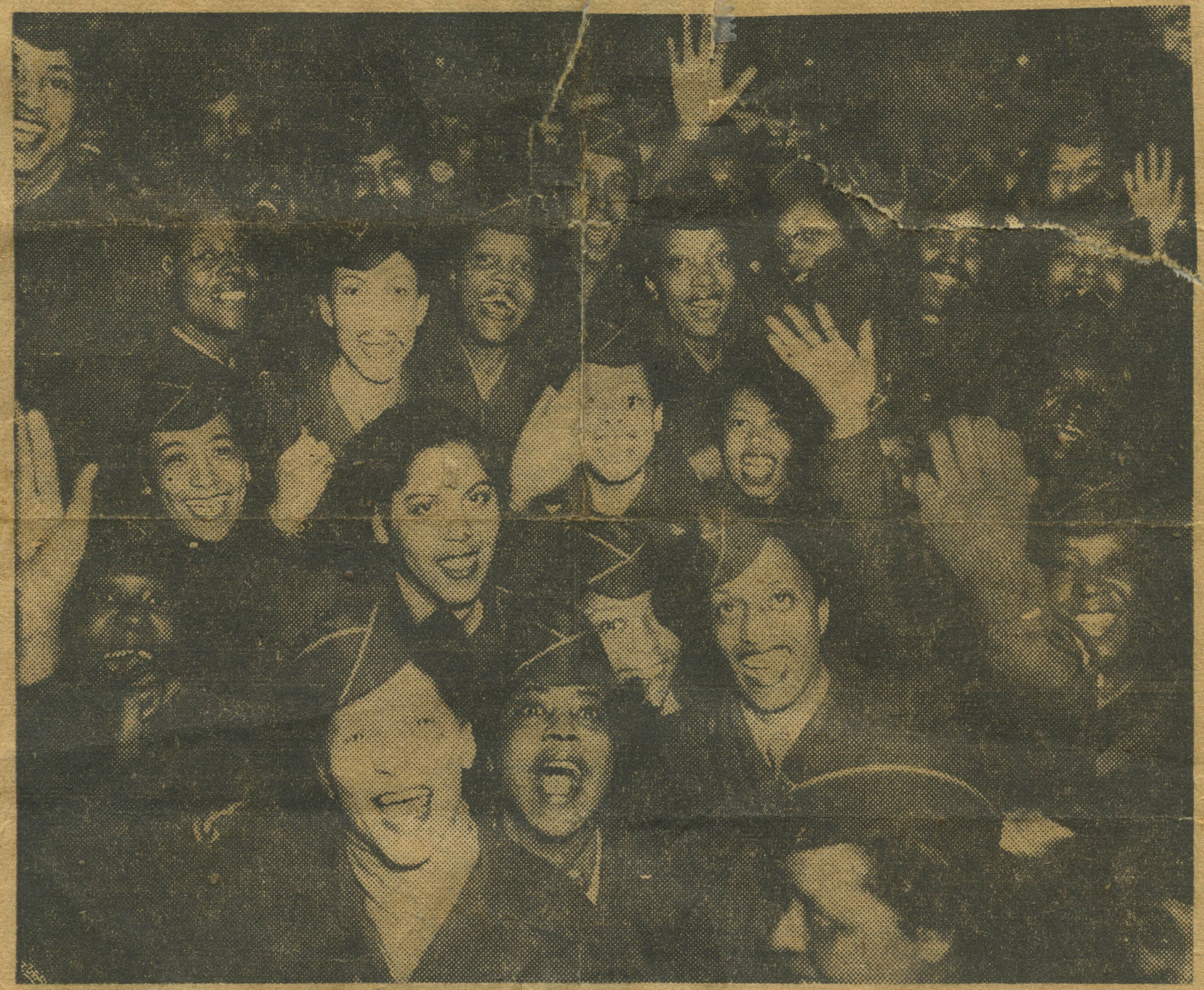
Iconic photo from when the last of the Women’s Army Corps (WAC) returned home from France. Annie Knight (Jordan) is the woman with the big smile in the top left corner.
The 6888th has a very special significance for me. My mother, Private First Class Annie Knight (Jordan), was one of those brave Battalion soldiers. As kids, my siblings and I always knew that she was in the Women’s Army Corps (something about which she was extremely proud). She mentioned to us that she did Morse code. We just thought of that as being like another language of sorts. It was not until Fall 2022 that we understood that her enlistment classification was not military postal worker. In fact, mom was in a special category called “Cryptographic Code Compiler.” Cryptographers, also known as code breakers, were secretly trained to crack code that provided intelligence information for the Army. Very little is known of the Black women who served in this capacity.
As I learned more about the 6888th, I began to think about how many ”hidden figures” there are and wonder how we might ensure that their stories are shared and their legacies known. I asked questions like, “What inspired these 855 African American women to enlist and pursue the 6888th?” “What gave them the internal fortitude to take on unknown ventures in a dangerous foreign land?” “What made them so different?” and “How did that very difference change the course of their lives post-military service and influence their legacies?”
So, in 2022, I became a first-time podcaster: NextUs818 Podcast is a reflective platform for connecting past successes with future progress in the African American community. There are many African American heroes—some known and many unsung men and women—who helped build this country. Some were the first or only in their fields of endeavor, like the 6888th. Yet little is known about how their unique journeys influenced the trajectory of their familial legacies…such as their children, grandchildren, nieces, nephews. The NextUs818 Podcast introduces the multi-generational descendants of these heroes. On the first and third Wednesdays of each month, I interview descendants of an African American hero and explore family lore, traditions, and values, and how the descendant’s journey was directly impacted.
The inaugural season of the NextUS818 Podcast features the descendants of the 6888th Central Postal Directory Battalion. Now 14 episodes in, 4 themes have emerged to help me better understand what inspired the 6888th soldiers and how their service has influenced subsequent generations: patriotism, fearlessness, adventurousness, and unwavering commitment to lifelong learning.
Patriotism: Despite the rampant racial and gender discrimination of early 1940s America, these women were exceptionally patriotic. With the country at war, they felt that it was their DUTY to contribute to the war efforts against the Hitler regime. They eagerly embraced this chance to serve.
Fearlessness: The notion of a young African American woman going into war zones would be darn right scary, even today. Yet these brave women exhibited a remarkable degree of fearlessness.
Adventurousness: Not only did these women demonstrate fearlessness, but they were excited to explore the unknown. As kids, mom always spoke about her adventures, especially once the Battalion moved on to France. In all the stories I heard about the women, they saw serving in the Army as a way of giving them broad exposure and opening post-military opportunities otherwise unavailable to them.
Commitment to lifelong learning: Many of the women went on to attend college after their military service, some using the G.I. Bill when the opportunity was available. (See How the GI Bill’s Promise Was Denied to a Million Black WWII Veterans) Their unwavering commitment to education deeply influenced their children and grandchildren.
In the NextUs818 Podcast, I enjoy hearing the stories of the soldiers’ civilian lives after World War II. The women of the 6888th were college graduates, teachers, nurses, college deans, and entrepreneurs. As important, they influenced the trajectory of their children and grandchildren who, among other things, are PhDs, physicians, engineers, lawyers, educators, professional musicians, and financial and advertising executives. All of the descendants with whom I have spoken emphasize that their successes are directly attributable to the foundation laid by the women of the 6888th. From them, they learned how to be focused, tenacious, and how to persevere under adverse circumstances. They learned how to survive and thrive. So when we are tempted to live in the moment and think we got here solely on our merit, we must never forget those shoulders on which we stand!
Five final notes:
Fort Lee Redesignation: The U.S. Department of Defense has made a commitment to rename military bases named after individuals associated with the Confederacy and other dark periods in American history. On April 27, 2023, Fort Robert E. Lee will be renamed “Fort Gregg–Adams” in honor of two trailblazing African American officers: Retired Lt. General Arthur Gregg and the late Lt. Col. Charity Adams (commander of the 6888th Battalion).
6888th Legacy Tour: A group of 6888th descendants and advocates will return to Scotland, England, and France, walking on the grounds where the brave soldiers made history as part of an upcoming 6888th Legacy Tour.
Carmen Jordan-Cox, PhD, is a retired university vice president and judge/magistrate. Currently, she is producer and host of NextUs818 Podcast and a freelance curator of stories about descendants of World War II soldiers.
I was a proponent of wearing face masks everywhere during the height of the pandemic. Today, I’m still on the side of donning one in crowded indoor spaces.
Here in Arizona, I have become recognizable because I’m one of the very few people who continues to wear a mask. I was in line at the grocery store and a stranger asked me if I had worked out that morning. He could see the quizzical look in my eyes above the bridge of the mask. He explained that he usually sees me at the gym but missed me this particular morning.
When I go to see plays at the theater, I buy tickets, when possible, for the one day when masks are required. If I go on days when masks are not required, I stand out as odd in wearing a mask. I feel some sense of the recognition of my right to wear a mask when the recording before the play begins: In addition to providing the usual information about exits and such, this recording now also includes a request that patrons respect those of us who choose to wear a mask.
The recent dueling research reports on whether masks are effective in protecting one from a swarm of viruses have given me pause about my decision to defiantly continue to wear a mask. In fact, the reports may be giving me an excuse to stop wearing a mask as often as I currently do.
Although I think that there ought to be a benefit in wearing a mask, I’m tired of wearing one. My equivocation about the mask makes me feel like a person who professes to be religious but only practices it when it’s convenient or out of desperation for an answered prayer. I’m faithful in wearing a mask in places like the gym where people are grunting and exhaling to the extreme. However, I’ve not been consistent in wearing a mask when I have visitors or go to someone else’s place. Until very recently, I wore a mask when enclosed in a car with another person, as well as upon entering restaurants and when the servers were at the table, only removing my mask to eat. I’ve finally given up on wearing a mask in restaurants.
My masks are supposed to be high-quality but they are not the recommended N95. They are KN95. When I read that one researcher said that if the mask is not N95 and worn correctly, you might as well not wear one at all. I’m questioning whether what I’ve been doing lately is an exercise in futility. Yet, I fear that if I abandon wearing a mask and then become infected, I might think that I “shoulda” kept wearing a mask.
I wonder what you are doing in regard to mask wearing. Are you wearing a mask religiously, judiciously, or not at all?
I’ve heard women I consider to be inspirational role models talk about having what is known as imposter syndrome, so when I came across the article “Why Everyone Feels Like They’re faking It” in the February 13 & 20 issue of The New Yorker, I was eager to read it. I have also heard women diagnose other women’s perceived lack of confidence as imposter syndrome. Because I’ve heard such comments so often, it seemed like a club to which a lot of women belonged. I never have heard a man say that he was a member of this club.
The concept was originally called “Impostor Phenomenon” by the two women who explored the idea and wrote the first paper on it. These women bristle at the current “Imposter Syndrome” nomenclature because they didn’t see what they were exploring as a pathological disorder.
The idea behind the phenomenon or syndrome is one’s feeling that they are a fraud or phony because it seems others are fooled into thinking the person is better than they assess themselves to be. Having to mask who one thinks she is, or her real self in regard to skills and abilities, is said to elicit feelings of inadequacy or lack of confidence. Therefore, one is an imposter in one’s own assessment.
The underlying original theoretical assumption or concept for one feeling this way was based on the experiences of the authors, themselves, and the women they interviewed. They concluded that the root cause of this phenomenon was the “disjunction between the messages received” from one’s family, in reference to abilities, and the messages one feared receiving from the world if the world could see behind the mask. The messages from the family could be positive or negative. When there was high praise at home, the women would seek external validation all the while doubting the veracity of the validation. If the messages from family were negative, the women would seek the positive validation that they didn’t receive at home.
As I read the article, I kept thinking about how I had never been able to relate to the feeling of masking or being an imposter or fraud as some have described their feelings. It’s not that I don’t experience a crisis of confidence sometimes. I just never felt that I was masking who I am. When I lacked confidence, everybody knew it because I didn’t try to hide it. If anything, I have been self-deprecating rather than pretending to be better than I think I am. I never felt like a fraud. What I did feel was that others underestimated me, and I had the burden of continuing to prove that I was competent and much more than their estimate of me.
As I continued to read the article, my feelings were validated in a reported exchange between two White women where the conclusion was that feeling like an impostor was a “white-lady thing” because their competence was taken for granted, causing unease if one were not as competent as might be assumed.
Apparently, my feelings reflect the feelings of some other women of color. As a Black woman, no amount of masking removes the racial bias, implicit or not, that colors every interaction regardless of the color of the person with whom you are interacting. Instead of feeling as if you were an imposter, it was most likely the case that others believed you, as a woman of color, to be an imposter rather than possess the requisite skills, abilities, and qualifications.
This is not to say that some people of color do not have fears of being unmasked to reveal inadequacies. The author of The New Yorker article mentions that research studies have repeatedly shown that imposter syndrome disproportionately affects people of color.
Some women are taking to task the idea of imposter syndrome. In an article published by the Harvard Business Review,Ruchika Tulshyan and Jodi-Ann Burey argue that the label implies a crisis of self-confidence among women, failing to recognize real obstacles professional women—especially women of color—face. Tulshyan and Burey write, “Imposter syndrome directs our view toward fixing women at work instead of fixing the places where women work.”
Pauline Clance and Suzanne Imes authored the original work on what they called impostor phenomenon in 1978. In interviews for The New Yorker article, they agree with many of the critiques, given the fact that the “original sample and parameters were limited.” Their focus was primarily on “family dynamics and gender socialization rather than on systemic racism and other legacies of inequality.”
Being a Black woman may not be the only reason that I’ve not felt like an imposter. My experience may be related to my generation. The author of TheNew Yorker article on imposter syndrome notes that she asked her mother who is 78 if the concept of imposter syndrome resonated with her and her mother said that it did not. For further explanation, her mother expressed feelings similar to the ones I expressed above, namely that women in her generation (and mine) “were likelier to feel the opposite—that we were being underestimated.”
It seems that all the young men at the front desk of the gym are named Brian. When I mentioned this coincidence to one of them, he said, “Yes, there are a lot of Brians around here.”
A lot of them may have the name Brian, but only one of them was our special Brian that meant so much to my fellow gym-goers and me. Like the other Brians, his job was to scan our membership card when we entered the gym. That’s all he had to do and periodically someone might have a problem with their card or have a question about some activity. But mostly, it was just standing behind a tall desk just inside the doors and electronically scanning the card for everyone who entered.
If one scanned the faces of gym-goers, one could see that everyone was different. We were focused intently on our disparate goals of self—our work-out goals, our life agendas, our schedules, our problems. But when Brian smiled at each of us, called us by name, wished us a good workout, we were joined in a community of regulars like the regulars at Sam’s bar in Cheers, the sitcom that aired between 1982 and 1993.
All the Brians could follow our Brian’s script, but they don’t. Our Brian seemed genuinely happy to see us and he called us by name. I looked forward to his smile as he said, “Good to see you, Miss Gwen.” Though I was not conscious of how I looked forward to Brian’s greetings and goodbyes, now that he is not there, I miss him and what he shared.
Recently, Brian had the opportunity to realize his life’s dream. Though extremely happy for him, many of my fellow gym-goers and I have commiserated with one another about a feeling of loss that he’s not there in his usual place when we arrive. We miss that he expected us to show up the next day. We miss the smile on his face as we entered the door. He created that welcoming ambience that keeps people coming back.
The absence of Brian makes me think about how small gestures of acknowledgement can be significant gifts of validation. Ordinary gestures such as a smile, a wave, translate into, “I see you.” Calling someone by name translates as “You’re special.”
We’re all the same in the ways we miss Brian. Because…
“Sometimes you want to go where everybody knows your name and they’re always glad you came. You want to go where people know people are all the same. You want to go where everybody knows your name.”
My background music for cleaning, dressing, cooking, grooving, exercising, and dancing is 70’s Disco/Funk and R&B. This music makes me feel alive! It makes me smile. It keeps me young. When I’m moving to the beat of this music, I feel free in every way.
These thoughts came to me while I was watching Episode 3 of The1619 Project titled, “The Birth of American Music.” Black people interviewed for this episode used the word “freedom” in describing the effect of Black music on them. Artists talked about how Black music continues to be created and evolved by sampling and building on the styles and sounds of historic Black music.
During the episode on music in America, I learned why Disco music became less popular and nearly faded from the airways. The story, as revealed in this documentary, of the demise of disco music is a sad one that keeps being told in every phase of Black progress.
Nile Rogers saw the backlash against Disco as the fear of an integrated America. Co-founder of Chic and developer of some of the most popular music for White performers after disco was literally blown to pieces, Rogers said that at New York clubs such as Studio 54, when music such as “Everybody Dance” and “Freak Out” was played, literally everybody was on the dance floor, all getting along.
Wesley Morris, film critic and podcast host, noted that “funk and disco were revolutionary, sexy, rebellious, and politically unafraid. [Funk] was a rebellion against broken promises of the Civil Rights Era.”
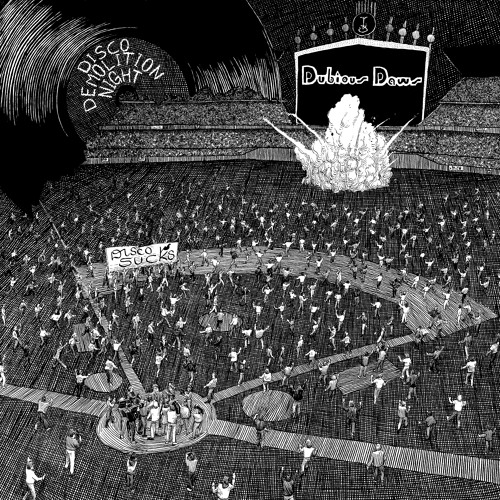
What began as the antics of a White radio DJ—and spread to other radio DJs who didn’t want to play disco because it was not the music that they believed was real or pure—turned into “Disco Demolition Night” at Comiskey Park, home of the Chicago White Sox, on July 12, 1979. Hordes of White people brought records by Black people and gay people to the field and blew them up between the games of a scheduled double-header. The playing field was so damaged by the explosion and by the ensuing riot on the field of some 40,000–59,000 people that the White Sox were required to forfeit the second game to the Detroit Tigers. This violent act gave birth to the “Disco Sucks” movement.
In the interview with Nikole Hannah-Jones, Rogers said in reference to the riot at Comiskey Park, “It felt to us like Nazi book-burning. This is America, the home of jazz and rock, and people are now afraid even to say the word ‘disco.’”
Despite the attacks and the campaigns against Black music, according to Morris, the “soul of Black music is the soul of freedom, constantly moving, being transferred, a feeling, a spirit. You have to know it when you feel it. It’s too deep, too fast, too elusive, you can’t catch it.”



 Gwen Dungy