This is appreciation day for all of you who read my blog. And for those of you who take the time to comment, a very special, “Thank you!”
I appreciate comments about my blog. Sometimes when there are long stretches without any comment, I want to ask if there is anyone out there. And, for a fleeting moment, I tell myself that I should stop writing.
However, this feeling is fleeting because…
I write to give my opinions on topics of the day. I write to share my thoughts on culture. I write to express my thoughts and feelings similarly to when I kept a journal. I write to fulfill some part of my desire to write a memoir. I write to share personal anecdotes that may resonate with another person. I write to exercise my mind. I write to have the discipline to prepare something each week. I write to feel seen and heard. I write to enshrine my identity. I write to assure myself that I’m still here.
In a recent interview, Harrison Ford summed up my reason for writing when he said, “I’m editor in charge of my life.”
Although I rarely respond to comments online, I am deeply grateful to you who do let me know that you hear me. Please accept my gratitude. Thank you.
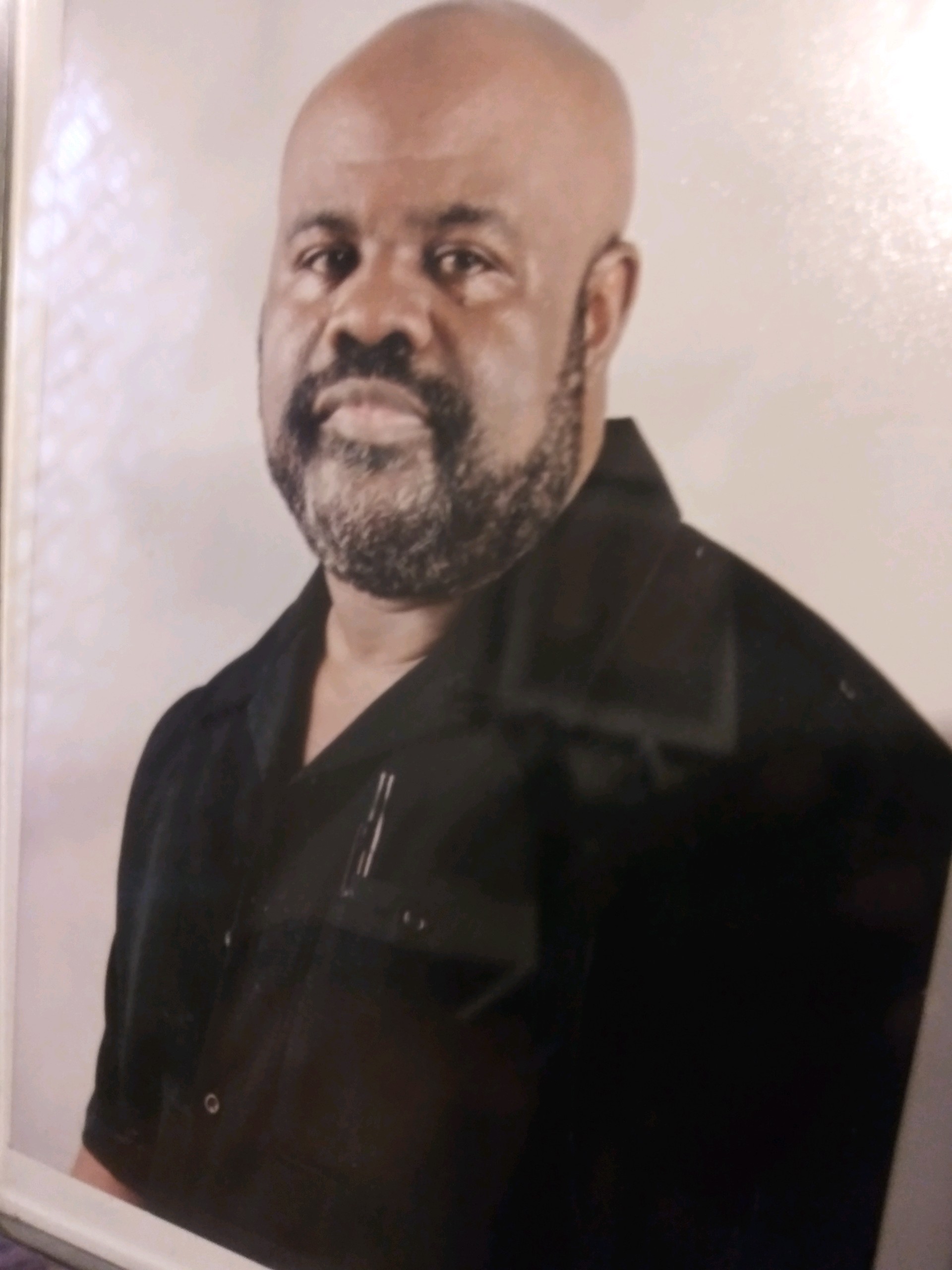
My brother-in-law—married to my baby sister, Regina, for 47 years—passed on Monday, June 26. My heart aches for all of us who knew and loved him. My hope is that we will all find comfort in knowing that he was a man who lived a good life as a loving husband, father, grandfather, and friend, to name just a few of his many roles.
I send a special prayer to my sister whose grief is inconsolable. Mack, who she knew from when they were in grade school, was the love of her life. And she was the love of his life, whom he loved steadfastly and with tenderness seldom witnessed.
He was the steady hand as they raised their children. He anchored the family with his calm dignity. He brought joy when he smiled with his eyes as his large, strong body shook with laughter.
Many thanks and praise to Chris Hanlon, former professor at Eastern Illinois University (EIU) and then at Arizona State University. In 2010, he brought the idea of a name change for Douglas Hall to EIU President David Glassman, who in turn asked the Board of Trustees to consider the idea of changing the name.
Located in proximity to one another, Douglas Hall for men and Lincoln Hall for women were so named to memorialize the fact that Abraham Lincoln and Stephen Douglas held one of their debates in Charleston, Illinois, where Eastern Illinois University is located. The famous Lincoln-Douglas Debates were part of the campaign when both men were running for the Illinois State Senate. A point of contention regarding honoring Douglas is the fact that he was a strong advocate for slavery.
When the reconsideration of a name change became known, some African American alumni gratefully reached out to some of us to write letters of recommendation to support a proposal for having the residence hall named Norton in honor of Ona and Kenneth Norton. When the 10-year campaign and deliberations ended and a vote was before the Board of Trustees, the Nortons received more letters of recommendation than the other worthy candidates.
The competition to be so honored was stiff with the 205 names submitted including notables such as a former Governor of Illinois, a student-athlete and Tuskegee Airman, a former student and later President of EIU, a Black professor who became the first director of the Afro-Studies Program, and Zella Powell, who is believed to be the first Black graduate of EIU. Ultimately, the Board of Trustees voted unanimously to rename the residence hall Powell-Norton Hall.
Powell graduated from EIU in 1910. Her family lived in Mattoon not far from Charleston. One of only two Black families in Mattoon, her family had means to afford them middle-class status. Nevertheless, the family suffered the indignities common then in small rural towns of the United States. Enduring the stress of being the only Black student on campus and then graduating is a victory not many can boast. Powell taught in Mattoon before moving to Chicago, where she continued her career as a teacher and raised a family with her husband.
By appearance, Ona Norton and her husband Kenneth were not apparently Black, but they apparently were considered to be Black in their community. Their involvement with EIU began in the 1950s when they were asked to “open their home to Black athletes who could not find housing on campus” (The Daily Eastern News, November 24, 2021).
Providing housing for athletes who were Black led to Mrs. Norton becoming the go-to person for other Black students who found their way to EIU. The Nortons rented two modest houses to accommodate Black students—one for women and one for men. I was in the group of Black women who lived in a Norton House on Second Avenue. If it were not for the agency of the Nortons, I would not have been able to attend the university. I didn’t have money to live in the residence halls and even the $28 a month that the Nortons charged was often hard to come by. Some of the other women were in similar circumstances, but I never knew of anyone who was asked to leave the Norton house for lack of funds for rent.
Although Mrs. Norton has been honored for other acts of charity, and EIU has a scholarship in her name for Black students, the honor that she shares with Powell is the most fitting because of its connection to housing students who, without her help, would never have had the opportunity to attend EIU.
I have been a participant observer in my own life for a very long time. My first written notes about what I observed were in a diary that I received as a gift when I graduated from eighth grade. I was diligent about writing in my diaries. When I left home to attend college, my mother found my diaries, read them, and trashed them. I never could understand why she would do such a thing.
Except for brief periods, I continued to be a participant observer in my life. I kept journals of my every day as well as extraordinary experiences. Now, at this stage of my life, I have decided that time is too precious to write daily about what I observe and experience. It’s time to reflect on what I’ve observed over the years, to realize what I’ve learned, and to embrace all parts of the experience.
I wrote my journals to be aware of what was happening around me, to be my companion, to be my confidant. I didn’t write them to be read. So now that I am doing just that, I can take the time I did not have previously to discover patterns and themes. Reading my journals now, it is as if I’m excavating precious pieces of history that when put together will define my life as only I could observe it.
An obvious pattern is that change is constant. One day all is right with the world, and not long after that, the opposite is true. Sometimes the rise and fall of circumstances occur within a day or two, or within a week.
And, whether I use the word or not in my writings, love is a theme. When I read entries that I interpret as the love theme, I empathize with the self that I described then by being tender, kind, and loving to the self that I am now. I’m so glad that I have lived long enough to show myself the love that I think no one else could have given me.
My extended family invited me to go with them to see Guardians of the Galaxy Volume 3. Though I didn’t voice this to them, this movie—among the plethora available—was not on my must-see list. On other occasions of wanting to be with family, I’ve seen similar blockbusters, but I’ve never been invested enough in the movies to retain who did what and what happened from one film to the next.
Perhaps you are a serious fan of superhero movies and will understand why our discussion following the movie was animated and seriously enlightening. I say enlightening because before seeing the movie and being part of the subsequent discussion, I didn’t think that it was about storytelling. I mistakenly assumed that this and other similar movies were all about shocking actions and comedic interludes. Intrigued by what I was hearing in the follow-up discussion, I left the conversation with suppositions and questions.
Storytelling, in whatever form, entertains, interprets, teaches, and stimulates the imagination to create possibilities that often need the space of the multiverse to be realized. Whether the heroes are in the form of humans, animals, or the inanimate, the throughline is wanting to do the right thing despite the improbability of success. The heroes believe and have faith that good will win out over evil.
In one sense, these very loud and extraordinarily violent superhero films are like fantastical nightmares. But what is a nightmare? Might they be our way of being in the multiverse grappling with evil and fighting for what we believe in?
These movies and our fantastical nightmares may free us from ordinary planes of consciousness in order to help us gain insights through extraordinary ways of imagining what else there may be out there in the multiverse.
At the Holiday Inn in Philadelphia Left the Stage Neck Inn at 1:00 p.m. yesterday Driver of the car to take me to airport is a moonlighting very petite teacher Alas, no help with heavy luggage
Arrived at Portland Maine airport Stood in line 45 minutes waiting for delayed plane Missed connection to Philly Stood in line for over an hour to get later flight at 7:00 p.m. 7:00 p.m. flight rescheduled for departure at 10:30 p.m. Flight finally cancelled
Stood in line for an hour and a half to get voucher for room at Holiday Inn Told to pick up luggage at Carousel C Waited an hour and a half at Carousel C Informed that luggage went to BWI
Called the Holiday Inn for shuttle Went outside to wait My purse was missing Made mad run for all the places I had been Purse not anywhere Went to service area They kept my purse thinking it belonged to personnel What a relief!
I believe that all of these delays and this scare about my purse were warnings to slow down, be more deliberate, take care of what’s absolutely necessary, and stop feeling compelled to make every scene, to respond to every bell. I’m going to miss the trip to Region III in Orlando because my connecting flight in Baltimore is boarding now, and I’m still in room 554 at the Holiday Inn in Philly.
Beginning now, I’m just going to relax into this situation and take care of some work that I would not otherwise have had time to do. I’m happy to have a moment to take stock, to look at what I’m doing to determine my way forward.
“I grew up in Orange Mound in the 1950s, and I lived right across the street from a park, which had a great swimming pool, a great recreation program and that’s where we went to have fun because every day all I had to do was walk across the street. I could either swim, I could play softball, I could play volleyball, I could do any of these things every day of the week except Saturday and Sunday.”
No, this was not my experience. I found this story narrative online as part of the Smithsonian Institution Traveling Exhibition Service’s Museum on Main Street program designed to provide “access to the Smithsonian for small-town America.“
Orange Mound, six miles from Memphis city center, is purported to be one of the first subdivisions built specifically for Black people. Created in 1890, it is said to be second only to Harlem in having the largest concentration of Black people in the United States.
My own experience must have been in the very early 1950s, and I’m sure that there was only one park in Orange Mound. That park was across the street from the cabstand where my Daddy had a taxi. On the days that I was with him, when I wasn’t in the little shack that housed the telephone and operator to receive calls requesting a taxi, I would be at the park across the street. Having never seen another park, I didn’t know that our park with its two sets of swings side by side, one glistening sliding board, a big pool, and a little pool was pitiful compared to the parks just a few miles away.
I recall the creaking noise the swings made that created a rhythm that matched the velocity of my swinging. I remember that when I reached my legs back under the swing and pushed myself off, I couldn’t go very high. But if someone was giving me a push, I could eventually swing so high that the chains that I held onto on both sides of the swing would buckle.
This was both a thrill and a fright for me. I would scream “higher, higher, higher!” When my sight line was just about to skim the top of the cross bar, I would get scared and want to slow down. I would stretch my legs straight out in front and lean back pulling the chains to slow down. Always careful not to let my shoes drag in the dusty grooves at the foot of the swing,
I would disembark smiling, laughing, happy. Skipping to the side of Carnes Avenue, I would look both ways before crossing the street and return to the little shack where I would wait for my Daddy to return from a trip.
“’Tis the times’ plague when madmen lead the blind.” —Gloucester in Shakespeare’s King Lear
It has been a couple of weeks, and I still can’t get out of my mind Maureen Dowd’s April 16 column in The New York Times, “When the Mad Lead the Blind.”
In today’s world, who are the mad and who are the blind?
What comes to my mind is that some of the people who hold political positions of power are mad. They are in positions of immense responsibility but lack the wisdom and grace to fulfill the promise of their title. Those who have good intentions—not the mad but those who don’t have the wherewithal to persuade, build coalitions, and execute plans—will hopefully have short terms in office avoiding catastrophic damage. However, it is those who are mad who will hang on to their positions, seeing every position as just another rung on their quest for dominating power. These officials have no regard for the impact of their decisions on citizens and the ideals of the nation.
Why do we elect people who are mad? Is this not a vote against our own wellbeing? Do we elect people who are mad because we are blind to who they really are? Acting as if we are blind to such people’s true nature makes us vulnerable to their maniacal actions. Willful blindness is a transgression paid for by retribution down the line.
We should not be surprised when some officials attempt to enact unconscionable policies that would have been unimaginable just a decade ago. These bold actions are just the tip of the iceberg because these elected and appointed officials believe that the citizenry is blind to who they are and to the purposes of their actions.
Imposters abound, using rhetorical tools that sound as if they are protectors of the electorate all the while spewing words that increase contempt and polarization among groups of people. When a candidate vilifies any group with no regard for the consequences of their message, you will know that this candidate is mad. More than party affiliation, charisma, or credentials, history tells us that it’s the character of the person that will foretell the kind of leader or representative that person will be.
Perhaps more than the sighted, blind people can discern if a person has empathy as well as a moral pale beyond which they will not tread. A yardstick to measure and a thermometer to test the degree of madness of potential leaders and elected officials is to listen to how they imagine the nation can restore a sense of unity; how they imagine creating cooperation among governing bodies; and how they imagine defusing bitter conflicts at home and abroad with compassion, justice, reason, and love.
For our own sake, we must believe that we can overcome the shame that some of our elected officials are creating when they enact punishing and disgraceful policies aimed at stifling freedom and rolling back progress for everyone, not just some. Rather than being discouraged by the actions of those who foment conflict indicating that they have no human compassion or moral compass, we need to do our due diligence in preparation for our next opportunity to choose.
We must not be blind. We must see who among the prospective elected officials are mad.
What I fear about aging is becoming conspicuously and stereotypically old. I’m not talking about the natural physical and mental changes that accompany aging. What I fear is the calcification of my attitude and outlook on life. I want to avoid falling into the trap of thinking according to a generational divide and believing that I must stay on my side of the generation gap.
Each generation has its place in the continuum of time, and unfortunately there are negative comparisons coming from both directions. Past generations create myths that support their belief that they were stronger, smarter, bolder, cooler, braver than succeeding generations.
The younger generations, because they are more technologically advanced than previous generations, see a mirage that indicates to them that they are more savvy and capable than the generations that came before them.
I want to know what I need to do to continue to be relevant and engaged in the continuation of human prosperity for all generations. I want to take a walk in the athletic shoes of younger generations to try to feel what it must be like to be facing an uncertain economic and social future in today’s world. I want to meet younger generations where they are in their interests.
I feel extremely lucky when I have the privilege to have conversations with the newer generations. I’m eager to understand their views on representation and culture; family and values; work and play; politics and human interactions. If they want to hear my perspective, I’m happy to share. However, I do not believe that because I’ve lived longer and have more experience in some things that I, and others like me in older generations, have the insights and knowledge to change the trajectory of the future. As in all things, I believe that shared knowledge among diverse groups is essential for optimal outcomes.
I do now believe–and always have–that our upcoming generations are our hope for the future. My hope for myself is that I can be a help and not a hindrance to the work that they must do. One way that I plan to avoid being conspicuously and stereotypically old is to be transgenerational. I want to cross the generational divide by accommodating to the new order of things. I want to lessen the distance of the generational gap by being in the moment with what’s happening now.



 Gwen Dungy