
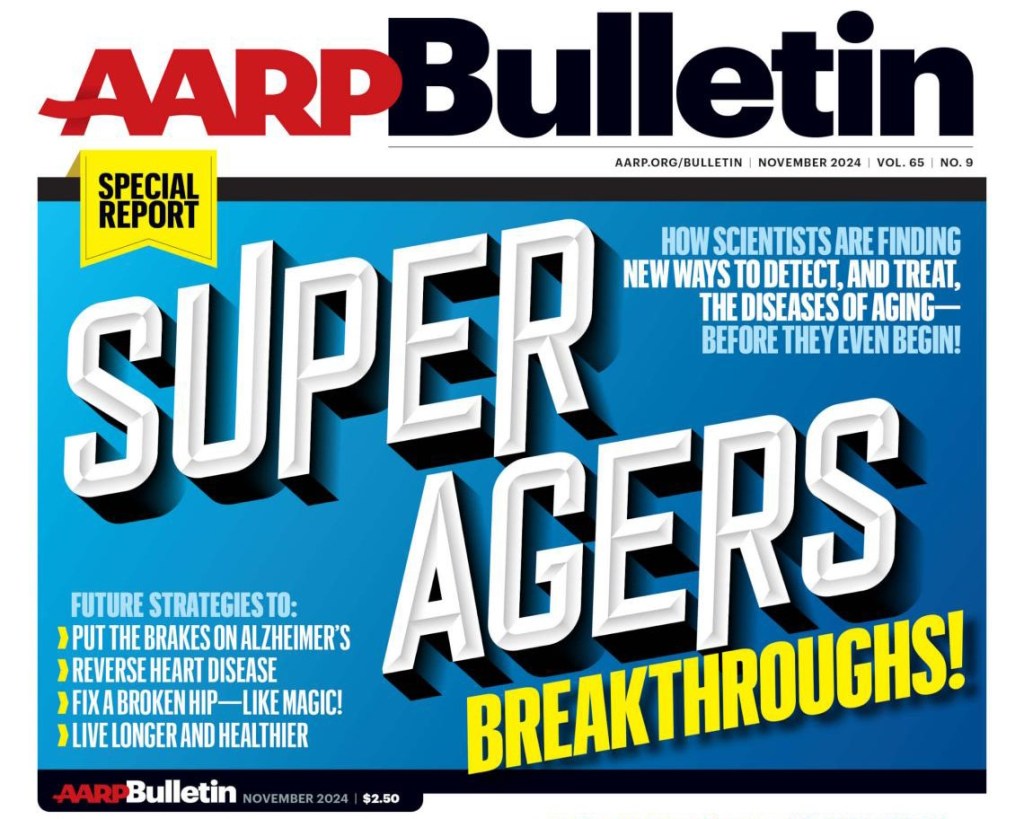
Reading the November issue of the AARP Bulletin about “super agers,” people who seem to defy the common complications of aging and appear destined to live a very long life, I recalled a recent conversation with a friend I’ve known since high school. We laughed as we talked about some of the experiences we’re having as people of a certain age and generation.
We laughed and made jokes about not wanting to live as long as science predicts that super agers might live. We agreed that the most unthinkable downside of living a long life would be outliving loved ones younger than us.
Another major downside of living a long life is the specter of becoming a living, breathing, walking ghost in our own time. Having experienced the loss of friends our age, we find ourselves in communities where we have fewer and fewer peers and no matter where we are, we think we are the oldest in the room.
As we have always done, we looked for the humor in our situation. We decided that we were living ghosts because younger people don’t really see us. They know that we’re here as a presence but not really an entity with whom they should engage. They feel our ghostly presence but not as contributors to the life they’re living.
We don’t blame them for not engaging with us. We understand that they don’t seek conversations with us because they “know” that we probably can’t connect with what they’re talking about regarding their social media interests, music they’re listening to, movies that appeal to them, and the fashions that are most fun and attractive to them. They see us as old-fashioned as we saw our elders when we were young.
We laughed as we shared anecdotes that supported our understanding that we were living, breathing, walking ghosts.
I told her about an experience I had some time ago when I was thrilled to be with a young friend at a club enjoying music and conversation while people-watching. A couple of seats at our table were empty. After some time, a young couple took the seats. After a while they asked “us” if “we” had heard this music group before.
That was the opening to talk about other things that “they” had in common. I care about my young friend, so I was not upset. I was just observant. The three of them engaged in animated conversation throughout the evening, never seeming to notice that I was a living, breathing human sitting with them at this very small table.
I couldn’t believe how unaware they were that I was excluded from the conversation. I don’t think ignoring me was out of malice or even bad manners. It was just how things are.
Thankfully, the situation at the club was the most blatant demonstration of exclusion and being treated as a void that I have had.
My long-time friend and I concluded that we ought to keep these rare instances in perspective and not allow the behavioral inclinations of the young to influence our worth and self-esteem. As we reminded ourselves, we have always swum against the tide and don’t plan to stop swimming any time soon.
 Gwen Dungy
As I read your post, four responses came to mind.
1. Congratulations on taking the high road and for coining the term “living, breathing, walking ghosts” to describe women of a certain age.
2. Kudos for keeping your sense of humor and ability to understand what motivated a group of young people to treat a table mate over sixty as an invisible person.
3. You are not alone. (Yes, I know that I am stating the obvious.) One of my doctors recently asked if I would wait around after my appointment because his lunch break was coming up, and he needed to talk with me. As we exited the hospital, the doctor said, “Maggie, I feel like such a dinosaur. Some of the younger hospital administrators look right through me, and two of the new interns recently commented that I must find it difficult to keep up with current medical advances since I earned my degree thirty years ago.” The man just turned sixty, is a recognized expert in his field, has published
extensively, and saved my life eight years ago when he detected a medical condition that six other doctors in different states—all under fifty—had missed because they did not take the time to listen to me or to check the data I provided.
4. The very people to whom we are invisible are the people who would benefit the most from interacting with us.
I will always be grateful to my husband, who was part Native-American, for introducing me to the concept of a spirit guide and convincing me that our generation had to become living spirit guides and help young people understand the past, make sense of the present, deal with life’s challenges, and prepare for an uncertain future. I can still hear him saying, “Refuse to be invisible, Maggie. Engage young people in conversation whenever you can. Once you have a connection, listen to them, ask questions that matter, and remind everyone that, although humans have made great strides in many areas over the centuries, their behavioral and belief patterns have evolved much more slowly. When the moment is right, explain how our generation’s life experiences have uniquely positioned us to offer guidance, protection, and insight to their generation just as our parents and grandparents guided, protected, and taught us—even when we tried to ignore them!