Author Archives: gwendungy

Competencies and a Cross-Cultural Perspective

gwen dungy at nissiThe second day of the Institute was divided into two sessions. During the morning session, we reviewed the lessons from the previous day and the goals the participants had for the Institute. Most of the goals not met on the first day were going to be addressed on this day. Our topic was the competency Advising and Helping.  Before giving an overview of the session, participants also shared what they saw as the most pressing concerns their students had. We would plan to use the list of concerns for role playing during the Advising and Helping session.

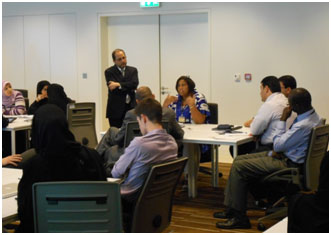
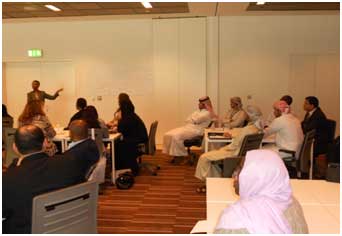
We learned that some of the participants had had some training in active listening skills, and we asked them to demonstrate some of the skills of active listening for the entire group. During the role play, one person was the student with a concern, one person was the helper, and the third person was the observer. The role play was videotaped and played back for all to see and share in discussing observations related to active listening skills. There was enthusiastic participation, and the exercise seemed to be quite effective.

oscar felixThe afternoon session was the Host Country Session on culture. What began as an information session became a lively discussion among nationals who had different perspectives on traditions and customs. This session is an invaluable part of the NASPA International Student Services Institute, and the only thing we would change about it is where we place it on the schedule. In the future, we will do the Host Country Session earlier in the program in order for non-nationals to have this information as the competencies are reviewed since the competencies were created from a U.S. perspective.

Dr. Oscar Felix, Dr. Courtney Stryker, and I think the participants learned and were satisfied with the Institute. In a cursory review, the evaluations were extremely positive.

NASPA International Student Services Institute

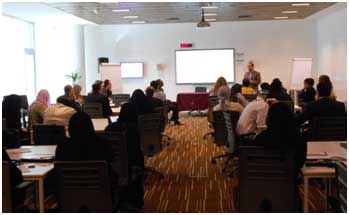
The first day of the NASPA International Student Services Institute (NISSI) was attended by forty participants, ten of which were undergraduate students. The five male and five female undergraduates were an interesting and thought-provoking addition to the Institute. As we student affairs practitioners talked about students, these students were able to interject the student perspective as they were living it.

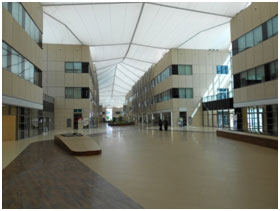
courtney strykerDr. Courtney Stryker, student affairs administrator at Zayed University, Abu Dhabi, hosted NISSI at Zayed University’s Abu Dhabi campus. Some photos of the convention center where the Institute is being held speak volumes about the AAA facility with so much space and architectural interest. The facility is impressively beautiful, comfortable and quite practically useful.

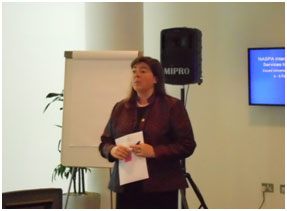
Zayed UniversityFrom 2:00 p.m. to 5:00 p.m., Dr. Oscar Felix and I shared a sketch of student development and learning theories. I talked briefly about the evolution of student affairs, the purpose of the publication Learning Reconsidered and how the publication has redefined learning.

oscar felixDr. Felix gave an introduction to various student development theories. Participants were engaged throughout the session and had quite a bit of discussion on Sanford’s challenge and support theory.

It was interesting to see the different perspectives of students and student affairs educators on whether or not students were more challenged than supported. Baxter-Magolda’s theory on self-authorship caused several participants to recall conversations with students who were at the threshold of making the decision to take responsibility for self authorship or sacrifice their own independence for the sake of tradition and family pride.

Tomorrow as we discuss and practice using the basic skills of advising and counseling, we might explore how the helpers would guide a student who is in-between.

Shangri-La


Had a really fine dinner and discussions with colleagues last night at an Indian restaurant in a shopping arcade next to the Shangri-La Hotel. Yes, it really does look like it should be called Shangri-La.

After dinner, sleep did not welcome me with open arms. Writers have described the sound of the wind during the night as howling, haunting, or even mournful. As I lay awake last night, because my body has not adjusted to the new time zone, I likened the sound of the wind to an ensemble of wind instruments, especially the flute. The sound was lilting and soothing, and for that, I am grateful.

In just a few hours, Dr. Oscar Felix and I will meet the participants who are attending the first NASPA International Student Services Institute (NISSI) in the United Arab Kingdom (UAE). This NISSI is a collaborative program created by Colorado State University Student Affairs in Higher Education program, Zayed University, and NASPA.

I could not be more excited about the Institute and future possibilities!

Oscar Felix, Colorado State University; Courtney Stryker, Zayed University;  Karla Fraser, American University of Afghanistan, Gwen Dungy, NASPA

Oscar Felix, Colorado State University; Courtney Stryker, Zayed University;  Karla Fraser, American University of Afghanistan, Gwen Dungy, NASPA

Dreaming While Awake – International Student Services Institutes

It’s 1:00 a.m. here in Abu Dhabi and 4:00 p.m. on the East Coast of the United States.  I left my house at 2:00 p.m. on Friday, February 1, for Dulles airport to take British Airways to Heathrow in London and from London to Abu Dhabi. I lost a day, so to speak, in travel. As soon as I finish this message to you, I will finally go to bed since I’ve not been prone since Thursday night, January 31. 

I’m surprisingly alert and have such a sense of well-being. Perhaps it’s because I’ve been so thrilled that the vision Kevin Kruger and I had about ways to fulfill the NASPA Board’s international objective is coming together on several fronts much sooner than either of us expected. One dream was to offer student services institutes internationally. We had our first one in December in collaboration with the Hong Kong Student Services Association. Speaking of collaboration, a partnership with Colorado State University’s SAHE program working with Dave McKelfresh, Jody, Donovan, and Oscar Felix is a fantastic dream as well.

I’m also pumped because Courtney Stryker, Zayed University in Abu Dhabi,  and I had an impossible dream to have a NASPA International Student Services Institute (NISSI) this February despite some setbacks along the way. The potential success for the Institute is beyond what either of us dared hope. I will give a better account of attendance and response after the first day of the Institute.

Last year, Denny Roberts, gave me an opportunity to represent NASPA in the Region III 6th Annual Gulf Conference program as a panelist along with Greg Roberts and colleagues from Hamad Bin Kalifa University in Doha, Qatar, or Education City. This year, Courtney Stryker and the Conference Planning Committee are giving me an opportunity to keynote the NASPA-ACPA Gulf Conference following the NASPA International Student Services Institute. It’s all coming together beautifully, and I am going to get some sleep now to continue the dream.

The Incomparable Caryn McTighe Musil

Last Thursday, I had the honor of introducing close friend and colleague Caryn McTighe Musil at the Women’s Networking Breakfast at the AAC&U Annual Meeting. As she truly is a remarkable person, I wanted the opportunity to introduce — or re-introduce — you to her:

I am pleased and truly honored to introduce Caryn McTighe Musil as our speaker this morning, and I can’t think of any group that would be better suited to celebrate her than you who are here at this Breakfast.  For this introduction, I want to talk sister-to-sister about one of the most incredibly competent and courageous women I know.

 As many of you know, Caryn has partnered with Carol Schneider, president of AAC&U, for the past twenty years in making AAC&U inarguably the most well-known and respected higher education association in the world.  Having served as senior vice president for the Office of Diversity, Equity, and Global Initiatives and claimed many successes during her tenure, Caryn decided to narrow her focus and take the role of Senior Fellow and Director of Civic Learning and Democracy beginning in November 2012.  The acclaimed report, A Crucible Moment, is one outcome of this multi-project national initiative.

 Caryn and I became friends upon our first meeting.  I’m sure all of you who claim Caryn’s friendship could probably say the same thing.  Caryn and Carol Schneider hired me to work with them on their big Ford Foundation initiative American Commitments: Diversity, Democracy, and Liberal Learning.  Having an opportunity to read, learn, and plan how diversity could be infused throughout the curriculum through forums, publications, and workshops was the most intellectually stimulating experience of my career.  

It was during this time that I learned that no one can work harder and longer than Caryn McTighe Musil.  Even when I would stay up half the night reading and writing for this initiative, I would find that Caryn had stayed up all night to continue the work.

When I put working hard and all night together in talking about Caryn, I recall one of the occasions when Caryn and I were roommates somewhere doing the work of AAC&U.  I was dreaming that I was listening to Caryn make one of her fine speeches.

 It seemed so real to me. Well, it was real. Upon awakening, I looked over at my dear friend who was speaking eloquently as she slumbered.

As I spent time with Caryn as a colleague and friend, I saw a woman of great moral courage, a woman of infinite grace, a caring, considerate, and compassionate woman, and a woman whose passion for social justice is as innate to her as her maternal sense and her love of beauty– be it in nature or the arts.

Caryn’s moral courage and passion for social justice, come from her foremothers who were dedicated educators, brilliant, and persuasive writers, and activists for civil rights and women’s rights.  She is the embodiment of all that is praiseworthy of Ida B. Wells, Susan B. Anthony, and Elizabeth Cady Stanton. 

Like Ida B. Wells whose writings were the impetus for the anti-lynching campaign, Caryn’s publications on social responsibility, civic learning and engagement have launched a world-wide campaign about the civic expectations of today’s graduates.  

Like Susan B. Anthony, Caryn has dedicated her life to “the cause.” Caryn was a pioneer in bringing Women’s Studies to college and university campuses.  She taught the first Women’s Studies course at LaSalle University, and she served as a faculty member for eighteen years before bringing her many talents to the national level.  

And like Anthony, Caryn knew how to bring people together for the cause. In 1971, she was helping women organize and network in order to support one another in finding their voice in male-dominated institutions in the Delaware Valley.

Like Elizabeth Cady Stanton, through her great rhetorical writing, Caryn has always been able to communicate her vision about social justice that ignites a sense of urgency in her readers. These skills and her track record made her the ideal person to be selected Executive Director of the National Women’s Studies Association in 1984.  

This was a critical time for women because there were momentous gains and setbacks.  

Among the gains, Geraldine Ferraro was nominated as the first woman vice president for a major political party, and Sandra Day O’Connor was the first woman named to the Supreme Court.  A setback was the defeat of the Equal Rights Amendment.  

It was during this time that Caryn was recognized for her work by being named a “Pennsylvania Woman of the Year.” During this same period of activism, she was chosen as a Commonwealth Speaker by the Pennsylvania Humanities Council.

What I’ve described is just a part of who Caryn McTighe Musil is.  Caryn is married to Bob Musil who with all of his successes as the leader of a prestigious professional association and scholar, he considers as his greatest achievement his good fortune to be Caryn’s loving husband.  

Caryn has always worked full-time and has not failed in balancing her maternal and spousal role with the demands of her career.  If she had not found the energy to be an attentive mother for her daughters, Rebecca and Emily, they would not have had the foundation and confidence necessary to become the successful attorney and college professor, respectively, that they are today.

To get a better sense of the whole of Caryn McTighe Musil, I asked her husband, Bob, to tell me what she liked to do for fun.  He said that she has this intense curiosity, passion, and joy for French history, culture, and politics.  She loves to spend time in France and she speaks French.  She also gets a lot of enjoyment out of analyzing films.  He said that she has this incredible ability to empathize with characters and analyze plots in film and literature.

When Bob mentioned empathize, I thought of how Caryn is with colleagues and friends.  She is patient and attentive and by being this way, she can see and feel the world that we inhabit.  And when she sees this world through our lens, she looks for and helps us identify our full potential.

I don’t want to give the impression that Caryn is perfect.  She has her faults.  For example, she will keep you waiting while she does one more thing before leaving the office.  

I mentioned her love of beauty, especially in nature.  She is an avid bird watcher and the season’s change and turning of the leaves are like a special holidays for her.  In all the years I have known Caryn, there is only one time that I recall when I irked her and really got under her skin.

Caryn thought it would be a great idea for us to invite our spouses to join us at the end of one of the trips we were making for work.  It was fall and we’d all drive to New England to see the fall foliage.  

Early on, I had said that the date was too late and the leaves would have already been at their peak.  Caryn disagreed and thought they would still be lovely.  

As the plane was making its approach to land, I pointed out the brown leaves.  Caryn pointed out the leaves that still had color.  As we drove through New England, I mentioned that the leaves had lost their color one time too many, and while I don’t know exactly what she said, the comment had the effect as if she had said, “Girl, if you say one more negative thing about these leaves, I’m going to clobber you.”  

As we all know, Caryn would never say anything like this, but as patient and as kind as she is, she has her limits.  She is fun to be with and never loses an opportunity to learn and to share that learning.

It is my joy to present to you our speaker this morning, our friend and colleague, Dr. Caryn McTighe Musil.

Coming to My Senses: Of Grandmothers, College Aspirations, and 8-Year-Olds

I’ve been spending time with our 8-year old grandson during this holiday season. Since my world has been about college and university students and because I, too, am caught up in the mad race that many all around the world are in about college and the future for our next generations, I look at him and begin to assess his potential as a successful college student.

For example, when he is playing flag football, and doesn’t get as many flags as his teammates, or when his friends play an instrument and he chooses not to, or when his friends love chess and he is very casual about it, I begin to think about college entrance test scores, how many service projects he will have to do, and special talents that might have an impact on his college acceptance and success. In other words, when he is looking at the other children as friends, I’m looking at them as competition.

And then, I move beyond college and think about the global competition he will face for jobs, and I wonder if he will excel in whatever might be the most sought-after skill for that unknown future time. Finally, I come to my senses and think back to when I was eight, and all that happened in my life between third grade and my senior year in high school.

Eight years is a critical age for children, but it does not have to set the course for their future. When I was eight years old, no one was thinking about what college would accept me. If any thought were given to me, it was with whom I would live and under what circumstances.

If I use my less-than-ideal experiences as an 8-year-old as an example, I can relax and realize that mistakes that adults make in bringing children up, opportunities that children miss, and coincidences that affect the lives of children do not necessarily predict what the future will hold for them.

I also have to remember that I was not a good athlete, did not play a musical instrument, and had no strong passion toward any particular activity. In contrast, our grandson is a good athlete, has a strong interest in knowing everything there is to know about football and the players, and he is passionate about winning in any competition. He has an extensive vocabulary, reads incredibly well, is an analytical thinker, is opinionated,  and relishes finding holes in any argument that is counter to his perspective. He has a strong moral compass, and when I want to bend the rules, he brings me up short on what is right and what is wrong.

Importantly, he is eight and is enjoying these few years when he is not anxious about college, jobs, and what the future holds. Being concerned about these issues are for the adults in his life such as grandmothers who know a thing or two about higher education and the outlook for the future.

NASPA in Hong Kong!

I didn’t sleep well on Monday night the 10th; I guess I was anxious about getting to Hong Kong. I left my house for the Thurgood Marshall Baltimore-Washington Airport at 7:30 a. m. on Tuesday the 11th. I landed in Hong Kong at about 8:15 p.m. on Wednesday the 12th.  After 16 hours in flight to Hong Kong from Newark, I’m pumped and eager to meet Dr. Jody Donovan for our NASPA International Student Services Institute in partnership with the Hong Kong Student Services Association.

When I arrived at the airport in Hong Kong Wednesday evening, I was greeted by “Deck the Halls with Boughs of Holly,” followed by “Silent Night” and many other Christmas carols. As I write this message while in the lobby of the hotel, I hear more Christmas carols. Everything is beautifully decorated in celebration of the Christmas holiday.

Leaving the airport on the Hong Kong side and coming across the Victoria Harbor Causeway to Kowloon to the hotel, I was struck by all the cranes and containers in the harbor and all the high rises surrounding the bay with lights on in the apartments and condos. The city is alive and electric with stores everywhere. Not just any stores, but there are designer stores jammed in every place.

With so many opportunities for conspicuous consumption, I wonder what college students in Hong Kong and the surrounding region envision for their future. Do they see themselves as financiers, CEOs of start-ups, or are some of them considering education, nonprofit work, or even student affairs. Tomorrow when I speak with the participants in the Institute, I will encourage them to consider becoming mentors in the Gwen Dungy NASPA Undergraduate Fellows Program.

Have a great holiday!
Gwen

Stronger Emphasis on ‘Soft Skils’

I’m serving on a Commission on the future for our very fine local community college, and I was at a meeting with business people and community college faculty, staff, and administrators.  In his closing remarks, the business man who is chairing the Commission reiterated what the various groups were saying about the needs of college graduates.

He said that the college needed to pay attention to ensuring that more students are preparing themselves in the STEM majors, but that they also needed to be prepared with what are sometimes called “soft skills.” Expecting to hear reasons why there is not more emphasis on those skills that student affairs works to encourage students to acquire, this very wise man made the following statement:

Soft skills may not get college credit, and they might not be accredited by the people who evaluate college courses, but we need to say, ‘The hell with that!’ We need to do what we know is right for students because it’s about learning and getting the skills students need to be successful.

If I had been in church, I would have said, “AMEN!” In my speeches and presentations, I’m focusing on what skills our graduates and alumni need in order to be prepared both for careers that currently exist and those that do not yet exist, and some of these skills are those skills called “soft skills.”

When I talk with employers, they say that college cannot prepare students for the specifics for most jobs, but they can give students the foundation that will be used in learning how to learn the specifics of the job. What students do not always have is the foundation that enables them to be excellent communicators across cultures. The employers are saying they need managers, and without the intercultural communication skills, our students will not be equipped.

These skills can be learned if student affairs will collaborate with faculty in offering what I call cocurriculum laboratories.

I will write about these in subsequent blogs and will respond to any questions or comments.

Giving Thanks…and the Wisdom of Women

It’s wonderful that some of us celebrate on a special day to think about all for which we can be thankful. Attending the NASPA Western Regional Conference November 7-10 is one of the many experiences for which I’m thankful. The conference planning committee led by Lea Jarnagin, dean of students at Cal State Fullerton, did a fine job. And if they didn’t, most of us would have thought it was a great conference because it was in Hawaii.

I’m thankful for more than the time in Hawaii, however. I’m thankful for the opportunity I had to co-present at the conference with Doris Ching, vice president emeritus from the University of Hawaii. Our presentation was something of a retrospective of student affairs and higher education, and we tracked the decades with our personal career journeys.

I’m also thankful for the opportunity to participate in a panel that Teri Bump, vice president for student affairs for American Campus Communities, organized. The panel’s session was titled Wisdom: Our Inspiration & Opportunities. Hearing these remarkable women share about their lives in very personal terms was awe-inspiring for me. When it was my turn to speak, I was so full of gratitude for what these women bring to all of us, that I could hardly find my voice.

Teri Bump vice president student affairs American Campus Communities

Teri Bump, vice president student affairs, American Campus Communities

During this season of giving thanks and sharing, let me share some of their comments with you.

Teri asked, “What do we know for sure?” She urged all of us to think about the gifts we bring and the choices we make. She shared that her gift is bringing good people together. I think that she is consistent in sharing this gift and it’s much appreciated.

Doris Ching emeritus vice president student affairs University of Hawaii System

Doris Ching, emeritus vice president student affairs, University of Hawaii System

Doris urged us as professionals to critically examine and adopt a personal education philosophy; to practice consistency and integrity; and to keep the ideals of the profession in our hearts, minds and spirit. She told all of us that we were already sharing our gifts in ways that strengthen the profession and that our gift in return is self-discovery and powerful leadership.

Carmen Vazquez vice president student affairs University of San Diego

Carmen Vazquez, vice president student affairs, University of San Diego

Carmen said that she was a first-generation miracle. She shared examples of faith, spirit, and intuition in her own life and concluded that sometimes we get what we need and not what we want. She stressed the importance of having a sense of presence and being in the here-and-now in order to absorb and manage chaos and give back calm. She believes that we are here for others and not just for self. In making decisions, she encouraged us to be open to possibilities and trust our inner voice.

Ann Marie Klotz director of residential education Oregon State University

Ann Marie Klotz, director of residential education, Oregon State University

Ann Marie began with “We are the women who came before us.” She gave a moving narrative about the characteristics of her great grandmother, her grandmother, and her mother that instilled her values and give her strength. These three incredible women are role models for her, and she is certain from where she received her intellect, heart and strength.

Luoluo Hong vice chancellor student affairs University of Hawaii Hilo

Luoluo Hong, vice chancellor student affairs, University of Hawaii Hilo

Luoluo announced at the beginning of her remarks that she was disruptive and discontent, and she is a social justice warrior who does not suffer from a lack of courage. She said that what she knows is that in her work and life, she draws from three pools of knowledge: scholarship, public health, and women’s studies and social justice. These areas help her understand the value of hard data and systems thinking, all the while not ignoring her heart.

I hope this thumbnail sketch of the stories and words of wisdom of these women will be food for thought for you during this Thanksgiving holiday season.