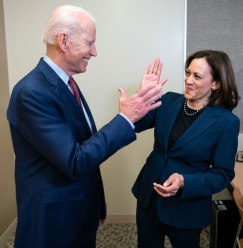
I couldn’t sleep at all Tuesday night. As soon as presumptive Democratic presidential nominee Joe Biden announced that his running mate would be Senator Kamala Harris, my phone began to ping with euphoric messages from friends and family. This announcement, coupled with my listening to Isabel Wilkerson’s book Caste: The Origins of Our Discontents at one-and-a-half times the regular speed, contributed to my racing thoughts and restlessness during the night.
My major concern as I tossed and turned was whether or not I would be compelled to write a blog titled “Shouldna Known” after the fall presidential election. Biden has been leading in recent polls; he has been threatened that if he did not choose a Black woman as his running mate he would lose the election; Kanye West may be successful in positioning himself to siphon off some votes from Biden; and passionate Evangelicals, perhaps more than ever, see the current President as the protector of their religious freedom.
The biggest threat to Biden’s election, however, may be the impossibility of the dominant caste to “allow” a strong woman who embraces her blackness to be a heartbeat away from the presidency of the United States. The election may rest on the question of whether or not the dominant caste will risk their place in the “ingrained system of hierarchy” to save the nation. If caste is as strong an impulse and motivator as Wilkerson asserts, backed by examples and research, we will relive 2016’s “morning after,” awaking to a very different reality than when we’d gone to bed thinking that there was no way the American people would not elect Hillary Clinton to be President of the United States.
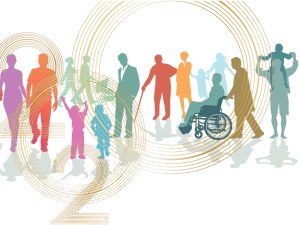
As opposed to pointing a finger up to see which way the wind is blowing, Generation 2020 will change the direction of the wind.
After going through the current hard times I need not reiterate here, I predict that Generation 2020 will acquire unmatched and phenomenal resilience. We will work to enhance the connectedness among all people. We will promote strong, powerful natural leaders who will create communities where everyone is needed.
Our experiences in 2020 will stimulate our imagination and strengthen our resolve to make our collective vision a reality.
While some less hopeful and less imaginative thinkers may want to label our generation the COVID Generation, the Pandemic Generation, or the Protest Generation, we will reject these descriptors that mark the retreat of progress and the decline of humanity. We will see and feel ourselves as wholly new and powerfully burnished by the crucible of 2020 into strong, precious, and valuable human beings.
Generation 2020 will be unstoppable as we work for the common good, find new ways to safeguard the earth, share our resources more generously, and support one another as we take responsibility for past history and advocate for justice and rights for people everywhere.
With so many disheartening reports about COVID 19, like many others, I’ve limited my exposure to television news. On Monday, June 29, however, I turned the television on for noise as I folded some just-washed towels. I was not really attending to the news reports until I heard this statement from White House Press Secretary Kayleigh McEnany: “Law and order are the building blocks of the American Dream.”
Stunned by the statement, I stopped folding towels and wrote down what she said. I began thinking about the term “law and order” and its historical political connotation combined with the historical concept of “the American Dream” and what that dream has meant to generations of immigrants and poor people for decades.
The wedding of these two terms in the press secretary’s statement elevates the political and cultural meaning of “law and order” while diminishing the ideal some have held as “the American Dream.” The statement raises the question: Whose dream is it if law and order are used to exclude, discriminate, and abuse?
Historian James Truslow Adams is credited with coining and defining the concept of “The American Dream” in 1931: “That dream of a land in which life should be better and richer and fuller for every man, with opportunity for each according to his ability or achievement.”
Such a concept is in keeping with the sentiment in Langston Hughes’ poem, Let America Be America Again, as the speaker calls upon the country to at last enact its highest ideals:
Let America be the dream the dreamers dreamed—
[Where] opportunity is real, and life is free,
Equality is in the air we breathe.
But the poem’s refrain that “America never was America to me” brings us back to the question of what, in fact, this “dream” has become and for whom. While soldiers may have gone off to war to “make the world safe for democracy,” they returned to political propaganda touting the virtues of home ownership, narrowing the idea of “the American Dream.” What’s more, a history of racial discrimination—particularly in regard to mortgage lending and redlining—made this dream attainable by only some.
Although there has been much progress in discarding explicitly racist residential maps and ensuring oversight to more equitably distribute loans for mortgages—and, to be sure, houses purchased in white neighborhoods by Black people are not as frequently firebombed—the concept of “the American Dream” may be out-of-date given the current global environment.
Over the years, the concept of the American Dream has been used as a benchmark to measure how Americans, especially college students, feel about their future. A few years back, in referencing New America’s annual survey on higher education, the Association of American Colleges and Universities (AAC&U) made the following statement:
While most Americans believe that higher education is valuable for students and beneficial to society, they also believe that the state of the economy, self-interest, and costs inhibit some institutions from helping students achieve the American Dream…. Overall, the data show that people are aware that the American Dream is increasingly out of reach.
Given how deeply embedded “the America Dream” has been in the American psyche, I think the 2011 Bonner report’s finding that, “First and second-wave African American millennials were not familiar with the term” is particularly telling.
Considering that the prognostications about achieving “the American Dream” as originally conceived are generally negative; surveys show that the new generations of young people, in large numbers, do not want to own a home; and the new narrative from the White House Press Secretary has devolved the concept into something not remotely related to the original idea, I think we have reached an important point in the nation’s history in which some terms and concepts should be deleted from our psychological dictionary.
One way we can do this is by letting go of and replacing dreaming about a monolithic concept of doing well materially with a “Dream for America” that has as its foundation our hope for humanity—a hope that this dreamed-for America yet will be. A “Dream for America” would include putting together the fragments many have just become aware of into a human connection focused on justice and equitable and sustainable opportunities for all.
Just when the “now” generation feels it has found its cause—injustices baked in by striations of economic opportunities, a systemic culture of racism, and an overwhelming consensus about a severely flawed system of law enforcement—many of those who took to the streets to protest like their predecessors who stimulated movements of cultural significance, will need to be students once again.
In order to sustain the commitment to action, some students will surely participate as activists on campuses in attempts to replicate what they saw or experienced during the summer of George Floyd. Others—no less committed to the cause—will want to contribute in a different manner.
Andrei Santos, Environmental Science and Public Policy major at Duke University, shares in the following thoughtfully reasoned essay ideas and suggestions about how students can sustain the passion and momentum of the summer of 2020 from where they are as students.
by Andrei Santos, Rachel Carson Council Stanback Engagement Intern, Duke University (Reposted courtesy of the Rachel Carson Council)
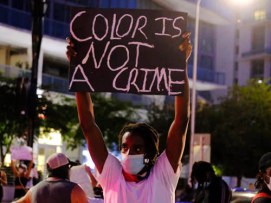
Over the last couple of weeks, protesters have responded to the death of George Floyd with demonstrations in all fifty states. Although the protests were started in response to Floyd’s death, they have quickly transformed into protests surrounding the broader issue of racism in police forces across the country and systemic racism in the country as a whole. While youth organizers have been responsible for many of the protests throughout the country, students must carry this momentum into the fall semester. The systemic abuse of people of color is not localized to their interactions with the police. In order to progress towards a truly just society we must confront the racial disparities not only in policing, but also the environmental sector.
People of color are more likely to suffer from exposure to air pollution, live near landfills, and contract waterborne diseases due to limited access to clean water. Access and quality of vital services have long been overlooked, but act as barriers to people of color by diminishing the quality of life of minority communities.Now is the time for students and faculty at universities across the nation to act in the places where they have the most influence. Students and student activists have the opportunity this fall to address these issues of race, and campus communities must work to dismantle systems of oppressions wherever present.
While protesters feel that speaking out in this moment is necessary, many also struggle with how to go about protesting. The COVID-19 pandemic has forced people to make a decision between protesting against inequality and brutality at the hands of police officers across the nation, or avoiding the pandemic by staying distant. Especially as the disease disproportionately affects communities of color, the people who feel most strongly the effects of the injustice protest have been centered around are also cognizant of the health risks. This, among other factors like the proliferation of social media platforms, has pushed many protesters to act digitally, sharing resources to help educate observers, raise awareness, and fundraise. For onlookers, it is time to become informed and act in anti-racist ways. For politicians, it is time to evaluate the efficacy of policies that work against black communities. For environmental groups, it is time to reflect on the intimate link between racism and environmental justice. Two crises are at the forefront of the American psyche in this moment, racism and disease, and it’s time to acknowledge that racism doesn’t just appear in the blue uniforms of police officers or the white robes of the KKK, it rears its ugly head in the form of food insecurity, pollution, and climate change. It appears as Confederate statues glorifying conquerors and slave-owners. It surfaces as university investment into campaigns and companies that promote racist policies.
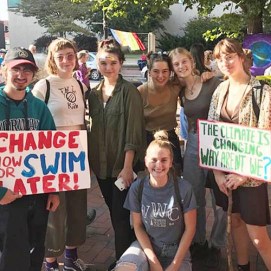
It’s normal to feel angry, frustrated, and ready for a change. For students, these feelings are an opportunity to act in socially responsible ways on campus. Systemic racism permeates everyday life, and university life is no exception. From educating oneself about injustices committed against people of color by enrolling in classes that challenge one’s perception of the world, to addressing diversity policies in the clubs one is a part of, students can educate themselves about inequality and work to improve the collegiate environment. Students can also look into the campaigns and companies that their universities and schools involve themselves with and promote divestment of groups that are socially irresponsible. Questioning the role and efficacy of police officers in schools is additionally important. Every school is different, but no school is perfect. Analyzing collegiate life and addressing, organizing, and protesting around the issues that affect people of color disproportionately is important to furthering the movement past calls for an end to police brutality. For students, bringing the protests from the streets into the classroom is important for keeping the movement alive.
When students return to campus in the fall, they may find that it is a significantly different place. Social interactions may be limited and classes may be smaller, but that doesn’t mean that activism has to stop. Engaging with communities digitally and transition to online movements allows student-activists to reach a broader audience while limiting the barriers presented by the post-COVID world. Organizing around racial issues in the area that students have the most influence, their universities and colleges, can still be done through digital media. Now is the time to ensure that the newfound energy being directed towards racial justice doesn’t begin to fizzle out by bringing this sense of action to campuses across the nation, digitally or otherwise.
Campuses across the nation have seen a renewed push to change aspects of collegiate life, even during a time when students aren’t living on campus. At Duke University in North Carolina, students have started online movements to remove the police from peaceful protests on campus. In Charlottesville, activists demonstrated by marching through downtown in protest of police brutality and called for Confederate statues to be brought down.
Clemson activists have circulated petitions to remove John C. Calhoun’s name from the Honors College, and have done so through online platforms like change.org. Examples of how to act in anti-racist ways are as varied as the students conducting these movements, but it’s important for these actions to continue and progress. Whether movements are conducted online or in person, it is important for students to continue working towards making their campuses more inclusive and carrying the energy from this summer to the fall.
Current protests underscore the complexity of progress. Systemic racism is not just a single-faceted issue, but rather one with traces in every sector. Organizing work may look slightly different in the time of social distancing, but in this time of political upheaval, it could not be more important. While social distancing may keep us physically separate, now more than ever, we need to use the tools at our disposal to come together and fight injustice on all fronts. For students, upcoming semesters signify change, and this semester offers an opportunity to change their campuses for the better.
February is Black History Month and, though I don’t want to talk about race per se, my experiences as a consequence of being black in institutions where there were few other people of color seem to bring me back to this song that has no ending.
My student teaching experience in an all-white institution – with no mercy from the high school supervising teacher or the practicum professor from the university – was so traumatic that I fainted in front of the class when I was being observed for my final evaluation. It was just too much pressure.
In my first teaching position after college, then, I was determined to right the wrongs of my student teaching experience. With only one other black teacher in the English Department, I had to pass the rigorous scrutiny of the Department Chair, who frequently just popped in to my classes unannounced to observe.
One day Miss Nelson, white-haired and married to her role as Department Chair, stopped by my classroom to chat about the Parents’ Night scheduled for that evening. She smiled and assured me that there was nothing to be concerned about. In fact, she said, “Don’t be disappointed if parents don’t show up because parents seldom visit the teachers of their children in high school.” Imagine my surprise when all the seats of my classroom were filled for every hour of visiting on Parents’ Night.
Because of my history as a black woman, when I was a counseling psychologist at a community college, I vigorously resisted the suggestion that all counselors have large photos posted outside the counseling center with a short professional bio so students could see with whom they were making an appointment. While there might not have been anything nefarious about the intent, you can guess what I thought.
Thinking back on these times and realizing that this song seems to have no ending makes me want to quarantine new generations of students from our history and from our current cycle of politics. Why quarantine? Because sometimes the professionals who have always believed that education for diversity and expanding one’s world view is the way to confront partisanship and polarization get discouraged.
For those who might be feeling discouraged by the tone and reality of our current political environment, I recommend what I think is an excellent article on what educators can do to continue to provide opportunities for reaffirmation of our very humanity and that of our students. In “Interfaith Learning and Development – Building an Understanding of Religious Differences” (Leadership Exchange, Winter 2020), Interfaith Youth Core Program Manager Janett I. Cordovés and University of Illinois at Urbana-Champaign Director of Diversity and Social Justice Education Ross Wantland write about how “provocative encounters” with diverse peers help students develop a “pluralism orientation,” resulting in the following positive outcomes, among others:
accepting others with different worldviews;
believing that worldviews share many common values;
considering it important to understand the differences between world religions; and
believing it possible to have strong relationships with diverse others and still hold to one’s personal world views.
The success of these provocative encounters depends on the ability of facilitators to both challenge and support students in these controversial learning spaces. Civility in dialogue around differences of opinions about religion and politics are high bars to attempt to reach particularly in an environment in which political identity has become the cauldron of multiple identities that not only exclude “the other,” but also make that “other” the enemy. Nevertheless, it is Black History Month, and we want to end this song.
In the recent inter-generational conversation on gender I had the privilege of facilitating, all of the dialogue participants were connected to education in some manner. The expectation, then, is that responses would resonate with students and those who work with students. To that end, I asked the following question directly related to student activism on campus today:
In a political climate where students take matters into their own hands, what do you see as critical for them to know about the risks and rewards of activism in their future careers? What difference do you think gender will make?
As the person still working directly on a higher education campus, Eboni’s is the first voice heard in the above clip, with a question from Jackie. The clip closes with Tangela’s observations.
Takeaways
Responses to this question clearly recognize that student activism is “cyclical and long,” as Tangela notes. Jackie asks if students know their history to inform their present and future. Eboni sees all kinds of students — those who are “grounded in understanding, as well as those who live only in the present.”
The Silent or Traditional (S/T) and the Baby Boomer generations on campus may see the rolling back of progress in the current climate of overt racist groups influencing students. Organizational and environmental characteristics of colleges and universities remain critical today, as they were when the doors began to open to provide more opportunities for all students. Current student activists, as those in previous generations, realize that they have to look to themselves for support because often the seats of power in academe are still occupied by people who do not understand, or do not care to support them in, their struggle.
Full Transcript for Activism Section
Gwen (T/S): Let’s talk about students on campus. As you know, students are quite active today in going after what they want. They don’t trust people to take care of them, as a lot of us didn’t trust people way back when to take care of us. So, what would you say the risks and rewards are for activism and these students’ future careers and, is there a difference related to – why don’t we say – gender and race if you’re an activist right now?
Jackie (BB): I’d like to hear Eboni’s answer, because she’s still actively on campus.
Eboni (X): Uh, sure. You know, I think that, particularly, kind of post-2016 elections, we’re seeing increasing numbers of students of all stripes, but particularly on the heels of Black Lives and Black Minds Matter, kind of post-Mike Brown and any number of us folks who have died at the hands of – unarmed – and have died at the hand of – and the Say Her Name – right? I mean, we talked about Me Too, but in terms of Black women, in particular, who have resulted in death in terms of interactions with police… I think that there’s been a way in which there have always been risks and rewards when it comes to activism, but that students are showing that, at least in the last couple of years, that they’re willing to go there. That the risks and the rewards in terms of what they seem keenly aware of, is that it’s still an uphill battle. That they have to assert with their whole selves demand for access to be afforded, level playing fields – or at least more level, that they’re not distracted by these superficial kinds of things in terms of what you might dangle in front of them to try to get them to retreat. Right? That they’re also thinking about how to redefine the risk in terms of strategy, in terms of ways that they can address specific challenges – some being mainly gendered in terms of, you know, wanting to see Black female leadership, or some, with a lot of the Black male initiatives – there’s a lot of activity on my campuses and on other campuses where students are rising up, there’s a new wave of activism, and I think that they’re coming up with some unique strategies to try to mitigate some of those risks because they also understand that their activism, their decisions today to do that, can result in ways that can limit opportunity later, depending on how they do it. And then there are others that are not trying to be that methodical about it. It is coming from a more organic, emotional place and, yes, they’re bright, they’re prepared, they understand risk and reward, but at the same time, they’re like, “No, we’re having our say.”
Jackie (BB): Let me ask you this: Do they know they’re history, and are they using it to inform their present and their future?
Eboni (X): I wouldn’t generalize to say that they all do, but I think that some, in particular, are poised and grounded in that understanding. I know in terms of just some of the students that I’ve interacted with – some of my advisees – that some of them feel the least amount of support for that kind of engagement, where they will have older generations tell them, you know, “Be careful” – to not take the risk, but they feel like, you know, that these are matters of public policy, that these are conditions affecting lives and, so, some of them feel like, for any number of reasons, that, you know, whether it’s they want to be active around speaking back – clapping back – at what they see as a growing wave of racial antipathy on campus, or a lack of inclusion efforts from central administration, or whatever it is that – some are feeling afraid to take those risks, and they see the risks as more so to themselves, not where this is something that their family or friends are necessarily subject to, and that the benefits of the risks to them make it worth taking, because, you know, they are just at that point of, you know, really wanting to stand up. And, so, I think every generation gets to a point where something where – and, again, that last election – it’s like you get a call to arms. And then it’s the thousand little cuts, you know, in between, of being inundated, where it seems like it’s a rerun, but it’s a first cut, but it happens so much that the way in which folks get kind of, you know, desensitized to seeing – and then being told, you know, “All Lives Matter”… I know when folk hear that and then we time and time again, there’s an acquittal and there’s an acquittal and there’s culpability, and you have campus police profiling you, you have, you know, right-wing student groups on campus, you know… I mean, we just had another Affirmative Action Bake Sale in the spring. We had chalking where very anti-Muslim, anti-immigrant, anti-Black sentiment and different campuses. And, so, I think we’re at a point where students are – they’re like, “Let’s roll,” “I can’t,” like, “My cup is runneth over.” And the you’ve got others that aren’t – they’re just not going to be actively involved in trying to be on the frontline or getting in the face of administrators or having people protest or stepping outside of their own comfort zone.
Tangela (M): Uh, Gwen, to your original question, I’m on the University of Chicago, one of their professional division’s board. So, we are interfacing with those students. What I’ve been inviting them to do is have a plan – even a loose one – and then to remember that history is cyclical and long. And, so, with respect to social media, what we’re communicating is still the same throughout history, for the most part, but the medium is what’s changing. And, so, whoever’s Googling your name or Googling your account, all of that will come up – that’s following most times, even when you think it’s not there. And then, the next piece I tell them is to be strategic in your alignment, be good allies, and to build a good coalition – including faculty and staff, because those folks have lots of institutional knowledge. You may only be there for two years, you may only be there for four, and the change that you’re seeking to have is to make it better for people who look like you who may want to come to that university. And, the last one is just to be aware of the criticisms that you receive. Everyone is not going to afford you constructive criticism. To let go of the idea of being coddled – that people ought to correct you and tell you what the error is. It should be enough for you to know that you’ve made an error and that you need to come up with a new solution.
Gwen (T/S): Fantastic, fantastic. I think this should be very helpful for students, because I’m hoping that students and those who work with students will be able to hear this blog.
Some of our colleagues have stopped accessing the news because they say it is far too stressful and depressing. On the one hand, this kind of reaction is understandable when considering educators are generally optimists. On the other hand, covering our eyes and ears does not alter the reality of the world for which we have accepted responsibility for preparing students. We cannot afford to avoid the negatives. Our job is to help students face fears and work together, using what they are learning to solve problems constructively.
There are always problems to solve. Sometimes they are more complex than at other times. Sometimes they are catastrophic. Few of us have the prescience that Jon Meacham had when he wrote an article in Newsweek in 1997 entitled, “Where Have All the Causes Gone?” I was led to read the article when it first came out because I had been hearing from students that they resented being labeled as apathetic. They just didn’t think that they had any causes for which they could have passion and work toward solving. When 9/11 occurred four years later, I recalled the Meacham article. Listening to the news and reading the papers these days brings that Meacham article to mind again. Here is the excerpt that keeps coming back to me:
Something will ultimately test us. Entitlements could collapse, a derivative deal may bring down the markets, some rogue nation might fire a missile at Manhattan. Americans are never comfortable for long without a crusade; one is sure to be thrust upon us. Then it will be our turn, and how we do will be the first big story of the Millennium.
During these critical moments in our nation and on many of our campuses, whether we see ourselves in this position or not, we are the at nexus of helping students integrate their expectations of college within the broader framework of sustaining our democracy. Historically, students have been at the forefront of cultural change, and now is no exception.
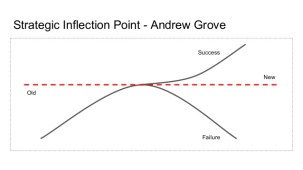
Andrew Grove, former chairman of Intel, is credited with coining the term strategic inflection point to describe a time when a business has to make major changes in the way they do what they do. At a strategic inflection point, the very fundamentals have to be altered. At the point of strategic inflection, it is not possible to remain the same. The trajectory defies the status quo. While we like to talk about crossroads in education, there is no urgency about taking one direction or another at a crossroads. However, during a crisis or at a strategic inflection point, there is a sense of urgency because action is going to occur whether or not it is of our own volition. We can see the crisis as opportunity and act with urgency to make the situation better than it was before or we can wait for the gravity of the situation to spiral all we do downward.
Following are two areas, among many, to consider for immediate fearless and forceful action:
changing student expectations of the collegiate experience
declining confidence in our democracy
Helping students take the perspective of problem solvers regarding the intersections of these issues is an excellent way to reinforce students’ academic learning and increase their adaptive skills, such as interpersonal communications and leadership. Setting the stage for problem-solving conversations taps into what student say they want: to be heard and for their values to be considered. Help students understand who they are, who others are, and what they mean when they say what they want and value.
Whether we are in a crisis or at a strategic inflection point, we know that our students will continue to reflect current society. Therefore, we must sync the methods and modes of our teaching and interventions with the way students prefer to learn. In other words, meet them where they are and walk with them as they discover their best selves in sustaining and creating a world that meets the values they have developed through their learning.
As trite as it may be, I think Student Affairs can identify all-too-well with the idea that “there is no rest for the weary.” After a brief exhale marking the end of the academic year, we must take a deep breath and once again begin the work of taking stock, reflecting, and planning. Our reflection, like our work, focuses on our students and the impact our role has in creating a constructive climate in which students can live and learn, both academically and experientially.
While our philosophy and point of view have not changed regarding the positive impact of student involvement and engagement on students’ cognitive and affective learning and development, the manner of student engagement on some campuses has changed considerably. We are witnessing how students’ engagement is evolving from apathy to activism. Many of us support this change because we see it as preparation for future democratic engagement.
Whether we are on board with today’s brand of student activism or not, we must accept that the context in which we do our work is changing. Therefore, the manner in which we do our work will change, as well. Despite our best intentions, we often employ one of two strategies in dealing with change. We either cope with it or adapt to it.
What would our work look like and how might we feel this time next year if we focused on initiating and leading change instead of simply coping or adapting to it? A quick and simple way to gauge whether it’s time to take responsibility to initiate and /or lead change is to think about our response to the following questions:
What am I hearing about what is happening at other colleges and universities?
What do I see at my own institution that is different than it was two years ago, one year ago?
Have we made any adjustments in our operations and policies in the past two years that reflect the changes that we see and sense around us?
If our response to these questions is accompanied by a feeling of unease, then this is one indication that we need to act and not wait and hope that whatever is occurring around us will blow over, dissipate, or disappear. The risk of waiting for change and then reacting to it is often greater than the risk of taking action and initiating change. Admittedly, some of us are risk-averse and do not see ourselves initiating or leading change. What low-level risk might we consider as we anticipate the inevitable?
As the increasingly mild weather brings out more golfers, we might recall author Tom Friedman’s anecdote about being a golf caddy at one point in his life. He recounted what he saw as the essence of his job as a caddy:
describe the terrain;
shout warnings and encouragement; and
whisper in the ears of big players.
Depending on the particular circumstances that contribute to climate on our individual campus, we can initiate change by thinking metaphorically about Friedman’s description of the role of a golf caddy.
We can describe the terrain by going out to students to hear what their expectations are rather than waiting for them to come forward. We can share what we learn from students with colleagues who want to help initiate change. We can share with students the history and evolution of the institution as it strives to create a climate that promotes the best interest of students.
We can shout warnings and encouragement to all the constituents we encounter by reminding them of our shared values. We can push the agenda to act on our rhetoric or warn about the consequences of failing to act. We can help students visualize the process of moving from abstract thinking about their beliefs and convictions to concrete plans for change. We can praise students’ progress in how they are acquiring the support they need to reach their well-considered goals.
Whispering in the ears of big players is an important part of initiating or leading change, and one of the best ways to do this is by creating partnerships without borders. We can redefine our territory and move beyond our circumscribed bailiwick and communicate with those who students see as critical in how they experience the institution. Faculty and high-level administrators are the big players in students’ eyes, and we can target them, without condescension, for orientation to today’s students. And, we can support them in their efforts.
Whether we are describing the terrain, shouting warnings and encouragement, or whispering in the ears of big players, our efforts will serve as a promising bridge between groups that may appear to be in different spaces regarding campus climate and the state of our institution.
Acting, rather than simply hoping and waiting, regardless of how minimally, is the first step in preparing to lead change. Imagine how we will feel this time next year when we take a deep breath, take stock and do it all over again.
Joy, dismay, fear, elation, security, vulnerability, anger, betrayal, despair, hope. The results of the 2016 presidential election elicited a wide spectrum of reactions from both colleagues and students. The breadth and strength of the reactions prompted us to write to you, our colleagues, who, like our country, reflect diversity in all its forms including ideologies, attitudes, opinions and beliefs. Our message is a call to you to emerge, as you always have done, in order to do the important work of helping all stakeholders come together as a community to help students succeed in the broadest and most all-encompassing sense of the word.
If you are feeling as if what you believed about our nation is out of sync with today’s reality, reflect on what Jon Stewart said in an interview with Charlie Rose on CBS This Morning, November 17, 2016: “I don’t believe we are a fundamentally different country today than we were two weeks ago. The same country with all its grace and flaws, and volatility, and insecurity, and strength, and resilience exists today as it existed two weeks ago. The same country that elected Donald Trump elected Barack Obama.”
Post-election Silver Linings Playbook: Recommitting to Core Principles of Higher Education by Dr. Shannon Ellis
January 20, 2017
This Is It: Student Affairs for “Such a Time as This” by Dr. Gwen Dungy
January 20, 2017
Events have revealed a truth, and it’s a truth we must acknowledge and understand so we may best serve our students. There is great value in knowing where the country truly stands and clarify our role as Student Affairs professionals.
So, how is our work different now?
Let’s start where we usually do not – with ourselves. Some of us were elated at the outsider being placed in a position in which he could tell insiders how things should be run. Some of us were crest fallen when it was clear the glass ceiling had not yet been shattered by the first female president.
Add to that the students – Trump and Clinton supporters alike – who sought counsel from us. Black women wept, telling us they feared for their safety. Black men asked us, “How are you doing?” White women in both camps were in disbelief. Women who supported Trump felt empowered by their belief that political correctness around equal pay and affirmative action would be dissolved. Women who supported Clinton were stunned, some wondering aloud about what kind of sexist workplace awaited them post-graduation. Legal and undocumented immigrant students feared for themselves, their parents, and their siblings.
Not only were there incidents of “fisticuffs” between roommates at the University of Nevada, Reno but deep divisions also surfaced among staff, characterized by chilling silence and sensitivity to words like “aftermath.”
As Student Affairs professionals, we now are put to the test to stand by a belief in a “no-censorship” approach to life – both on and off campus. We recommit to that principle of higher education.
Journalist and activist Gloria Steinem points out that the election is evidence that we are not living in a post-sexist, post-racist society. Seeing opportunity in the election results, scholar Shaun Harper wrote in The Chronicle of Higher Education (January 9, 2017), “The polarizing nature of the 2016 campaign makes improving the racial climate a more urgent matter for higher education leaders…Donald Trump has given us a gift – in that the racial ugliness of our nation has been exposed.”
If the silver lining of the presidential election is that there is no longer any doubt that racism and other biases and prejudices persist, Harper also provides the following warning: “If we’re not careful, we will see a very serious clash of races on campuses. We shouldn’t wait for that to happen.”
Jon Stewart said “there is this idea that anyone who voted for [Trump] has to be defined by the worst of his rhetoric. There are guys in my neighborhood that I love and respect, that I think have incredible qualities, who are not afraid of Mexicans, not afraid of Muslims, and not afraid of Blacks. They’re afraid of their insurance premiums.”
What is our role as Student Affairs professionals, then? I will tell you! It is to help students, faculty, and staff avoid viewing any group – Trump supporters, Clinton supporters, Muslims, immigrants, ANY labeled group – as a monolith.
The Student Affairs professionals needed today will help students wrestle with ideas, with perspectives and viewpoints that offend. These professionals will console, challenge, and affirm who students are and their aspirations for who they will become personally and professionally. Our time to develop this openness and willingness with students is brief. We are all on a lifelong journey to determine who we are – each of our students is a part of our journey, and we are just one part of theirs. This is our time to help students on our campuses be courageous, open, resolute – even stubborn – and willing to change their minds. This is, after all, what the academic world prides itself on – intellectual inquiry that requires an openness for discovering new ideas, overturning assumptions and biases, all in pursuit of truth. Higher education should model for all the ability to take joy in learning and growing, as well as the ability to welcome the ambiguity of “not knowing.”
Versatile, disciplined, resourceful, and emotionally strong are some characteristics of successful Student Affairs professionals. These are transferable skills valued in many professions, but you chose to work in a college environment. Now is the time to navigate caution signs without losing either patience or direction and thrive, helping your institution prioritize students’ intellectual learning and emotional development by ensuring a supportive environment. Ensuring a supportive environment in times such as this will require different approaches, new tools, and a clear understanding of what you need to do your job.
While others may view the possibility of turbulence on campus as a problem, you see an environment where you can shape and contribute to the future of students and your institution, alike, in an unprecedented manner. You embrace your role as mediator when there are controversies related to diversity, equity, and inclusion. You support faculty and other colleagues who create a space for dialogue and conversation about sensitive and controversial issues.
Times demand you shift focus solely from students within the bailiwick of Student Affairs to the entire campus. No one office, division, unit or person can create an inclusive and equitable campus climate. Wrenching change demands a new approach to collaboration.
Collaborate with your Diversity, Inclusion and Equity Office. You are in an optimal position to help faculty, staff, students, and administrators contribute to a climate of inclusion. Who more than professionals in Student Affairs understand how important it is for every member of the community to feel a sense of belonging? Extend your reach. Actions speak louder than words. Equity and inclusion must permeate a diverse institution at every level, every position, and every role. All stakeholders are responsible for identifying who is marginalized and in what circumstance.
Executive leaders have important visible and symbolic roles to play when there are demands for a shift in the focus of the institution. With your support, your campus leaders will understand and address what students need in order to feel a sense of belonging, to be assured they are getting the quality education expected, and to believe their opinions matter. You can help these leaders become more knowledgeable about campus climate and help make inclusion the norm.
As a professional in Student Affairs, you also have skills that support faculty, but not all faculty may be aware of these skills. Help faculty identify common experiences for students to share that both support curricular objectives and allow for the expression of differing opinions and emotions in a facilitated academic environment. This kind of environment will help students experience deep learning and discover the core of who they are. Offer your help to facilitate these discussions. Be the champion of intellectual learning coupled with personal development.
Likewise, staff who employ or mentor students may need your help to ensure they take advantage of teachable moments.
It is during these times that you need to shift your focus to the community at-large. Your education, training, and access to students have prepared you to do this work. During times that are both propitious and unfavorable, you must increase your communication and visibility with all stakeholders. To play a major role as mediator, mentor, teacher, and leader in an educational environment during uncertain times is why you went into Student Affairs. This is it. This is the time for you to assume your role with confidence and to ask for what you need to do your job.
As we begin the school year across the nation, I wanted to revisit some of my notes from a call with a reporter from The Chronicle of Higher Education, in preparation for his July 11 story, “When Does a Student-Affairs Official Cross the Line?”
New and returning students, alike, are coming to campus after a summer of continued polarization on many fronts, and they are witnessing a larger society that not only seems to be failing to adequately address multiple grievances, but even failing to engage in civil discourse around the varied issues we currently face.
How much more important, then, is it for student affairs and faculty to be prepared to walk the line between “student support” and “political solidarity”?
Student activism is essential – not only as a component of campus life, but as a critical impetus for change occurring at pivotal moments in the history of our democracy. As a group, students have played a key part in the Women’s Rights, Civil Rights, Gay Rights, and Occupy movements, and they have been politically active around issues related to the environment, sustainability, and fair trade.The two most recent generations of students have largely demonstrated their social consciousness through community service and service learning.
Historically, student affairs professionals have been on the front lines during these cycles of student activism. There is no conflict if it is understood that the role of student affairs is not to control or direct the activism of students, but to help students see responsible civic engagement as an essential outcome of a college education.
Administrators should welcome the active involvement of student affairs professionals and faculty in supporting students’ activism. After all, if members of the academic community don’t support student activists, others outside of higher education and any particular institution will be more than glad to stand in the gap. In this case, students may be advised in generic strategies by those lacking an understanding of an institution’s unique mission and context. What is important for other administrators, faculty, and staff to know is that when student affairs professionals are working with students who are activists, they are doing so as educators using the knowledge and passion students are exhibiting as strategic pedagogy.
With this in mind, student affairs professionals will see their roles as educators as they help students make connections between what they are learning through their courses, the realization of their personal values, and their desire to do something to make a difference in regard to what they see as social injustice. Student affairs professionals feel an obligation to encourage students to look for congruence between their intent and the strategies they use to reach their goals.
Opportunities to help students learn through action are not shunned by student affairs; their professionalism allows them to work with students in a manner that, first, demonstrates support for students reaching their own educational and personal development goals, (this is direct support for the mission of the institution and the philosophical foundations of student affairs) and, secondly, helps students learn how to reach their activists’ goals in a manner that is more likely to provide a platform for sustained engagement, learning, and eventual success in making a difference.
One of the most important skills student affairs will help student activists with is communicating in a manner that sets the stage for dialogue by challenging activists to both hear and learn from ideas that are different than their own with respect and civility. Student affairs professionals can offer students coaching and feedback on how to become civically active without jeopardizing their good standing as students. In doing these things to support activist students, student affairs is supporting the mission of the institution – stated or not – that exists to promote responsible citizenship, preparing students to be agents in improving the quality of life not only for themselves, but for humanity.

 I couldn’t sleep at all Tuesday night. As soon as presumptive Democratic presidential nominee Joe Biden announced that his running mate would be Senator Kamala Harris, my phone began to ping with euphoric messages from friends and family. This announcement, coupled with my listening to Isabel Wilkerson’s book Caste: The Origins of Our Discontents at one-and-a-half times the regular speed, contributed to my racing thoughts and restlessness during the night.
 The biggest threat to Biden’s election, however, may be the impossibility of the dominant caste to “allow” a strong woman who embraces her blackness to be a heartbeat away from the presidency of the United States. The election may rest on the question of whether or not the dominant caste will risk their place in the “ingrained system of hierarchy” to save the nation. If caste is as strong an impulse and motivator as Wilkerson asserts, backed by examples and research, we will relive 2016’s “morning after,” awaking to a very different reality than when we’d gone to bed thinking that there was no way the American people would not elect Hillary Clinton to be President of the United States.
 As opposed to pointing a finger up to see which way the wind is blowing, Generation 2020 will change the direction of the wind.
 Andrei Santos, Environmental Science and Public Policy major at Duke University, shares in the following thoughtfully reasoned essay ideas and suggestions about how students can sustain the passion and momentum of the summer of 2020 from where they are as students.
 Over the last couple of weeks, protesters have responded to the death of George Floyd with demonstrations in all fifty states. Although the protests were started in response to Floyd’s death, they have quickly transformed into protests surrounding the broader issue of racism in police forces across the country and systemic racism in the country as a whole. While youth organizers have been responsible for many of the protests throughout the country, students must carry this momentum into the fall semester. The systemic abuse of people of color is not localized to their interactions with the police. In order to progress towards a truly just society we must confront the racial disparities not only in policing, but also the environmental sector.
 People of color are more likely to
  It’s normal to feel angry, frustrated, and ready for a change. For students, these feelings are an opportunity to act in socially responsible ways on campus. Systemic racism permeates everyday life, and university life is no exception. From educating oneself about injustices committed against people of color by enrolling in classes that challenge one’s perception of the world, to addressing diversity policies in the clubs one is a part of, students can educate themselves about inequality and work to improve the collegiate environment. Students can also look into the campaigns and companies that their universities and schools involve themselves with and promote divestment of groups that are socially irresponsible. Questioning the role and efficacy of police officers in schools is additionally important. Every school is different, but no school is perfect. Analyzing collegiate life and addressing, organizing, and protesting around the issues that affect people of color disproportionately is important to furthering the movement past calls for an end to police brutality. For students, bringing the protests from the streets into the classroom is important for keeping the movement alive.
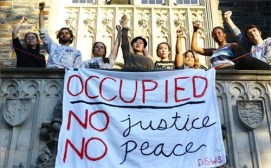 Campuses across the nation have seen a renewed push to change aspects of collegiate life, even during a time when students aren’t living on campus. At Duke University in North Carolina, students have started online movements to remove the police from peaceful protests on campus. In Charlottesville, activists demonstrated by marching through downtown in protest of police brutality and called for Confederate statues to be brought down.
 Current protests underscore the complexity of progress. Systemic racism is not just a single-faceted issue, but rather one with traces in every sector. Organizing work may look slightly different in the time of social distancing, but in this time of political upheaval, it could not be more important. While social distancing may keep us physically separate, now more than ever, we need to use the tools at our disposal to come together and fight injustice on all fronts. For students, upcoming semesters signify change, and this semester offers an opportunity to change their campuses for the better.



 Joy, dismay, fear, elation, security, vulnerability, anger, betrayal, despair, hope. The results of the 2016 presidential election elicited a wide spectrum of reactions from both colleagues and students. The breadth and strength of the reactions prompted us to write to you, our colleagues, who, like our country, reflect diversity in all its forms including ideologies, attitudes, opinions and beliefs. Our message is a call to you to emerge, as you always have done, in order to do the important work of helping all stakeholders come together as a community to help students succeed in the broadest and most all-encompassing sense of the word.
 Gwen Dungy