Category Archives: energy

Broken Promises, Shattered Lives, and the Pursuit of Happiness

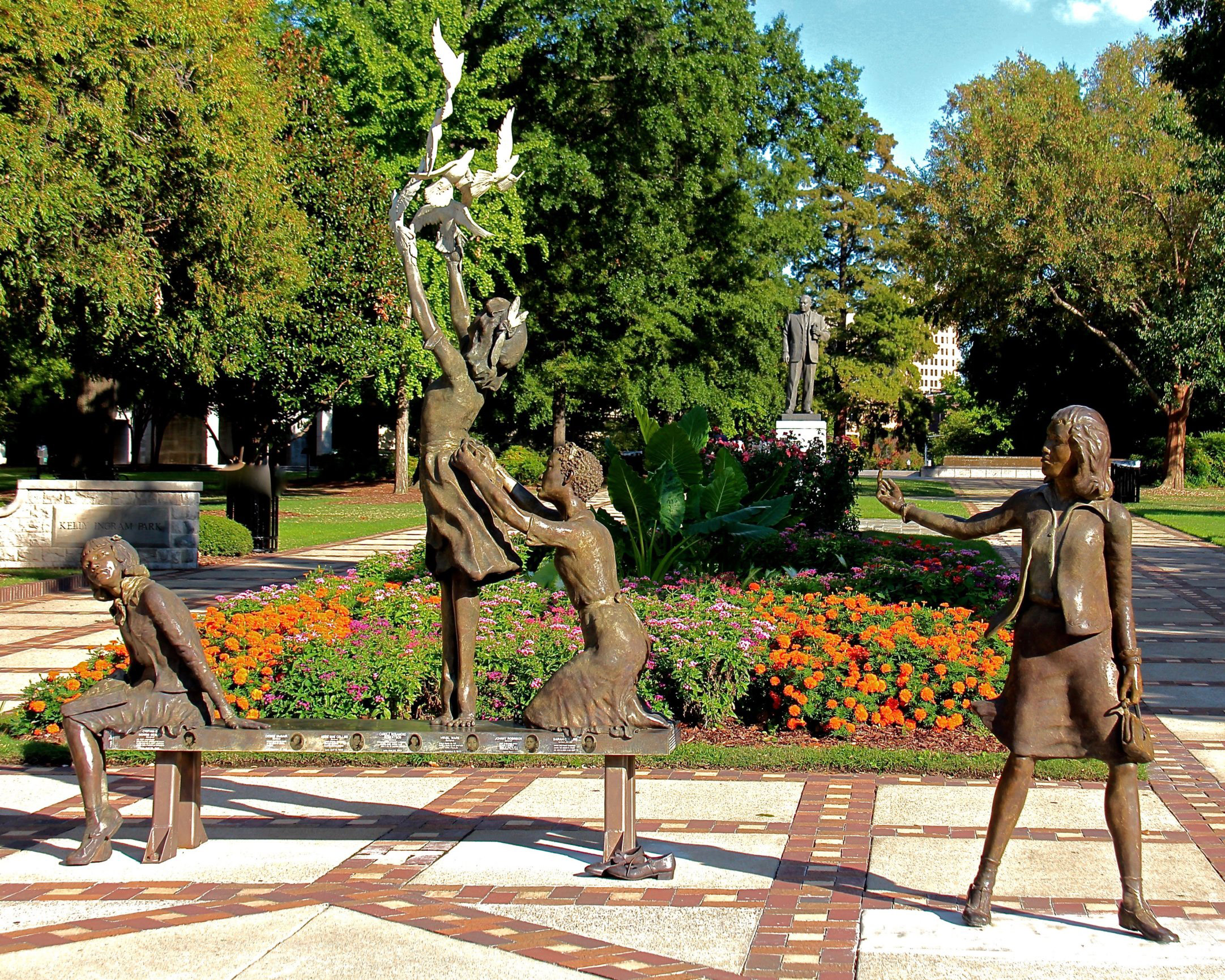
On September 15, 2023, Supreme Court Justice Ketanji Brown Jackson spoke at the 16th Street Baptist Church in Birmingham, Alabama, to commemorate the 60th anniversary of the church bombing that killed four Black girls–ages 11 and 14–and caused another 12-year-old girl to lose her eye.

Some of Justice Brown Jackson’s remarks were particularly poignant for me because I had listened to a Smithsonian Associates lecture just the day before entitled, “The Pursuit of Happiness,” by Dr. Richard Bell of the University of Maryland.

Justice Brown Jackson said, “Yes, our past is filled with too much violence, too much hatred, too much prejudice, but can we really say that we are not confronting those same evils now? We have to own even the darkest parts of our past, understand them, and vow never to repeat them.”

In his lecture, Dr. Bell recounted the shattered lives of Black people who pursued happiness during a time of great discontent. He gave numerous examples of the struggles of formerly enslaved Black people who were used as pawns by the British and slaughtered by the Patriots of the American Revolution. Broken promises by the British who changed terms of agreements on certificates and rewrote laws that disenfranchised the freedom seekers resulted in unmitigated violence and treachery and needlessly ended the lives of our ancestors who fought for freedom. It’s asking a lot to understand these dark parts of the past.

Black people who in good faith pursued their freedom by fleeing the slave holders and siding with the British became refugees of the Revolution while fighting to create a post-slavery society. Between 1775 and 1808, freedom seekers continued to petition and pursue their liberty even while fleeing from New York to Nova Scotia to Sierra Leone. Given the magnitude of their sacrifice and the depths of their despair, I don’t think they would see cause for our celebration of what Justice Brown Jackson described as “great strides that have been made since 1963.”

The bombing of the church came just two weeks after the March on Washington and the Rev. Dr. Martin Luther King’s “I Have a Dream” speech—a speech in which King spoke of the “promissory note” spanning from the Declaration of Independence that still had not been made good even 100 years after the Emancipation Proclamation. The bombing—and perhaps tellingly the two boys who also were killed in the chaos of that day in Birmingham, but who are largely still unknown outside of the Black community in that city—reinforces the pattern that our destination to freedom invariably takes us back into the caves of those who seek to enslave us.

Sadly, recurring attitudes of supremacy make the lure of freedom ever so elusive.

bronze art installation at Kelly Ingram Park representing the four girls killed in the 16th Street Baptist Church bombing on September 15, 1963, in Birmingham Alabama. The girls are depicted in play with one reaching for a group of ascending doves.

The public memorial for the children killed on September 15, 1963, sits across from the 16th Street Baptist Church in Birmingham, Alabama, at an entrance to Kelly Ingram Park.

Mr. Fantastic

Laurence N Smith

Once in a lifetime, if you’re lucky, you will know a Mr. or Ms. FANTASTIC!

Laurence N. Smith is my Mr. Fantastic! He was the vice president for University Marketing and Student Affairs at Eastern Michigan University from 1975–2000.

I give him this title because he stands out from the rest in every way. He’s always the tallest in the room and the smartest in the room. And when asked how he’s doing, invariably, he responds, “FAANTASTIC!”

Leadership in a volunteer organization based in higher education can be a different experience than what a leader might be able to do in a top-down organization where the people responsible for making the trains run on time are paid and can be released at-will.

When I was in such a leadership position, willing volunteers were the key to success. Many stepped forward to let me know that I could count on them to help me achieve the goals of the organization. They used words like “help you,” “support you,” “here when you need me.”

In my imaginative recall, Larry Smith, towering over the heads of his colleagues, fixed his eyes on me, made a beeline to me, and asked, “What is your vision for this organization?” With confidence, I summarized my mandate from the volunteer board of directors and added my own vision, which could be described as fantastical given the structure and history of the organization. Mr. Fantastic’s eyes communicated, “Are you sure?” The gaze I returned indicated that I was.

Lyrics from songs best describe his response: “Come along with me,” “I’ll take you there,” “I believe I can fly!” My leadership vision was the perfect vehicle for Mr. Fantastic to test drive his ideas about what student affairs administration in higher education could “truly be.”

On the journey with Mr. Fantastic, it was obvious that when we were talking about using listservs to bring our members together in conversation from various locations, he was already thinking about what we now call Zoom meetings. When we were talking about Palm Pilots, he was envisioning what is now Chat GPT. Always looking toward the possibilities for the future, never fearing failure, and always optimistic is my Mr. Fantastic.

And I’m not the only one that found Larry to be fantastic. In 1999, he was named a NASPA Pillar of the Profession, and in 2002, he was the recipient of the Fred Turner Award for Outstanding Service to NASPA. The equivalent of a Lifetime Achievement Award, the Turner Award recognizes NASPA members who have brought honor and dignity to the student affairs profession and to NASPA as an association for a sustained period. Among Larry’s extensive activities, he was founder and chair of the NASPA National Academy for Leadership and Executive Effectiveness and executive editor of NASPA’s online management magazine.

I spoke with Larry recently and told him that to have him as a colleague and friend during my time at NASPA was a blessing of pain and glory. The pain was tempering the projections of where the organization could go and modulating the speed of change in order to be in sync with the volunteer leadership. The glory was the innovations NASPA achieved through its volunteers when we were flying with Mr. FAANTASTIC!

Thank you, Larry. I am truly grateful for your colleagueship and friendship.

Illusion of the “perfect, fulfilling” career

I don’t watch much television news these days because I’m just too busy. However, I do continue my habit of catching Fareed Zacaria on CNN’s Global Public Square (GPS) on Sunday mornings. I take time to listen to the five-or-so minutes of “Here’s My Take,” Fareed’s commentary at the beginning of the show. After Fareed’s comments, I begin preparing my Sunday morning breakfast with one ear to the conversation that he has with his guests.

On last week’s show, one of Fareed’s guests was the author of a new book about careers. I only heard the author’s last name and some of what he said in the interview. Some of the comments he made piqued my interest because I’m a certified career counselor, and I’m always interested in hearing different perspectives on this complex topic.

After breakfast, I went to Google to try to find the author’s name and the title of the book but initially had no luck.* What I did find was a whole patch of books on careers and even a blog titled 16 Best Career Books to Read in 2023.  The statement introducing the list of books noted that they were about “finding the perfect job and cultivating a fulfilling career in the modern workplace.” I shudder at the use of words like “perfect” and “fulfilling” when it comes to choosing a career.

Ideas about career choice and career change are often generated by people who have a bright idea and a catchy title for a book. In my graduate research on career choice, however, I found nothing to support the idea of being able to methodically find a perfect job and fulfilling career.

I didn’t need research to know that people’s desires and life circumstances are not static and what seems perfect and fulfilling at one time in life is not necessarily going to be what is fulfilling at another time. In other words, career satisfaction and fulfillment have a “shelf life” and “sell-by” date for most people.

Those who can accept the fact that the job or career path chosen at the age of 19 or 20 will, in all likelihood, not be what brings satisfaction at 35 and beyond are realistic. Lucky and rare are those who know in their hearts and minds what they want to do from an early age, follow that path, and receive the proverbial gold watch and plaque at the end of a fulfilling career. This may have been the Hollywood ending generations ago, but it’s not the likely ending for those who are entering or are now in the early stages of their careers.

The world of work is changing so rapidly that it’s almost impossible to plan for a career. What seems satisfying and passion-fulfilling this year may not even be an option by the time you finish preparing for it. It can be a frustrating journey searching for one’s passion. In my experience, the most successful and satisfied workers have been those who became passionate about their work. Passion was not the draw. Passion was the reward.

I hope that those who are feeling pressure to decide on a career will just think about preparing themselves for a job that they can do well and to plan on using the experience to test the waters to see what makes them feel good and satisfied with how they are situated in their world. I hope that they will go into these different jobs looking for gold, and if the gold is not there, the experience is one more clue to where they can discover the gold. 


*Later searches found the GPS guest to be Bruce Feiler, whose latest book is “The Search: Finding Meaningful Work in a Post- Career World.”

Appreciation

This is appreciation day for all of you who read my blog. And for those of you who take the time to comment, a very special, “Thank you!”

I appreciate comments about my blog. Sometimes when there are long stretches without any comment, I want to ask if there is anyone out there. And, for a fleeting moment, I tell myself that I should stop writing.

However, this feeling is fleeting because…

I write to give my opinions on topics of the day.
I write to share my thoughts on culture.
I write to express my thoughts and feelings similarly to when I kept a journal.
I write to fulfill some part of my desire to write a memoir.
I write to share personal anecdotes that may resonate with another person.
I write to exercise my mind.
I write to have the discipline to prepare something each week. 
I write to feel seen and heard.
I write to enshrine my identity.
I write to assure myself that I’m still here.

In a recent interview, Harrison Ford summed up my reason for writing when he said, “I’m editor in charge of my life.”

Although I rarely respond to comments online, I am deeply grateful to you who do let me know that you hear me. Please accept my gratitude. Thank you.  

I don’t want…

I don’t want to read another article about the Tyre Nichols and Black police officers tragedy.

I don’t want to hear another interview where experts explain why the tragedy occurred.

I don’t want to keep thinking about the tragedy.

I don’t want to wake up in the middle of the night with blog titles about the tragedy running through my mind:

We’re all victims
Race always matters
The hunters and their prey
All pawns in the game
Eyes everywhere
You can’t hide
There is no escape

Let there be light
Lord have Mercy
Change is gonna come

I don’t want to write about the tragedy.

A Helper’s FIRE

I’ve talked with people who after many years in a particular kind of work feel unsettled as if they are not doing the kind of work that fulfills their passion. Others I’ve had conversations with have changed the kind of work they do many times. They say that they get restless after the bloom of doing something different begins to fade.

Like those I’ve spoken with who wonder if there is something that they should be doing rather than what they are doing with their lives, I’ve had these thoughts. But for me, these thoughts have been fleeting. During my career journey, I took many of the assessments that purport to help career searchers begin to narrow their focus. Interpretations of my various assessment results showed a consistency in that whatever I chose for a career, I would be a “helper.”

I defined being a helper as someone who would provide support to others in reaching their goals and human potential. The question for me was how this might be realized in a specific career. Coming of age in the 1960s, I didn’t believe that the universe of options was open to me. Going into the medical field was my teenage dream. However, the reality of my financial situation made that dream unrealistic as a goal.

Being a teacher was one way that I could become a helper. However, it was a choice for which I settled rather than one for which I had a strong inclination. I didn’t know it at the time, but it was during these years that I thought I was settling that I found my passion. Teaching helped me realize that young people found it easy to relate to me and sought my counsel beyond the classroom. During these one-to-one sessions with students, I learned that many of them worked to the level that was expected of them rather than to the level of what they were capable of doing. They had more potential than they realized. Helping these students see beyond their current circumscribed existence brought me joy.

My sense of satisfaction in these relationships with students and their positive response to me confirmed for me that I was in the right place. Attaining a degree in counseling, I was prepared to be a helper. I found real congruence between who I imagined myself to be and who I could be in my career as a mental health and career counselor.

Even at this early stage of my journey, my touchstones of FIRE were part of my inner process:

I accepted the situation that I was in (fate).

I believed that I would be led to the right outcome (faith).

I focused on living a life infused with integrity.

I took initiative to get the required credentials to do what I wanted to do.

I was constantly reflecting on circumstances in a manner that I could glean lessons from my experiences.

I always tried to respect those with whom I interacted regardless of age and position.

I applied energy to achieve career goals and to carry out my responsibilities as a spouse and parent.  

I freely expressed empathy for others, and I allowed myself empathy when it seemed that I had lost my way.

My hopeful wish for young professionals is that you will find the path that will lead you to your place of passion and fulfillment in your professional and personal life.

All My Sisters and Me

In March 1992, my Black sisters and I were in San Antonio attending the annual conference of a professional women’s organization. Historically, the organization’s membership had been virtually all White, except for a couple of notable Black women who were the best in their field. By 1992, our coterie of Black sisters had increased to a small minority with some status.

During a free afternoon, five of my sisters and I decided to shop for pottery and jewelry while enjoying the sights along the River Walk. 

Not too far from the hotel, we encountered an Asian American colleague who was usually in solidarity with us because the same issues and concerns Black members raised also plagued other nonmajority members. The number of Asian American and Pacific Islander women in this organization could be counted on one hand.

My sisters and I greeted our colleague warmly and we embraced all around. A fellow member of the program committee, I asked if she knew what time the meeting was that evening. Expressing dismay that I didn’t get the notice, she let me know it was to be at 7:30 p.m. After more hugs, she moved on. 

Now knowing the time of the committee meeting, I suggested to my sisters that we get something to eat while we were out during the afternoon so I could eat with them.

We continued to meander down the River Walk, stopping to look in shops along the way. In one of the shops, “Diva” expresses great admiration and interest in a lovely bracelet. I encouraged her to buy it, going so far as to ask the clerk if he would give her a discount because she really liked the bracelet. He agreed to give the discount and she bought the bracelet. I felt happy for her, and I’m sure I beamed with satisfaction.

As we continued our shopping, it seemed that Diva was determined that I also buy something, no matter what it was. Eventually, I became annoyed. My motive in encouraging her to buy came from a good place. I did not feel that her motive was the same.   

Sometime after I had suggested that we eat while we were out, a couple of my sisters began making comments such as, “Gwen is hungry, so we better get something to eat.” I was accustomed to the teasing, so their comments didn’t bother me.

We chose a Thai restaurant. During the latter part of what was an amiable dinner, Diva, who was new in the organization, apparently feeling comfortable with us, said that she felt unwelcome when she first joined, feeling that the organization was “cliquish.”

“Elegant “responded in a friendly tone, “I was friendly with you.” I followed up her comment with, “I also befriended you. Do you remember that I invited you to lunch?”

Diva responded in a less than friendly tone, “Yeah, but that was business.”

Taken aback, I mused, “I thought I was being friendly; how did you get the idea that it was business?”

Two of my sisters said nothing and just stared as “Admiral” and Elegant tried to convince Diva that things were not as she perceived them. When I sensed that Diva felt strongly about her initial feelings and seemed to want to be able to express them and be heard, I wanted us to empathize with her and give her experience the respect it deserved.

Sage that I must have thought I was, I said, “You know, Diva, you really might have felt a chilliness toward you because it’s not uncommon for people as strikingly attractive as you are to cause some people, perhaps unconsciously, to wait and see before they extend a welcome and acceptance.”

Diva’s lips turned down and her eyes seemed to float out of their sockets as she responded, “Yes! I’ve experienced this before, and I think people who put themselves up as important and as ‘sisters’ are just hypocrites because they usually do this kind of thing.”

I had apparently touched a nerve. I tried to close this box of snakes that I had opened, saying, “People are human, and this can be a natural and unconscious reaction….,” but Admiral cut me off, declaring, “This is not true in this group. Maybe when males are in the group, the competition is there but not in this group of women professionals.”

The mood definitely changed, and I could smell the stink of anger in the air. 

When we are outside the restaurant, Admiral got in my face, saying, “Gwen, I can’t believe you said that!” “How can you think that?” I’m a part of this organization and I know this is not true.”

I felt apologetic and tried to explain that I was just trying to make Diva feel better. Admiral cut her eyes away from me and walked ahead with Elegant. From their postures and movements, I gathered that they were talking about me and rejecting me for my comment.

In the meantime, Diva fell in step with me, saying, “I believe what you said, and I want to talk with you further about this.” Not wanting to keep this line of conversation going, I escaped from Diva and began walking in step with the silent sisters. Diva kept talking with anyone who came near her. My other four sisters got very interested in the pottery we passed along the way, ignoring what Diva was saying.

I deliberately walked next to Admiral and said, “I know you want to kill me for making that comment, but when you think about human behavior, what I said could be a possible motive for the chilliness that Diva felt. Jealousy and envy are real.”

“I’m not going to kill you,” responded Admiral, “but you have so much going for you—you have this nice little shape, shapely legs…. You don’t have any reason to feel as you do.”

“I’m not feeling that way!” I protested. “I’m speaking generally!”

Admiral ignored my comment and told me that I wouldn’t be late for my meeting because we’re only a couple of blocks away. I had no idea how to get back, and told her so, but she only said, “It’s easy,” and turned away. 

No one said goodbye to me. With a sigh of exasperation, I began my search for the right direction to return to the hotel for the 7:30 p.m. program committee meeting.

The Excitement and Curiosity of Having “No Plans”

Retirement is one of those events that some look forward to with eager anticipation while others feel sad about the prospect.  Then there are some—like me—who don’t experience either of these thoughts or emotions.

On February 22, 2012, about a month before I officially retired from NASPA, I wrote the following in my journal:

As I get nearer to the final days at NASPA, I feel no sadness. I feel satisfaction and pray that all continues to prosper with the organization.

On March 1, 2012, I wrote:

I don’t think I’m going to miss my role. I just want to keep doing something that is meaningful to move our world forward. I want to add my part, fulfill my purpose, live up to my potential.

These were goals for my life. I had no plans for what I would do in retirement.  

Being without the responsibility of a job and having no reason to get up, to get dressed, and to leave the house would be a little like a free fall. I had to rely on my faith that without these routines and trappings of identity, I would still be able to maintain confidence in myself and optimism about my future.

As I dropped through the space of what could be a professional void, unexpected safety nets and lifelines afforded me a soft landing in the field of retirement after my last day as NASPA Executive Director on March 30, 2012. At the same time as I was consulting, facilitating workshops, and making speeches (see boxed list), I was working on writing projects with 2012 deadlines and organizing and filing a career’s worth of papers and notes at home.

What gave me the energy to follow through on the activities and experiences I had during the year that I “retired” was my excitement and curiosity about the experiment of having “no plans.”

Since this experiment, I’ve stopped making New Year’s resolutions and I’ve begun each year with optimism and “no plans.”

  • 4/15-16: Indiana State University
  • 4/18: Skype with master’s class, DePaul University
  • 4/25: in person with graduate class, University of Maryland, College Park
  • 5/21-29: China on behalf of NASPA
  • 6/4: Taylor University in Indiana
  • 6/19-23: Portland State University
  • 7/9: conference, Los Angeles
  • 7/28: conference, Manhattan
  • 7/30-8/3: University of Vermont
  • 8/16: University of Southern California
  • 8/30-9/1: Evergreen State University
  • 9/17-19: California State University, Fullerton
  • 9/18: Skype with graduate students, Colorado State University
  • 9/19-21: conference, Washington, DC
  • 9/30: Skype with graduate students, Oregon State University
  • 10/16-17: Berkeley College, New York City
  • 10/19: conference, Baltimore
  • 11/1-2: Wake Forest University
  • 11/18-19: conference, Hawaii