Category Archives: initiative

Appreciation

This is appreciation day for all of you who read my blog. And for those of you who take the time to comment, a very special, “Thank you!”

I appreciate comments about my blog. Sometimes when there are long stretches without any comment, I want to ask if there is anyone out there. And, for a fleeting moment, I tell myself that I should stop writing.

However, this feeling is fleeting because…

I write to give my opinions on topics of the day.
I write to share my thoughts on culture.
I write to express my thoughts and feelings similarly to when I kept a journal.
I write to fulfill some part of my desire to write a memoir.
I write to share personal anecdotes that may resonate with another person.
I write to exercise my mind.
I write to have the discipline to prepare something each week. 
I write to feel seen and heard.
I write to enshrine my identity.
I write to assure myself that I’m still here.

In a recent interview, Harrison Ford summed up my reason for writing when he said, “I’m editor in charge of my life.”

Although I rarely respond to comments online, I am deeply grateful to you who do let me know that you hear me. Please accept my gratitude. Thank you.  

Removing Roadblocks

Many community college students are true immigrants to higher education. To them, going to college is as foreign as finding themselves put ashore in a strange land.

Once they embark upon a college education at the community college, often their main concerns include how to pay for their course work and how to juggle their myriad responsibilities in order to find time to study.

Often, their plans include getting as many courses done as possible at the community college at lower costs before continuing toward their four-year degree.  

They are proud of these hard-earned credits. However, too often they find their safe harbor disrupted when they discover that many of the credits earned at the community college will not transfer or be accepted by their choice of a four-year college.

More than 40 years ago when I worked at a community college, the most time-consuming and frustrating parts of my job as a counselor and academic adviser were to work with students who were being stymied in their progress because the community colleges and four-year colleges could not come to agreement on which courses taken at the community college were “equivalent” to courses at the four-year college. I think now as I did then: If community colleges are “colleges” and faculty who teach the courses are qualified and students meet the requirements, why are there questions about equivalences?

A recent story on Marketplace Morning Report noted that when transferring from a community college to a four-year college, about “43% of college credits don’t end up counting toward a new degree.” The reasons for this lack of cooperation and consistency between community and four-year colleges seem to be about money and hierarchy.

With less funding from states and counties and increasing infrastructure costs for colleges and universities, four-year colleges continue to raise tuition as a source of revenue. Done intentionally or not, having students repeat courses already taken at community colleges is another source of revenue.

Then there is the hierarchy. Community colleges that were created to give opportunities to a broader spectrum of students in their own communities are often described in unflattering terms. Rather than being seen as a way to level the playing field, the hierarchy is preserved when the gatekeepers at four-year colleges stand in judgment as to the worth of the credits earned at community colleges.

Students have little say or control about the transfer of credits and suffer the consequences of being stuck in the middle. If faculty from the two types of institutions cannot agree on what is acceptable in courses of the same or similar names and descriptions, then it may be time for outsiders to interfere further in the business of the professionals in higher education.

If outsiders are allowed to make decisions about what is appropriate to be in the curriculum, how teachers teach, and what books are in the library, why not take this interference further and mandate articulation on course transfer between community and four-year colleges? The time is long overdue for leadership to require that the roadblocks to complete articulation between community and four-year colleges be removed.

Powell-Norton Hall

Many thanks and praise to Chris Hanlon, former professor at Eastern Illinois University (EIU) and then at Arizona State University. In 2010, he brought the idea of a name change for Douglas Hall to EIU President David Glassman, who in turn asked the Board of Trustees to consider the idea of changing the name.

Located in proximity to one another, Douglas Hall for men and Lincoln Hall for women were so named to memorialize the fact that Abraham Lincoln and Stephen Douglas held one of their debates in Charleston, Illinois, where Eastern Illinois University is located. The famous Lincoln-Douglas Debates were part of the campaign when both men were running for the Illinois State Senate. A point of contention regarding honoring Douglas is the fact that he was a strong advocate for slavery.

When the reconsideration of a name change became known, some African American alumni gratefully reached out to some of us to write letters of recommendation to support a proposal for having the residence hall named Norton in honor of Ona and Kenneth Norton. When the 10-year campaign and deliberations ended and a vote was before the Board of Trustees, the Nortons received more letters of recommendation than the other worthy candidates.

The competition to be so honored was stiff with the 205 names submitted including notables such as a former Governor of Illinois, a student-athlete and Tuskegee Airman, a former student and later President of EIU, a Black professor who became the first director of the Afro-Studies Program, and Zella Powell, who is believed to be the first Black graduate of EIU. Ultimately, the Board of Trustees voted unanimously to rename the residence hall Powell-Norton Hall.

Powell-Norton Hall

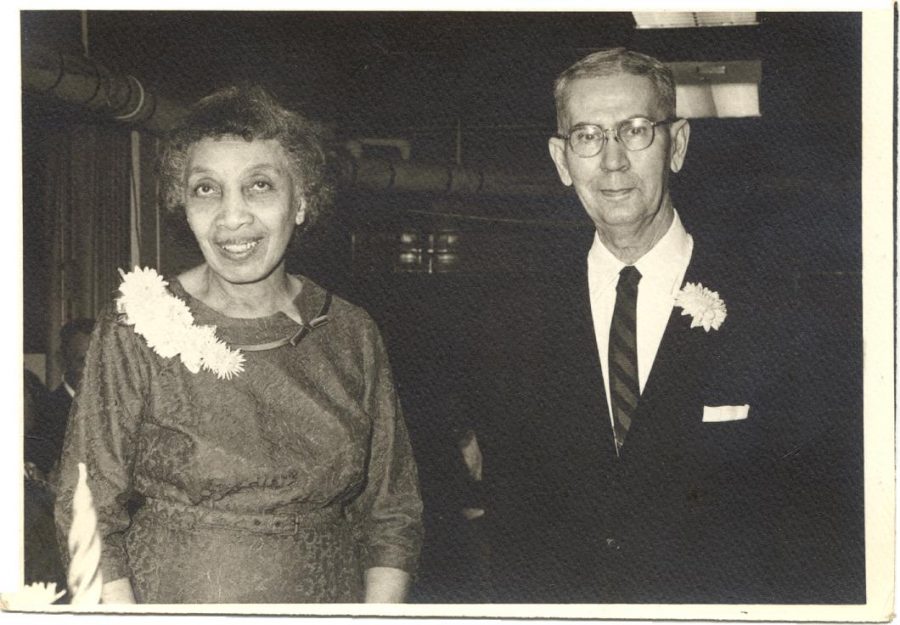
Powell graduated from EIU in 1910.  Her family lived in Mattoon not far from Charleston. One of only two Black families in Mattoon, her family had means to afford them middle-class status. Nevertheless, the family suffered the indignities common then in small rural towns of the United States. Enduring the stress of being the only Black student on campus and then graduating is a victory not many can boast. Powell taught in Mattoon before moving to Chicago, where she continued her career as a teacher and raised a family with her husband.

By appearance, Ona Norton and her husband Kenneth were not apparently Black, but they apparently were considered to be Black in their community. Their involvement with EIU began in the 1950s when they were asked to “open their home to Black athletes who could not find housing on campus” (The Daily Eastern News, November 24, 2021).

Providing housing for athletes who were Black led to Mrs. Norton becoming the go-to person for other Black students who found their way to EIU. The Nortons rented two modest houses to accommodate Black students—one for women and one for men. I was in the group of Black women who lived in a Norton House on Second Avenue. If it were not for the agency of the Nortons, I would not have been able to attend the university. I didn’t have money to live in the residence halls and even the $28 a month that the Nortons charged was often hard to come by. Some of the other women were in similar circumstances, but I never knew of anyone who was asked to leave the Norton house for lack of funds for rent.

Although Mrs. Norton has been honored for other acts of charity, and EIU has a scholarship in her name for Black students, the honor that she shares with Powell is the most fitting because of its connection to housing students who, without her help, would never have had the opportunity to attend EIU.  

Ona and Kenneth Norton

Jews of the Wild West

On Palm Sunday, April 2, 2023, I went to the Scottsdale Museum of the West to see a screening of the documentary film, Jews of the Wild West.

As I watched the film, I kept thinking about how the stories of Jewish people who immigrated to the United States and later to the Western United States appear to be missing from American history. The absence continues to be perpetuated in books and films today. A special thanks is owed to the nonprofit production company and to the filmmaker, Amanda Kinsey, for uncovering and sharing such a significant part of American history.

Notable Jewish migrants to the West are Levi Strauss, who we can thank for the jeans we wear; Isaac Shwayder, whose son, Jesse, founded the premier luggage line Samsonite; and Meyer Guggenheim, patriarch of the philanthropic Guggenheim family whose wealth came from the mining and smelting business. Women such as Golda Meir were also prominent in establishing a Jewish presence in the West. To say that these families had humble beginnings is an understatement.

They used their ingenuity, persistence, grit, and desire to make a life without persecution—one in which they not only survived the hardships of the frontier but thrived. They found that the Wild West had less antisemitism than New York City. In general, people who moved West had one thing on their minds: taking advantage of the riches the frontier would eventually offer.

The Jews who migrated West, for the most part, were not panning streams and mining for gold. They understood that people needed practical products and clothes as they pursued their dreams of a better life and their road to riches. The Jewish migrants may have started out as peddlers who made enough money to open a dry goods store as in the case of Shwayder. Eventually, they found markets within their communities and beyond that became their road to success. Because they were usually the only people in the community with a business, they often became the mayors of these frontier towns.

Jews of the Wild West is rich with the personal stories of the Jews who struck out for the Wild West and made good. Check out streaming platforms and American Public Television to see this film.

Mighty Mighty Mattie

Mattie Butler

My cousin, Mattie Butler, passed a couple of weeks ago. She was small in stature and physical features but huge in courage and compassion. She was a saving grace and a rescuer. Everyone in the family and otherwise had a code to use when they needed serious help: “Call Mattie.” 

We’re all elated that she was recognized for one of her greatest accomplishments before she passed:

Woodlawn was once neglected, disinvested, and considered a dangerous south side Chicago area beset by violence, and filled with at-risk, in need of repair properties. But a determined, fierce neighborhood advocate, Mattie Butler, stood tall, confronted, challenged, and changed the prevailing deceptive narrative with her community building and investment efforts. Throughout her life, the indomitable warrior fought for social equality and housing affordability for marginalized residents.…

Many of us grew up and often heard our elders declare, “Give me my flowers and accolades while I can enjoy and remember them.”

Recently, Mattie Butler was the surprised and elated beneficiary of such an effort because whatever she’s done for others, it’s always done exactly right. Butler was recognized for vital contributions to the same Woodlawn community, during her more than 45-year residency. Two newly renovated affordable rental apartment buildings were named in her honor.

Mayor Lori Lightfoot joined 1st District Congressman Bobby Rush, Chicago Housing Department Commissioner Marisa Novara, other public officials, religious and community leaders and scores of local residents on May 26, 2022, highlighting affordable housing opportunities for Woodlawn residents during a news conference celebrating the meritorious work of advocate Mattie Butler.

“Thanks to Ms. Butler’s strong leadership, we generated a workable Policy Roadmap which reflects our shared vision for Woodlawn’s future. Preservation of housing affordability was key. Further, the inclusive, open process incorporated input and feedback from diverse local community stakeholders, residents, governmental agencies, non-profit, civic, religious, and private sector partners. She commands my utmost appreciation and respect,” said Mayor Lightfoot….

Congressman Bobby Rush who has partnered on grassroots initiatives with Butler and WECAN for years, laughingly recalled, “Over the years, as an activist, former Black Panther, Chicago Alderman, and U.S. Congressperson, I’ve confronted formidable high-profile and little-known opponents. However, I admire and refuse to tangle with Mattie Butler. She has a deceptively warm and sweet demeanor – at first. She’s always armed with irrefutable facts, figures, and contingents of devoted supporters, remaining staunchly unafraid. Mattie’s a strong social advocate, a modern-day Harriet Tubman. I will always respect that.”…

Reverend Dr. Byron T. Brazier, pastor of Woodlawn’s Apostolic Church of God praised Butler’s tenacious, dynamic spirit. “She’s been WECAN’s driving force, developing housing for neighbors, the homeless, organizing drug rehabilitation programs, delinquency prevention, numerous education, and support services programs, launching a food pantry serving hundreds of people. Butler also greatly influences developing sustainable local, statewide, and national public policy initiatives.”…

Acclaimed Black author James Baldwin once expressed: “Your crown is already bought and paid for…All you must do is put it on your head.”

Mattie Butler’s crown of successful achievement rests comfortably and regally on her deserving head. Equally important, she’s alive to receive it. Grateful Woodlawn locals believe it will forever stay there. She’s always stood for them. A few days ago, they returned the favor, standing united to praise and illuminate her altruistic, benevolence. What a profound living legacy.

Read full article, “Chicago’s iconic affordable housing advocate Mattie Butler honored,” on The Chicago Crusader Newspaper site

Dan

To know him is to love him.

He’s innately good and he was born that way.

He’s kind and thoughtful. Like the time his kindergarten teacher wrote, “He has a good attitude toward others; wants to please and do the right thing and is bothered if others do not.”

He’s compassionate. Like the time when he took blankets off his own bed and gave them to people in the neighborhood who had been negatively impacted by a snowstorm.

He’s generous. Like the time when, at seven years old, he took money from his bank, went to a neighbor’s garage sale, and bought his mother a letter opener and a cookbook.

He’s patient. Like when he slowly, without apparent annoyance, repeats what he has already explained. His kindergarten teacher described this as “good self-control.”

He’s positive. When people around him find fault with something or someone, he finds something to say that expands the perspective so others can see the person or situation in another light. 

He’s disciplined. He decides on a goal and, without falter, takes the steps to achieve it. His kindergarten teacher wrote, “He is very conscientious about his work—tries hard to do well, and completes what is expected, and enjoys doing it! He’s very well-disciplined—but also enjoys just being a boy sometimes.”

He’s optimistic. Like when his best efforts in pursuing a goal appear to fail, he perseveres, looking for the rainbow.

He’s responsible. Like when he got his first job at age 12 and has not been without a job from that point on.

He’s confident. Like how he never seems to doubt his abilities. His kindergarten teacher wrote, “He seems pleased and happy about himself, school, and others.”

He’s courageous. Like the times when he has been selected as the spokesperson for a group and takes the role regardless of the possible consequences. 

He’s fair. Like the times when during a discussion he often asks, “Is that fair?”

He’s funny. Like the many times he makes those around him laugh out loud even when the situation is what might be described as “dark” and “not funny.”

He’s curious. Like when he finds just about everything interesting and, judging from his behavior, in need of further study and work.

He’s self-possessed. Like when he seems to be walking too leisurely and never wears a watch, yet always gets to where he intends and on time.

I like being in his presence because there is a lightness of being around him.

I like seeing him live his life unstintingly, stretching it out to experience and enjoy every inch of it.

He is the light of my world. The joy of my life.

He is our son, Danton.

A Helper’s FIRE

I’ve talked with people who after many years in a particular kind of work feel unsettled as if they are not doing the kind of work that fulfills their passion. Others I’ve had conversations with have changed the kind of work they do many times. They say that they get restless after the bloom of doing something different begins to fade.

Like those I’ve spoken with who wonder if there is something that they should be doing rather than what they are doing with their lives, I’ve had these thoughts. But for me, these thoughts have been fleeting. During my career journey, I took many of the assessments that purport to help career searchers begin to narrow their focus. Interpretations of my various assessment results showed a consistency in that whatever I chose for a career, I would be a “helper.”

I defined being a helper as someone who would provide support to others in reaching their goals and human potential. The question for me was how this might be realized in a specific career. Coming of age in the 1960s, I didn’t believe that the universe of options was open to me. Going into the medical field was my teenage dream. However, the reality of my financial situation made that dream unrealistic as a goal.

Being a teacher was one way that I could become a helper. However, it was a choice for which I settled rather than one for which I had a strong inclination. I didn’t know it at the time, but it was during these years that I thought I was settling that I found my passion. Teaching helped me realize that young people found it easy to relate to me and sought my counsel beyond the classroom. During these one-to-one sessions with students, I learned that many of them worked to the level that was expected of them rather than to the level of what they were capable of doing. They had more potential than they realized. Helping these students see beyond their current circumscribed existence brought me joy.

My sense of satisfaction in these relationships with students and their positive response to me confirmed for me that I was in the right place. Attaining a degree in counseling, I was prepared to be a helper. I found real congruence between who I imagined myself to be and who I could be in my career as a mental health and career counselor.

Even at this early stage of my journey, my touchstones of FIRE were part of my inner process:

I accepted the situation that I was in (fate).

I believed that I would be led to the right outcome (faith).

I focused on living a life infused with integrity.

I took initiative to get the required credentials to do what I wanted to do.

I was constantly reflecting on circumstances in a manner that I could glean lessons from my experiences.

I always tried to respect those with whom I interacted regardless of age and position.

I applied energy to achieve career goals and to carry out my responsibilities as a spouse and parent.  

I freely expressed empathy for others, and I allowed myself empathy when it seemed that I had lost my way.

My hopeful wish for young professionals is that you will find the path that will lead you to your place of passion and fulfillment in your professional and personal life.