Category Archives: integrity

Where Do We Go From Here?

Guest post by Kaaryn McCall

As we start a new year, particularly this new year, it is perhaps good to ask, “Where do we go from here?” The Rev. Dr. Martin Luther King, Jr., began bringing his 1967 Southern Christian Leadership Conference address by that title to a close with the following words we would do well to heed today:

“The road ahead will not always be smooth. There will still be rocky places of frustration and meandering points of bewilderment. There will be inevitable setbacks here and there. And there will be those moments when the buoyancy of hope will be transformed into the fatigue of despair…. But difficult and painful as it is, we must walk on in the days ahead with an audacious faith in the future.”

King’s book of that same title that year was aptly subtitled with the question “Chaos or Community?” This is a choice with which we are always faced and, as we enter 2024 that is, among other things, a presidential election year, and as we near the nation’s 250th anniversary even as some talk of the possibility of a second civil war, I, for one, choose community.

Too often, this can seem like an amorphous concept, so it’s helpful to understand the Beloved Community that was King’s ultimate aim, as reflected in remarks as early as 1956, following the Montgomery Bus Boycott: “The end is reconciliation; the end is redemption; the end is the creation of the Beloved Community.”*

From the religious perspective, King saw Beloved Community as the wholly achievable goal of realizing the kingdom of God on earth, “in which all human beings ha[ve] value in and of themselves, and [a]re subjects worthy of love.” This restored community is the ideal of creation—God’s intention for all of humanity living together in an “inescapable network of mutuality.”

Perhaps more concretely, and from a more universal perspective, this Beloved Community is one in which:

“poverty, hunger and homelessness will not be tolerated because international standards of human decency will not allow it. Racism and all forms of discrimination, bigotry and prejudice will be replaced by an all-inclusive spirit of sisterhood and brotherhood…. Love and trust will triumph over fear and hatred. Peace with justice will prevail over war and military conflict.”*

Achieving such community requires transformation on many levels. In his further remarks following the bus boycott, King noted, “It is this type of spirit and this type of love that can transform opponents into friends. It is this type of understanding goodwill that will transform the deep gloom of the old age into the exuberant gladness of the new age.*

It is important to note that King did not believe Beloved Community would be devoid of conflicts, but that these could always be resolved peacefully,* noting that “true peace is not merely the absence of tension [but] the presence of justice.”

silhouette of the Rev Dr Martin Luther King Jr with the words "BUILDING THE BELOVED COMMUNITY" and a colorful illustration with many components, including a river, trees, hearts, stars, hands, people, rainbow, and various decorative elements

So, “Where do we go from here?”

In a world increasingly divided, let us seek to build increasing levels of trust across difference.

In a world increasingly concerned with domestic and international terrorism, let us embrace the fact that “love [is the] most potent instrument available in humanity’s quest for peace and security.”

In a world increasingly complex and intertwined, let us seek to understand the “enemy-neighbor” as more than a given action on their part.

In a world where prejudices continue to manifest themselves, let us seek a true conception of self instead of “self-deception and … neurosis stemming from repressed truth.”

In a world of zero-sum games, let us demonstrate that there is no need to fear one’s own loss when advocating for justice. (As a popular meme puts it, “Equal rights for others does not mean fewer rights for you. It’s not pie.”)

In a world still plagued with brokenness, separation, suspicion, and deadly conflicts, let us find our points of commonality and shared humanity.

The choice between chaos and community remains for each of us individually and collectively. May this new year and MLK Day be about more than just platitudes. Let us answer the call to action and walk on together not in blind optimism, but an intentional hope and “audacious faith in the future.” Let us not fall into despair as a few loud voices are amplified across various media but recall how far we have come and set forth with renewed purpose to building Beloved Community.


SOURCES

† Hunt, C. Anthony. The Beloved Community Toolkit.

‡ Hunt, C. Anthony. Blessed are the Peacemakers: A Theological Analysis of the Thought of Howard Thurman and Martin Luther King, Jr. Lima, OH: Wyndham Hall Press, 2005.

* The King Center. “The King Philosophy.” thekingcenter.org/king-philosophy


Kaaryn McCall is a communications consultant who, in addition to supporting Dr. Dungy, works with nonprofit organizations across the social justice spectrum to most effectively leverage strategic communications to support their missions. Connect on LinkedIn
Unselfconscious Unfiltered Thoughts and Feelings

My trove of handwritten journals was rich with details of day-to-day happenings and interactions. The feelings I had when I wrote them were memorialized in my heart and bones. Sometimes I had to take a break from reading them because the visceral reactions were more than I wanted to re-experience.

When I wrote my journals by hand, my engaged emotions helped me see my inner self—that soft place that needed protection. I didn’t judge myself for having unpleasant emotions. As I wrote about the interactions or situations that caused these emotions, I allowed myself to feel merciful toward the “me” that only I understood.

These journals showed me that believing in myself was the kind of faith inculcated within me since I was a very small child. During my middle years, I would have been completely lost without this bedrock faith. In my journals, I recorded how my beliefs in the greater good sustained me time after time.   

It was in my handwritten journals that I thanked God for those I encountered who had a generosity of spirit and showed warmth when I needed it. It was in these handwritten journals that I was honest about my limitations and worked hard to be objective and fair in observing others and, more importantly, my responses to them. The real learning and change came from being wholly with myself in reflection and humbleness.

When I switched to keeping my journals online, apparently, I did not trust the medium with my deepest thoughts and tender feelings. For some reason I found myself not sharing my secret voice. In reading excerpts from my digital journals, it’s clear that I was not using them as a source of self-reflection. My journals became one dimensional. I recorded what can be thought of as a public record of what was happening and when.

My epiphany is that journaling is not simply the words recorded; it’s the meditation and process of writing one’s unselfconscious unfiltered thoughts and feelings.

The Inspirational Six, Part 1: Venerable Pierre Toussaint

Guest post by Joann Stevens

In a series of posts, I’d like you to meet six Black Catholics from the 19th and 20th centuries on the road to sainthood in the global Catholic Church: Venerable Pierre Toussaint; Venerable Henriette DeLille; Venerable Augustus Tolton; Servant of God Mary Lange; Servant of God Julia Greeley; and Servant of God Thea Bowman. Ordinary people inspired by faith to serve the Common Good, they helped build and transform American Catholicism, advanced a democracy they couldn’t enjoy, and upheld Jesus’ commandment to “Love each other as I have loved you” (John 15:12).

Inspiration can be hard to find when celebrity and socioeconomic status define influence more often than character. But sainthood is an equalizer. Saints inspire people of all faiths or no faith. Saints are rarely sexy, beautiful, rich, or celebrated. They endure hardship, poverty, and social rejection. They sacrifice their bodies— sometimes literally, more often figuratively—to serve as agents of God’s righteousness and unconditional love. Saints don’t wear Chanel or Brioni but lift the spirit higher than a well-cut garment as they model essential elements of humanity: Love and Hope.

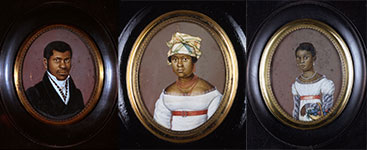
Pierre, Juliette, and Euphemia Toussaint as painted by Anthony Meucci, 1825

Venerable Pierre Toussaint (1766–1853) took his surname from the Haitian general Francois-Dominique Toussaint Louverture, a Black enslaved person turned enslaver turned slave liberator. Venerable Pierre Toussaint was trained as a house servant in his native Saint Domingue (Haiti). He was taught to read and write in French and English and had free reign of his enslavers’ library. Along with his sister Rosalie, his aunt, and two others, Toussaint arrived in New York in 1787, the property of Jacque Berard who had fled the Haitian rebellion with his family. Berard returned to Haiti to secure his property but died there of pleurisy in 1791, nearly destitute.

At the time, the United States was facing its first financial crisis. Although enslaved, hardship seemed to sharpen Toussaint’s resolve and entrepreneurialism. Apprenticed as a hairdresser, his success enabled him to support the Berard family and household, caring for Berard’s widow, Marie, until her death in 1807, after which he gained his freedom. Toussaint’s success also enabled him to purchase the freedom of his sister—whose daughter he would adopt upon Rosalie’s death—as well as the freedom of others who were enslaved. Among those was Juliette Noel, a Haitian woman Toussaint married in 1811. That same year he bought a house in Manhattan to shelter Black orphans and teach them trades.

Hairdressing was Toussaint’s profession, but his intellect, faith, and love for humanity established his character.  In addition to working more than 12 hours a day dressing hair, followed by household chores and community service to feed the hungry and nurse the sick, Toussaint was a daily communicant of St. Peter’s Church on Barclay Street, attending Mass at 6:00 a.m. He served the public another 36 years after gaining his freedom and was known to quote from the Sermon on the Mount in French. “The Beatitudes seemed to have found a way into his heart,” wrote his first biographer.

Toussaint inspired all who knew or heard of him. His clients were elite society women. Among them the wife and daughter of Alexander Hamilton. They welcomed him into their estates, sought his counsel and admired his kindness, piety, and charitable works. Many were Protestant socialites like Mary Anna Sawyer Schuyler, a close friend who called him “my Saint Pierre.” Under their patronage, Toussaint earned as much as $1,000 a client annually at a time when the average annual salary was $65.

Pierre and Juliette Toussaint spread their philanthropy widely and diversely, creating a credit bureau and employment agency to help Black people and support the resettlement of Haitian immigrants to New York; founding the First New York City Catholic School for Black children; helping raise funds for Elizabeth Seton’s Sisters of Charity to open an orphanage in New York City even though it only served White children; funding the nation’s first religious order of Black nuns, the Oblate Sisters of Providence; providing aid for retired priests and destitute travelers; and contributing to the founding and building of St. Patrick’s Church that became St. Patrick’s Cathedral.

As his health failed with age, friends pressed the elderly Toussaint to retire and enjoy his success. He responded, “I have enough for myself, but if I stop working, I have not enough for others.” His last recorded words, two days before his death, were, “God is with me.” Asked if he wanted anything, he replied, “Not on this earth.”

Pierre Toussaint died at age 87, two years after his beloved Juliette. Friends and media praised this man defined by his faith, heart, and character and not external circumstances.

An act of racism once barred Toussaint from attending the St. Patrick’s Church he helped found. In a testament to God’s grace and remembrance of Toussaint’s servanthood, Cardinal John O’Connor arranged for Toussaint’s reinterment in 1959 to a vault under the altar of St. Patrick’s Cathedral on Fifth Avenue. He is the only layperson buried among bishops and cardinals.


Sources: George Washington’s Mount Vernon, Ten Facts About the American Economy in the 18th Century; Archdiocese of New York; Archways, the online Magazine of the Archdiocese of New York; Cathecist Cafe


Joann Stevens is a freelance writer and program specialist promoting unsung and unknown African American jazz, faith, and cultural innovators who have influenced democracy and racial justice for the Common Good.

Dousing the Fires of Inhumanity

I woke up and looked at the clock. It really was 3:00 in the morning. “Oh no,” I thought. “I hope I can get back to sleep.” Because I usually sleep well, I tried to recall my activities from the day and evening to try to figure out what could be causing me to wake up and not get back to sleep.

After about an hour of tossing and turning, searching for the best position to invoke sleep and playing mind games equivalent to counting sheep, my mind was pulled toward the ubiquitous, never-ending negative news stories of the day.

Wars and their devastating physical and psychological human toll and our inhumanity to one another as exhibited through political maneuverings, the cutting cruelty of social media, and random killings, some out of a belief that some people are worthy to live and others are not. As I ruminated about these things, I was overwhelmed by a deep sadness and tears slowly leaked out of the corners of my eyes.

My sadness caused me to think about the title of my website: The F.I.R.E. This Time. Inspired by Baldwin’s The Fire Next Time, the title I chose in some ways reflects my pessimism about us humans.

Though there are ebbs and flows, there is always Fire. Sometimes there are Fires all over the world and little fires everywhere all the time. What are these Fires?

What I call Fires is what David Brooks describes as “the rising culture of dehumanization . . . tribalism, racism, ideological dogmatism, and social media.”  (“A Humanist Manifesto: The world feels like an awful place right now. Here’s how to make it better.” The Atlantic, October 24, 2023.)

Brooks describes dehumanization as “any way of seeing and acting that covers the human face, that refuses to recognize and respect the full dignity of each person.”

Described as such, dehumanization is the root cause of all the Fires. What ignites these Fires is humans thinking that there is only one right way, one right answer, one point of view and other ways of thinking or viewing are wrong or bad and must be vanquished, destroyed, and annihilated.

Some ideas Brooks suggest for conserving humanity that resonate with me are what he calls humanistic wisdom and empathy.*

Brooks shares that it takes humanistic wisdom “to be able to understand one another to some degree, to see one another’s viewpoints, to project respect across difference and disagreements.” If this is all we must do, why do we feel helpless to confront the problems we see and hear about? What can we do as individuals? How can we exhibit humanistic wisdom and empathy?

It’s obvious that we can’t contain world Fires, but we can contribute to dousing the flames of little fires. While even controlling little fires is no easy task, it is something that each of us can do in our everyday interactions, even our casual encounters. Instead of accusing as a first instinct, we can practice the habit of first accepting and hearing.  

An attitude of acceptance and hearing sets the tone for humanistic wisdom and is a meaningful step toward empathy. Brooks’ understanding of empathy is “first mirroring—accurately reflecting the emotions of the person in front of you. Second, mentalizing using your own similar experiences to project a theory about what the other person is going through. Third, caring…. To care, you not only have to understand another person: you also have to perform an action that will make them know that you understand how they feel.”

We should be grateful for the many good people who try to be empathetic by mirroring and mentalizing in their encounters with others. It’s the third part of Brooks’ description of empathy—caring—that is often missing from our relationships with “the other.” If more people could care about “the other” because it’s the humane thing to do, we could chip away at the kindling that keeps these Fires of hate and aggression smoldering and eventually bursting into flames.

Our history demonstrates that there was fire last time, and sleepless nights cause us to ruminate on the fire this time. Sadly, if there are not more demonstrations of humanistic wisdom and empathy, there will undoubtedly be Fire the Next Time.

word cloud in shape of two hands reaching toward each other with primary words in one being "I HEAR YOU" and "CONNECT" and the primary word in the other hand being "EMPATHY"

*In fact, the FIRE in the title of my blog is an acronym that’s long been a touchstone for me, of which ‘empathy’ is a component, so I guess I’m not entirely pessimistic. Following are the components of the acronym:

  • Fate/Faith
  • Integrity/Initiative
  • Reflection/Respect
  • Energy/Empathy

Mr. Fantastic

Laurence N Smith

Once in a lifetime, if you’re lucky, you will know a Mr. or Ms. FANTASTIC!

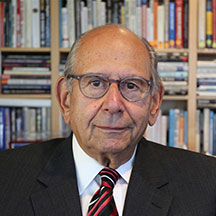
Laurence N. Smith is my Mr. Fantastic! He was the vice president for University Marketing and Student Affairs at Eastern Michigan University from 1975–2000.

I give him this title because he stands out from the rest in every way. He’s always the tallest in the room and the smartest in the room. And when asked how he’s doing, invariably, he responds, “FAANTASTIC!”

Leadership in a volunteer organization based in higher education can be a different experience than what a leader might be able to do in a top-down organization where the people responsible for making the trains run on time are paid and can be released at-will.

When I was in such a leadership position, willing volunteers were the key to success. Many stepped forward to let me know that I could count on them to help me achieve the goals of the organization. They used words like “help you,” “support you,” “here when you need me.”

In my imaginative recall, Larry Smith, towering over the heads of his colleagues, fixed his eyes on me, made a beeline to me, and asked, “What is your vision for this organization?” With confidence, I summarized my mandate from the volunteer board of directors and added my own vision, which could be described as fantastical given the structure and history of the organization. Mr. Fantastic’s eyes communicated, “Are you sure?” The gaze I returned indicated that I was.

Lyrics from songs best describe his response: “Come along with me,” “I’ll take you there,” “I believe I can fly!” My leadership vision was the perfect vehicle for Mr. Fantastic to test drive his ideas about what student affairs administration in higher education could “truly be.”

On the journey with Mr. Fantastic, it was obvious that when we were talking about using listservs to bring our members together in conversation from various locations, he was already thinking about what we now call Zoom meetings. When we were talking about Palm Pilots, he was envisioning what is now Chat GPT. Always looking toward the possibilities for the future, never fearing failure, and always optimistic is my Mr. Fantastic.

And I’m not the only one that found Larry to be fantastic. In 1999, he was named a NASPA Pillar of the Profession, and in 2002, he was the recipient of the Fred Turner Award for Outstanding Service to NASPA. The equivalent of a Lifetime Achievement Award, the Turner Award recognizes NASPA members who have brought honor and dignity to the student affairs profession and to NASPA as an association for a sustained period. Among Larry’s extensive activities, he was founder and chair of the NASPA National Academy for Leadership and Executive Effectiveness and executive editor of NASPA’s online management magazine.

I spoke with Larry recently and told him that to have him as a colleague and friend during my time at NASPA was a blessing of pain and glory. The pain was tempering the projections of where the organization could go and modulating the speed of change in order to be in sync with the volunteer leadership. The glory was the innovations NASPA achieved through its volunteers when we were flying with Mr. FAANTASTIC!

Thank you, Larry. I am truly grateful for your colleagueship and friendship.

A Philosophy of Sorts

Guest blog by David Keymer

Over time I arrived at something like a philosophy to govern my work in student affairs and higher education. Ultimately, all of our expertise points back to a vision of what college and university life should be like, what it should do. Universities and colleges are a special kind of community—a community of learners. The emphasis should be on both words: “community” and “learners.”

The ideas, then, are simple…nothing complicated:

First and foremost, I was there for the students, and the students were there to get an education. In this exchange, then, it was the students who were paramount. If it was about empowering students, it was simply a matter of service for me. That meant that…

  • students should always be able to reach me;
  • it was important that I give good value in whatever I did; and
  • ego was less important than results.

Using power gratuitously is not only wrong, it’s counterproductive. The power I held was the position’s and there for a purpose. It was not mine and, just because I had it by way of the position did not mean I had to use it.

This was especially true as I realized that everyone on campus needed to be in the same business of helping students succeed, academically as well as socially. Parents or prospective students didn’t come on campus and ask where the Vice President for Student Affairs’ office was. They talked to whomever they met. It might be a worker planting flowers in the flower beds outside a classroom building, or a campus police officer passing by, or a stray faculty member or student on the way to class. As a result, I did a lot of walking around talking to colleagues and students to ensure we got our message out that we had the same ends and were serious and proud of our commitment to student success.

Everything I managed to do required other people. It was important, then, that I listen to EVERYone, not take others for granted, and recognize others’ contributions and let them know I appreciated them. That being said, an important piece of effectively working with people is to cooperate, but “never give up your teeth.” The work is too important, and every so often, you may have to take a bite out of someone to convince the other person you’re not kidding.

Relatedly, developing people is as important as spurring them on to work well. It takes time, money, and effort to find and hire someone new for a position. If there were difficulties initially, it wasn’t a matter of giving up, but needing to find out what people did well and what inspired them, then leveraging those strengths and interests.

After all, work should be fun as well as work.


David Keymer served as a chief student affairs officer at SUNY Utica Rome; California State University, Stanislaus; and Zayed University (Dubai and Abu Dhabi) from 1983-2004. For more wisdom gleaned from Keymer’s experience in student affairs across these varied institutions, check out the seven-part series published in 2021 from a set of interviews.

Albert (Mack) Tate

Mack Tate

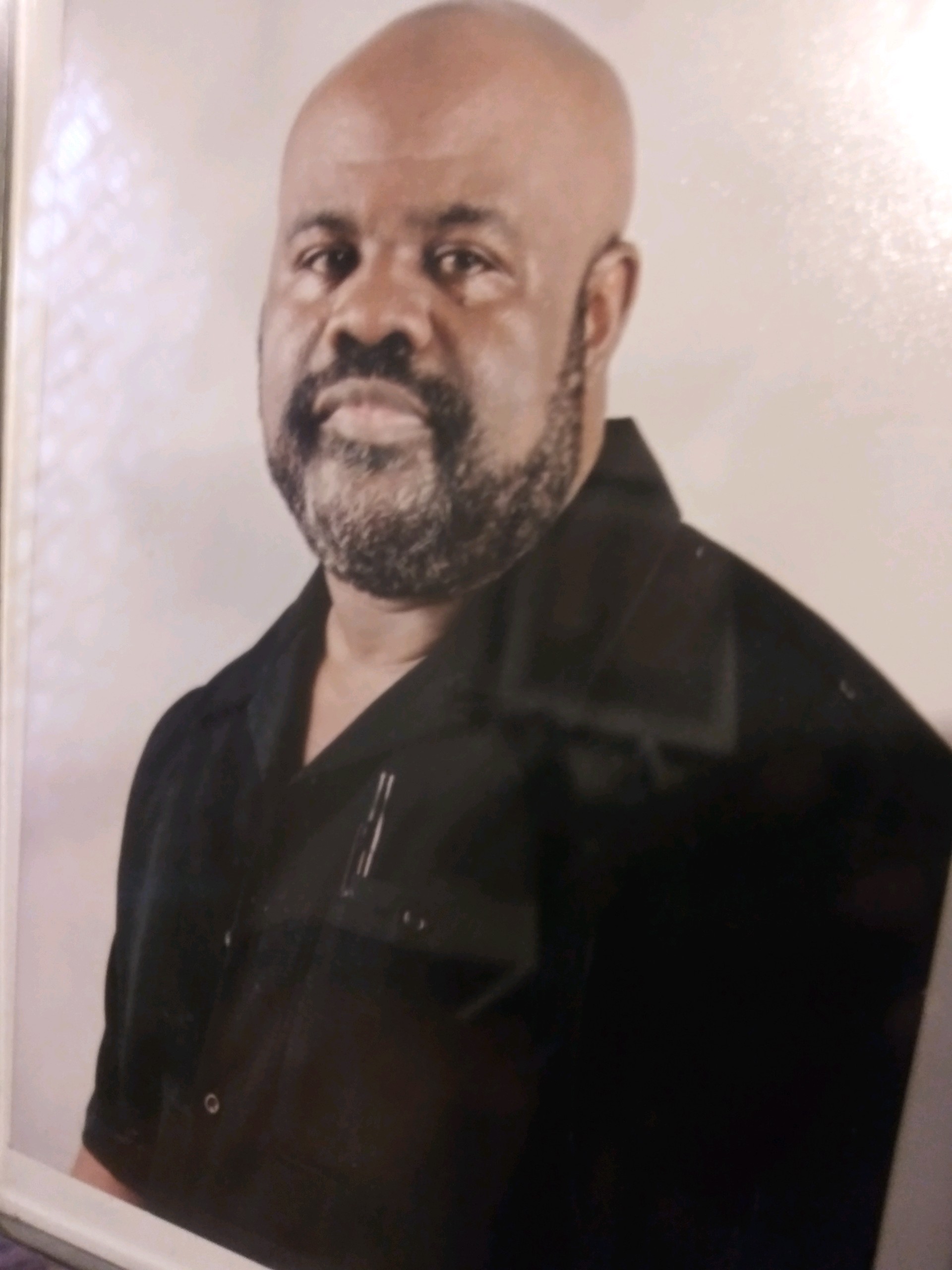
My brother-in-law—married to my baby sister, Regina, for 47 years—passed on Monday, June 26. My heart aches for all of us who knew and loved him. My hope is that we will all find comfort in knowing that he was a man who lived a good life as a loving husband, father, grandfather, and friend, to name just a few of his many roles.

I send a special prayer to my sister whose grief is inconsolable. Mack, who she knew from when they were in grade school, was the love of her life. And she was the love of his life, whom he loved steadfastly and with tenderness seldom witnessed.

He was the steady hand as they raised their children. He anchored the family with his calm dignity. He brought joy when he smiled with his eyes as his large, strong body shook with laughter.

We love you and miss you, Mack.

Removing Roadblocks

Many community college students are true immigrants to higher education. To them, going to college is as foreign as finding themselves put ashore in a strange land.

Once they embark upon a college education at the community college, often their main concerns include how to pay for their course work and how to juggle their myriad responsibilities in order to find time to study.

Often, their plans include getting as many courses done as possible at the community college at lower costs before continuing toward their four-year degree.  

They are proud of these hard-earned credits. However, too often they find their safe harbor disrupted when they discover that many of the credits earned at the community college will not transfer or be accepted by their choice of a four-year college.

More than 40 years ago when I worked at a community college, the most time-consuming and frustrating parts of my job as a counselor and academic adviser were to work with students who were being stymied in their progress because the community colleges and four-year colleges could not come to agreement on which courses taken at the community college were “equivalent” to courses at the four-year college. I think now as I did then: If community colleges are “colleges” and faculty who teach the courses are qualified and students meet the requirements, why are there questions about equivalences?

A recent story on Marketplace Morning Report noted that when transferring from a community college to a four-year college, about “43% of college credits don’t end up counting toward a new degree.” The reasons for this lack of cooperation and consistency between community and four-year colleges seem to be about money and hierarchy.

With less funding from states and counties and increasing infrastructure costs for colleges and universities, four-year colleges continue to raise tuition as a source of revenue. Done intentionally or not, having students repeat courses already taken at community colleges is another source of revenue.

Then there is the hierarchy. Community colleges that were created to give opportunities to a broader spectrum of students in their own communities are often described in unflattering terms. Rather than being seen as a way to level the playing field, the hierarchy is preserved when the gatekeepers at four-year colleges stand in judgment as to the worth of the credits earned at community colleges.

Students have little say or control about the transfer of credits and suffer the consequences of being stuck in the middle. If faculty from the two types of institutions cannot agree on what is acceptable in courses of the same or similar names and descriptions, then it may be time for outsiders to interfere further in the business of the professionals in higher education.

If outsiders are allowed to make decisions about what is appropriate to be in the curriculum, how teachers teach, and what books are in the library, why not take this interference further and mandate articulation on course transfer between community and four-year colleges? The time is long overdue for leadership to require that the roadblocks to complete articulation between community and four-year colleges be removed.

Powell-Norton Hall

Many thanks and praise to Chris Hanlon, former professor at Eastern Illinois University (EIU) and then at Arizona State University. In 2010, he brought the idea of a name change for Douglas Hall to EIU President David Glassman, who in turn asked the Board of Trustees to consider the idea of changing the name.

Located in proximity to one another, Douglas Hall for men and Lincoln Hall for women were so named to memorialize the fact that Abraham Lincoln and Stephen Douglas held one of their debates in Charleston, Illinois, where Eastern Illinois University is located. The famous Lincoln-Douglas Debates were part of the campaign when both men were running for the Illinois State Senate. A point of contention regarding honoring Douglas is the fact that he was a strong advocate for slavery.

When the reconsideration of a name change became known, some African American alumni gratefully reached out to some of us to write letters of recommendation to support a proposal for having the residence hall named Norton in honor of Ona and Kenneth Norton. When the 10-year campaign and deliberations ended and a vote was before the Board of Trustees, the Nortons received more letters of recommendation than the other worthy candidates.

The competition to be so honored was stiff with the 205 names submitted including notables such as a former Governor of Illinois, a student-athlete and Tuskegee Airman, a former student and later President of EIU, a Black professor who became the first director of the Afro-Studies Program, and Zella Powell, who is believed to be the first Black graduate of EIU. Ultimately, the Board of Trustees voted unanimously to rename the residence hall Powell-Norton Hall.

Powell-Norton Hall

Powell graduated from EIU in 1910.  Her family lived in Mattoon not far from Charleston. One of only two Black families in Mattoon, her family had means to afford them middle-class status. Nevertheless, the family suffered the indignities common then in small rural towns of the United States. Enduring the stress of being the only Black student on campus and then graduating is a victory not many can boast. Powell taught in Mattoon before moving to Chicago, where she continued her career as a teacher and raised a family with her husband.

By appearance, Ona Norton and her husband Kenneth were not apparently Black, but they apparently were considered to be Black in their community. Their involvement with EIU began in the 1950s when they were asked to “open their home to Black athletes who could not find housing on campus” (The Daily Eastern News, November 24, 2021).

Providing housing for athletes who were Black led to Mrs. Norton becoming the go-to person for other Black students who found their way to EIU. The Nortons rented two modest houses to accommodate Black students—one for women and one for men. I was in the group of Black women who lived in a Norton House on Second Avenue. If it were not for the agency of the Nortons, I would not have been able to attend the university. I didn’t have money to live in the residence halls and even the $28 a month that the Nortons charged was often hard to come by. Some of the other women were in similar circumstances, but I never knew of anyone who was asked to leave the Norton house for lack of funds for rent.

Although Mrs. Norton has been honored for other acts of charity, and EIU has a scholarship in her name for Black students, the honor that she shares with Powell is the most fitting because of its connection to housing students who, without her help, would never have had the opportunity to attend EIU.  

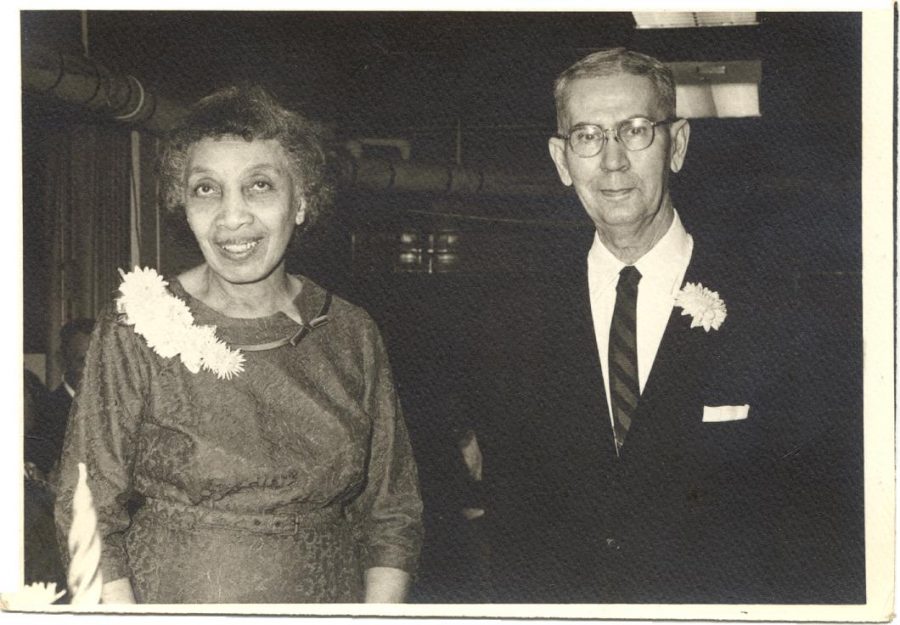
Ona and Kenneth Norton