“’Tis the times’ plague when madmen lead the blind.” —Gloucester in Shakespeare’s King Lear
It has been a couple of weeks, and I still can’t get out of my mind Maureen Dowd’s April 16 column in The New York Times, “When the Mad Lead the Blind.”
In today’s world, who are the mad and who are the blind?
What comes to my mind is that some of the people who hold political positions of power are mad. They are in positions of immense responsibility but lack the wisdom and grace to fulfill the promise of their title. Those who have good intentions—not the mad but those who don’t have the wherewithal to persuade, build coalitions, and execute plans—will hopefully have short terms in office avoiding catastrophic damage. However, it is those who are mad who will hang on to their positions, seeing every position as just another rung on their quest for dominating power. These officials have no regard for the impact of their decisions on citizens and the ideals of the nation.
Why do we elect people who are mad? Is this not a vote against our own wellbeing? Do we elect people who are mad because we are blind to who they really are? Acting as if we are blind to such people’s true nature makes us vulnerable to their maniacal actions. Willful blindness is a transgression paid for by retribution down the line.
We should not be surprised when some officials attempt to enact unconscionable policies that would have been unimaginable just a decade ago. These bold actions are just the tip of the iceberg because these elected and appointed officials believe that the citizenry is blind to who they are and to the purposes of their actions.
Imposters abound, using rhetorical tools that sound as if they are protectors of the electorate all the while spewing words that increase contempt and polarization among groups of people. When a candidate vilifies any group with no regard for the consequences of their message, you will know that this candidate is mad. More than party affiliation, charisma, or credentials, history tells us that it’s the character of the person that will foretell the kind of leader or representative that person will be.
Perhaps more than the sighted, blind people can discern if a person has empathy as well as a moral pale beyond which they will not tread. A yardstick to measure and a thermometer to test the degree of madness of potential leaders and elected officials is to listen to how they imagine the nation can restore a sense of unity; how they imagine creating cooperation among governing bodies; and how they imagine defusing bitter conflicts at home and abroad with compassion, justice, reason, and love.
For our own sake, we must believe that we can overcome the shame that some of our elected officials are creating when they enact punishing and disgraceful policies aimed at stifling freedom and rolling back progress for everyone, not just some. Rather than being discouraged by the actions of those who foment conflict indicating that they have no human compassion or moral compass, we need to do our due diligence in preparation for our next opportunity to choose.
We must not be blind. We must see who among the prospective elected officials are mad.
On Palm Sunday, April 2, 2023, I went to the Scottsdale Museum of the West to see a screening of the documentary film, Jews of the Wild West.
As I watched the film, I kept thinking about how the stories of Jewish people who immigrated to the United States and later to the Western United States appear to be missing from American history. The absence continues to be perpetuated in books and films today. A special thanks is owed to the nonprofit production company and to the filmmaker, Amanda Kinsey, for uncovering and sharing such a significant part of American history.
Notable Jewish migrants to the West are Levi Strauss, who we can thank for the jeans we wear; Isaac Shwayder, whose son, Jesse, founded the premier luggage line Samsonite; and Meyer Guggenheim, patriarch of the philanthropic Guggenheim family whose wealth came from the mining and smelting business. Women such as Golda Meir were also prominent in establishing a Jewish presence in the West. To say that these families had humble beginnings is an understatement.
They used their ingenuity, persistence, grit, and desire to make a life without persecution—one in which they not only survived the hardships of the frontier but thrived. They found that the Wild West had less antisemitism than New York City. In general, people who moved West had one thing on their minds: taking advantage of the riches the frontier would eventually offer.
The Jews who migrated West, for the most part, were not panning streams and mining for gold. They understood that people needed practical products and clothes as they pursued their dreams of a better life and their road to riches. The Jewish migrants may have started out as peddlers who made enough money to open a dry goods store as in the case of Shwayder. Eventually, they found markets within their communities and beyond that became their road to success. Because they were usually the only people in the community with a business, they often became the mayors of these frontier towns.
Jews of the Wild West is rich with the personal stories of the Jews who struck out for the Wild West and made good. Check out streaming platforms and American Public Television to see this film.
I just finished listening on Audible to April Ryan’s book, Black Women Will Save The World: An Anthem. #BlackWomenWillSaveTheWorld. This is a powerful and emotional reflection on the toils and unwavering leadership of Black women in a world in which our contributions are not valued and, in fact, our very selves often are devalued.
This book made me think about those women—“hidden figures” —who, over the decades, have provided the very foundation for all the successes of subsequent generations of Black families. One such group of “hidden figures” is the 6888th Central Postal Directory Battalion from World War II.
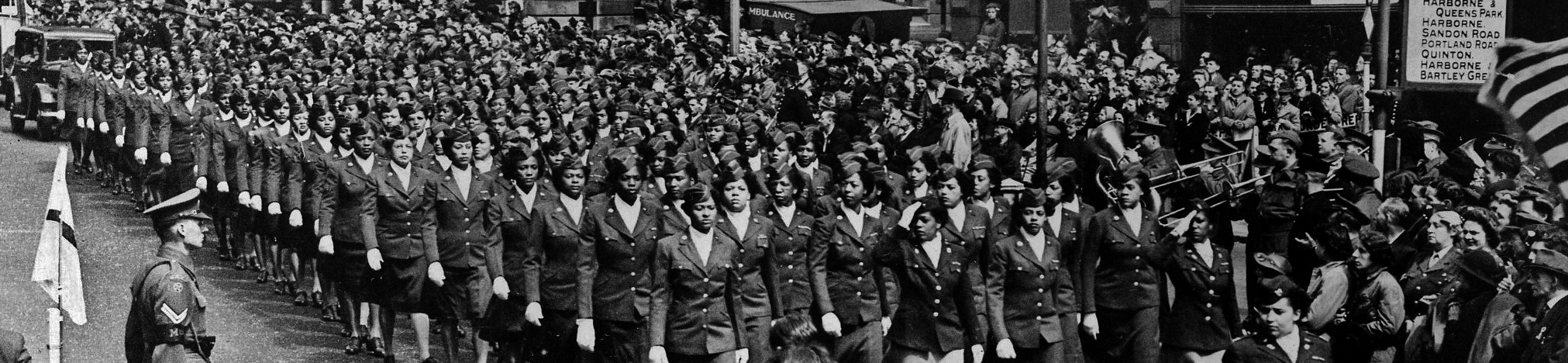
The 6888th was a unique U.S. Army unit that had the distinction of being the only all-female, African American battalion to serve in the European Theater of Operations during World War II. Made up of 855 women—824 enlisted and 31 officers—this Women’s Army Corps Battalion was commissioned in Europe between February 1945 and March 1946, and was led by 26-year-old Major Charity Adams.
The specific mission of the 6888th was to sort and clear a multi-year backlog of mail for the American Army, Navy, Air Force, the Red Cross, and uniformed civilian specialists who were stationed in Europe. This represented seven million people awaiting mail.
In February 1945, the first contingent of the 6888th embarked from Camp Shank, New York, to sail for Britain. They survived close encounters with Nazi U-boats and arrived in Glasgow, Scotland, where a German V-1 rocket exploded near the dock. The second contingent of 6888th soldiers docked in March 1945 in Gourock, Scotland.
Upon arrival by train in Birmingham, England, the Battalion confronted warehouses stacked to the ceiling with letters and packages. They endured inhumane working conditions, including dark, unheated, rat-infested aircraft hangars with broken windows and air raids. Despite these conditions, the Battalion created a new mail tracking system, worked three separate 8-hour shifts, 7 days a week to process an average of 65,000 parcels per shift (which is 195,000 daily), and cleared the 6-month backlog of mail in 3 months.
After resolving the immense mail backlog in Birmingham, the 6888th Battalion sailed to France for their next assignment in Rouen. They encountered undelivered mail dating back two to three years, which the Battalion again successfully processed and cleared in just three months.
Upon concluding their final assignment in Paris, the last of the Battalion returned to the United States by ship and was disbanded in March 1946 at Fort Dix, New Jersey. There were no parades, public appreciation, or official recognition of their accomplishments.
Adhering to the motto, “No mail, low morale,” the Battalion provided essential support to the U.S. military in the European Theater of Operations by linking service members to their loved ones back home. The 6888th achieved unprecedented success and efficiency in solving the military’s postal problems. The Battalion was the largest contingent of African American women to ever serve overseas, dispelling stereotypes and representing a change in racial and gender roles in the military.
It was not until nearly 80 years later that the 6888th received the well-deserved recognition for their service to the United States. In March 2022, the Battalion became the only women’s military unit to be awarded the Congressional Gold Medal, which was first awarded to General George Washington in 1776.
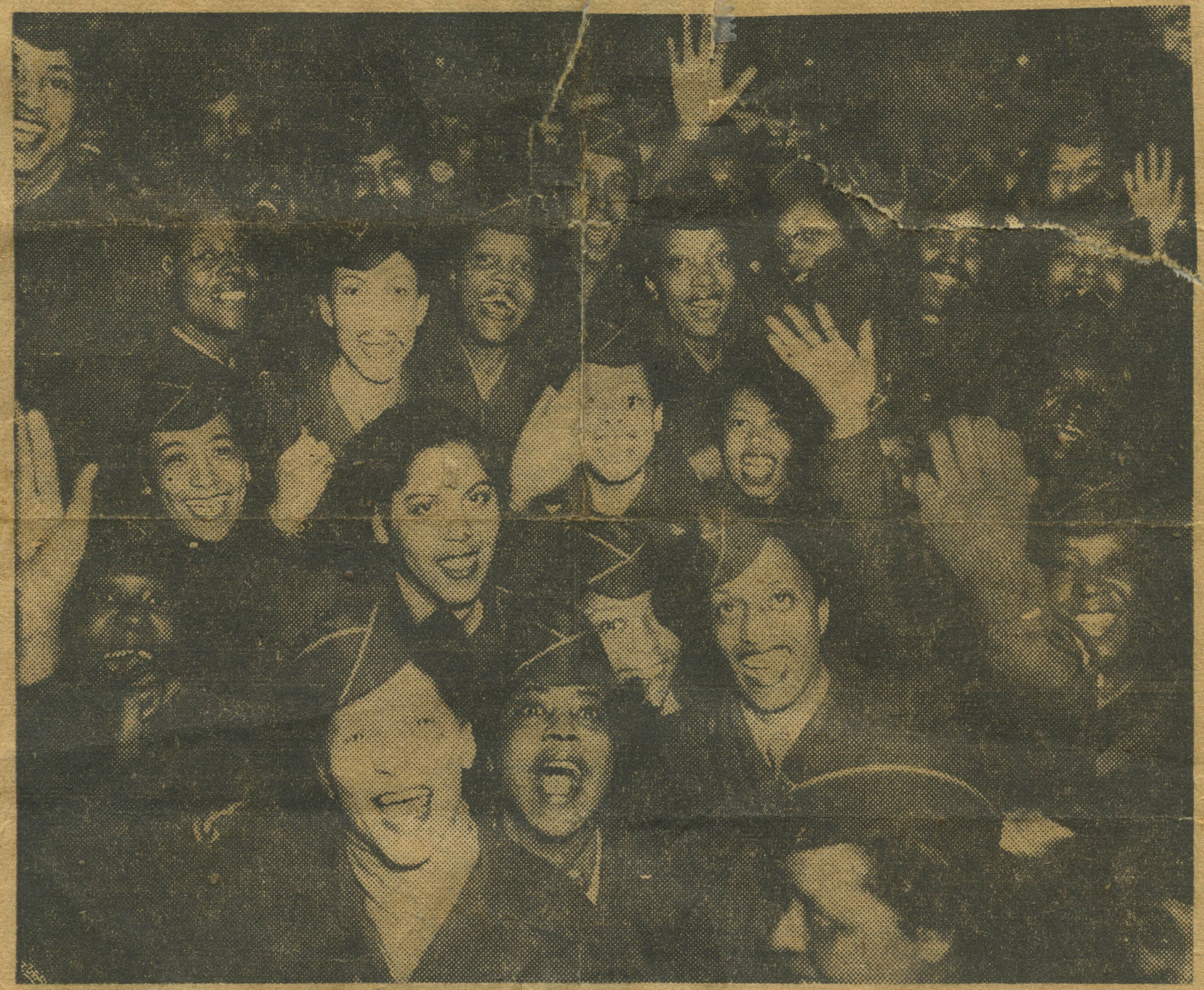
Iconic photo from when the last of the Women’s Army Corps (WAC) returned home from France. Annie Knight (Jordan) is the woman with the big smile in the top left corner.
The 6888th has a very special significance for me. My mother, Private First Class Annie Knight (Jordan), was one of those brave Battalion soldiers. As kids, my siblings and I always knew that she was in the Women’s Army Corps (something about which she was extremely proud). She mentioned to us that she did Morse code. We just thought of that as being like another language of sorts. It was not until Fall 2022 that we understood that her enlistment classification was not military postal worker. In fact, mom was in a special category called “Cryptographic Code Compiler.” Cryptographers, also known as code breakers, were secretly trained to crack code that provided intelligence information for the Army. Very little is known of the Black women who served in this capacity.
As I learned more about the 6888th, I began to think about how many ”hidden figures” there are and wonder how we might ensure that their stories are shared and their legacies known. I asked questions like, “What inspired these 855 African American women to enlist and pursue the 6888th?” “What gave them the internal fortitude to take on unknown ventures in a dangerous foreign land?” “What made them so different?” and “How did that very difference change the course of their lives post-military service and influence their legacies?”
So, in 2022, I became a first-time podcaster: NextUs818 Podcast is a reflective platform for connecting past successes with future progress in the African American community. There are many African American heroes—some known and many unsung men and women—who helped build this country. Some were the first or only in their fields of endeavor, like the 6888th. Yet little is known about how their unique journeys influenced the trajectory of their familial legacies…such as their children, grandchildren, nieces, nephews. The NextUs818 Podcast introduces the multi-generational descendants of these heroes. On the first and third Wednesdays of each month, I interview descendants of an African American hero and explore family lore, traditions, and values, and how the descendant’s journey was directly impacted.
The inaugural season of the NextUS818 Podcast features the descendants of the 6888th Central Postal Directory Battalion. Now 14 episodes in, 4 themes have emerged to help me better understand what inspired the 6888th soldiers and how their service has influenced subsequent generations: patriotism, fearlessness, adventurousness, and unwavering commitment to lifelong learning.
Patriotism: Despite the rampant racial and gender discrimination of early 1940s America, these women were exceptionally patriotic. With the country at war, they felt that it was their DUTY to contribute to the war efforts against the Hitler regime. They eagerly embraced this chance to serve.
Fearlessness: The notion of a young African American woman going into war zones would be darn right scary, even today. Yet these brave women exhibited a remarkable degree of fearlessness.
Adventurousness: Not only did these women demonstrate fearlessness, but they were excited to explore the unknown. As kids, mom always spoke about her adventures, especially once the Battalion moved on to France. In all the stories I heard about the women, they saw serving in the Army as a way of giving them broad exposure and opening post-military opportunities otherwise unavailable to them.
Commitment to lifelong learning: Many of the women went on to attend college after their military service, some using the G.I. Bill when the opportunity was available. (See How the GI Bill’s Promise Was Denied to a Million Black WWII Veterans) Their unwavering commitment to education deeply influenced their children and grandchildren.
In the NextUs818 Podcast, I enjoy hearing the stories of the soldiers’ civilian lives after World War II. The women of the 6888th were college graduates, teachers, nurses, college deans, and entrepreneurs. As important, they influenced the trajectory of their children and grandchildren who, among other things, are PhDs, physicians, engineers, lawyers, educators, professional musicians, and financial and advertising executives. All of the descendants with whom I have spoken emphasize that their successes are directly attributable to the foundation laid by the women of the 6888th. From them, they learned how to be focused, tenacious, and how to persevere under adverse circumstances. They learned how to survive and thrive. So when we are tempted to live in the moment and think we got here solely on our merit, we must never forget those shoulders on which we stand!
Five final notes:
Fort Lee Redesignation: The U.S. Department of Defense has made a commitment to rename military bases named after individuals associated with the Confederacy and other dark periods in American history. On April 27, 2023, Fort Robert E. Lee will be renamed “Fort Gregg–Adams” in honor of two trailblazing African American officers: Retired Lt. General Arthur Gregg and the late Lt. Col. Charity Adams (commander of the 6888th Battalion).
6888th Legacy Tour: A group of 6888th descendants and advocates will return to Scotland, England, and France, walking on the grounds where the brave soldiers made history as part of an upcoming 6888th Legacy Tour.
Carmen Jordan-Cox, PhD, is a retired university vice president and judge/magistrate. Currently, she is producer and host of NextUs818 Podcast and a freelance curator of stories about descendants of World War II soldiers.
I was a proponent of wearing face masks everywhere during the height of the pandemic. Today, I’m still on the side of donning one in crowded indoor spaces.
Here in Arizona, I have become recognizable because I’m one of the very few people who continues to wear a mask. I was in line at the grocery store and a stranger asked me if I had worked out that morning. He could see the quizzical look in my eyes above the bridge of the mask. He explained that he usually sees me at the gym but missed me this particular morning.
When I go to see plays at the theater, I buy tickets, when possible, for the one day when masks are required. If I go on days when masks are not required, I stand out as odd in wearing a mask. I feel some sense of the recognition of my right to wear a mask when the recording before the play begins: In addition to providing the usual information about exits and such, this recording now also includes a request that patrons respect those of us who choose to wear a mask.
The recent dueling research reports on whether masks are effective in protecting one from a swarm of viruses have given me pause about my decision to defiantly continue to wear a mask. In fact, the reports may be giving me an excuse to stop wearing a mask as often as I currently do.
Although I think that there ought to be a benefit in wearing a mask, I’m tired of wearing one. My equivocation about the mask makes me feel like a person who professes to be religious but only practices it when it’s convenient or out of desperation for an answered prayer. I’m faithful in wearing a mask in places like the gym where people are grunting and exhaling to the extreme. However, I’ve not been consistent in wearing a mask when I have visitors or go to someone else’s place. Until very recently, I wore a mask when enclosed in a car with another person, as well as upon entering restaurants and when the servers were at the table, only removing my mask to eat. I’ve finally given up on wearing a mask in restaurants.
My masks are supposed to be high-quality but they are not the recommended N95. They are KN95. When I read that one researcher said that if the mask is not N95 and worn correctly, you might as well not wear one at all. I’m questioning whether what I’ve been doing lately is an exercise in futility. Yet, I fear that if I abandon wearing a mask and then become infected, I might think that I “shoulda” kept wearing a mask.
I wonder what you are doing in regard to mask wearing. Are you wearing a mask religiously, judiciously, or not at all?
My cousin, Mattie Butler, passed a couple of weeks ago. She was small in stature and physical features but huge in courage and compassion. She was a saving grace and a rescuer. Everyone in the family and otherwise had a code to use when they needed serious help: “Call Mattie.”
We’re all elated that she was recognized for one of her greatest accomplishments before she passed:
Woodlawn was once neglected, disinvested, and considered a dangerous south side Chicago area beset by violence, and filled with at-risk, in need of repair properties. But a determined, fierce neighborhood advocate, Mattie Butler, stood tall, confronted, challenged, and changed the prevailing deceptive narrative with her community building and investment efforts. Throughout her life, the indomitable warrior fought for social equality and housing affordability for marginalized residents.…
Many of us grew up and often heard our elders declare, “Give me my flowers and accolades while I can enjoy and remember them.”
Recently, Mattie Butler was the surprised and elated beneficiary of such an effort because whatever she’s done for others, it’s always done exactly right. Butler was recognized for vital contributions to the same Woodlawn community, during her more than 45-year residency. Two newly renovated affordable rental apartment buildings were named in her honor.
Mayor Lori Lightfoot joined 1st District Congressman Bobby Rush, Chicago Housing Department Commissioner Marisa Novara, other public officials, religious and community leaders and scores of local residents on May 26, 2022, highlighting affordable housing opportunities for Woodlawn residents during a news conference celebrating the meritorious work of advocate Mattie Butler.
“Thanks to Ms. Butler’s strong leadership, we generated a workable Policy Roadmap which reflects our shared vision for Woodlawn’s future. Preservation of housing affordability was key. Further, the inclusive, open process incorporated input and feedback from diverse local community stakeholders, residents, governmental agencies, non-profit, civic, religious, and private sector partners. She commands my utmost appreciation and respect,” said Mayor Lightfoot….
Congressman Bobby Rush who has partnered on grassroots initiatives with Butler and WECAN for years, laughingly recalled, “Over the years, as an activist, former Black Panther, Chicago Alderman, and U.S. Congressperson, I’ve confronted formidable high-profile and little-known opponents. However, I admire and refuse to tangle with Mattie Butler. She has a deceptively warm and sweet demeanor – at first. She’s always armed with irrefutable facts, figures, and contingents of devoted supporters, remaining staunchly unafraid. Mattie’s a strong social advocate, a modern-day Harriet Tubman. I will always respect that.”…
Reverend Dr. Byron T. Brazier, pastor of Woodlawn’s Apostolic Church of God praised Butler’s tenacious, dynamic spirit. “She’s been WECAN’s driving force, developing housing for neighbors, the homeless, organizing drug rehabilitation programs, delinquency prevention, numerous education, and support services programs, launching a food pantry serving hundreds of people. Butler also greatly influences developing sustainable local, statewide, and national public policy initiatives.”…
Acclaimed Black author James Baldwin once expressed: “Your crown is already bought and paid for…All you must do is put it on your head.”
Mattie Butler’s crown of successful achievement rests comfortably and regally on her deserving head. Equally important, she’s alive to receive it. Grateful Woodlawn locals believe it will forever stay there. She’s always stood for them. A few days ago, they returned the favor, standing united to praise and illuminate her altruistic, benevolence. What a profound living legacy.
“And I must confess, my friends, that the road ahead will not always be smooth.
“There will be rocky places of frustration and meandering points of bewilderment.
“There will be inevitable setbacks here and there.
“And there will be those moments when the buoyancy of hope will be transformed into the fatigue of despair.
“Our dreams will sometimes be shattered and our ethereal hopes blasted.
“We may again, with tear-drenched eyes, have to stand before the bier of some courageous civil rights worker whose life will be snuffed out by the dastardly acts of bloodthirsty mobs.
“But difficult and painful as it is, we must walk on in the days ahead with an audacious faith in the future.…”
Martin Luther King, Jr. 1967. “Where Do We Go From Here?” Annual Report Delivered at the 11th Convention of the Southern Christian Leadership Conference, August 16, Atlanta, GA. Excerpt.
He’s kind and thoughtful. Like the time his kindergarten teacher wrote, “He has a good attitude toward others; wants to please and do the right thing and is bothered if others do not.”
He’s compassionate. Like the time when he took blankets off his own bed and gave them to people in the neighborhood who had been negatively impacted by a snowstorm.
He’s generous. Like the time when, at seven years old, he took money from his bank, went to a neighbor’s garage sale, and bought his mother a letter opener and a cookbook.
He’s patient. Like when he slowly, without apparent annoyance, repeats what he has already explained. His kindergarten teacher described this as “good self-control.”
He’s positive. When people around him find fault with something or someone, he finds something to say that expands the perspective so others can see the person or situation in another light.
He’s disciplined. He decides on a goal and, without falter, takes the steps to achieve it. His kindergarten teacher wrote, “He is very conscientious about his work—tries hard to do well, and completes what is expected, and enjoys doing it! He’s very well-disciplined—but also enjoys just being a boy sometimes.”
He’s optimistic. Like when his best efforts in pursuing a goal appear to fail, he perseveres, looking for the rainbow.
He’s responsible. Like when he got his first job at age 12 and has not been without a job from that point on.
He’s confident. Like how he never seems to doubt his abilities. His kindergarten teacher wrote, “He seems pleased and happy about himself, school, and others.”
He’s courageous. Like the times when he has been selected as the spokesperson for a group and takes the role regardless of the possible consequences.
He’s fair. Like the times when during a discussion he often asks, “Is that fair?”
He’s funny. Like the many times he makes those around him laugh out loud even when the situation is what might be described as “dark” and “not funny.”
He’s curious. Like when he finds just about everything interesting and, judging from his behavior, in need of further study and work.
He’s self-possessed. Like when he seems to be walking too leisurely and never wears a watch, yet always gets to where he intends and on time.
I like being in his presence because there is a lightness of being around him.
I like seeing him live his life unstintingly, stretching it out to experience and enjoy every inch of it.
A lot of deserved attention is being given to Viola Davis, who stars in and produced The Woman King. Before I get into more about Viola, I want to draw attention to the director of The Woman King and other more-than-noteworthy films. Her record is one of excellence in creating films that have strong moral and positive messages.
Historically, women have not been in the director’s chair. For a Black woman to be in the director’s chair the number of times Gina Maria Prince-Blythewood has is truly an amazing accomplishment. Thank you, Director Prince—Blythewood, for your contributions to the film industry and to our culture.
Although the focus of The Woman King is Black women warriors, another warrior who ran up against a ceiling created for Black folks is John Boyega. Being a man, notwithstanding, John Boyega has felt the oppression of being Black in a world acculturated to seeing only White people as heroes in films. This was the reality that fueled what some saw as a backlash against having a Black man as one of the heroes in the Star Wars sequel trilogy. Thank you, John Boyega, for sharing your talents as King Ghezo in this epic film that focuses on Black women warriors.
As Viola Davis and the other stars of The Woman King make appearances throughout the media universe, Viola shares strong messages that refute the endemic negative messages that Black girls and women have historically received not only from folks who were not Black but also from Black people who put down women because of their particular shade of blackness.
Here are snippets of messages that Viola sent that resonated with me:
Clear up space for yourself.
Do not disappoint yourself; disappoint others instead.
Don’t say “Yes” so people will love you. They don’t love you.
… weighed down with a cultural history that tells you that you are nothing.
Life is a relay race and you run every leg of it yourself.
I have a new term—“I’m worth it!”
If you have not seen interviews with the stars of The Woman King, I recommend that you take a look at some of them to hear about the six-year experience of getting the film from concept to reality.
Director Gina Prince-Blythewood, in response to an interviewer’s question, responded that she hoped that women would see themselves reflected in the film. She also hoped that when they leave the theater after seeing the film, women feel enlightened, inspired, and empowered.
A constant refrain that remains with me after seeing The Woman King and hearing comments of those who made the film possible is “spirit of the warrior within.”
I’ve talked with people who after many years in a particular kind of work feel unsettled as if they are not doing the kind of work that fulfills their passion. Others I’ve had conversations with have changed the kind of work they do many times. They say that they get restless after the bloom of doing something different begins to fade.
Like those I’ve spoken with who wonder if there is something that they should be doing rather than what they are doing with their lives, I’ve had these thoughts. But for me, these thoughts have been fleeting. During my career journey, I took many of the assessments that purport to help career searchers begin to narrow their focus. Interpretations of my various assessment results showed a consistency in that whatever I chose for a career, I would be a “helper.”
I defined being a helper as someone who would provide support to others in reaching their goals and human potential. The question for me was how this might be realized in a specific career. Coming of age in the 1960s, I didn’t believe that the universe of options was open to me. Going into the medical field was my teenage dream. However, the reality of my financial situation made that dream unrealistic as a goal.
Being a teacher was one way that I could become a helper. However, it was a choice for which I settled rather than one for which I had a strong inclination. I didn’t know it at the time, but it was during these years that I thought I was settling that I found my passion. Teaching helped me realize that young people found it easy to relate to me and sought my counsel beyond the classroom. During these one-to-one sessions with students, I learned that many of them worked to the level that was expected of them rather than to the level of what they were capable of doing. They had more potential than they realized. Helping these students see beyond their current circumscribed existence brought me joy.
My sense of satisfaction in these relationships with students and their positive response to me confirmed for me that I was in the right place. Attaining a degree in counseling, I was prepared to be a helper. I found real congruence between who I imagined myself to be and who I could be in my career as a mental health and career counselor.
Even at this early stage of my journey, my touchstones of FIRE were part of my inner process:
I accepted the situation that I was in (fate).
I believed that I would be led to the right outcome (faith).
I focused on living a life infused with integrity.
I took initiative to get the required credentials to do what I wanted to do.
I was constantly reflecting on circumstances in a manner that I could glean lessons from my experiences.
I always tried to respect those with whom I interacted regardless of age and position.
I applied energy to achieve career goals and to carry out my responsibilities as a spouse and parent.
I freely expressed empathy for others, and I allowed myself empathy when it seemed that I had lost my way.
My hopeful wish for young professionals is that you will find the path that will lead you to your place of passion and fulfillment in your professional and personal life.
The epiphany I experienced upon announcing my wish to write a book on student affairs and social movements became a goal to pursue. (read part 1: Student Affairs and Social Change)
Despite feeling discouraged because of the initial reception to my book idea, I kept talking with people about the dream.
On a bright spring day in 2000, I had breakfast with Bud Thomas and John Blackburn at the hotel across the street from the NASPA office on Connecticut Avenue. They wanted to talk about their plans as Board members of the NASPA Foundation.
After discussions about the business of the NASPA Foundation, the conversation turned to their experiences as chief student affairs administrators at the University of Maryland College Park and the University of Alabama, respectively.
The student affairs and civil rights book had not been on my mind at this breakfast meeting. However, when John Blackburn said that he was the Dean in Student Affairs from 1956 to 1969 at the University of Alabama, it was as if a door opened that I had been trying to enter. John and I had several conversations after this pivotal breakfast meeting.
I learned that during the fraught months and days around integrating southern universities, John was literally on the front lines. In fact, he played a major role in the relatively peaceful entrance of James Hood and Vivian Malone as the first African American students to integrate the University of Alabama. While Governor George Wallace was blocking the doors, John Blackburn was setting up the student leadership social infrastructure to bring Hood and Malone into the academic community of the University.
When I told John about the thoughts I had about a book on the experiences of student affairs administrators during the civil rights era, he told me that the only way my idea would have legs was if I had conversations not only with him but with a sterling group of senior and retired chief student affairs officers such as James J. Rhatigan, now vice president emeritus of student affairs at Wichita State University; James Appleton, now president emeritus at University of the Redlands; and Dave Ambler, now vice chancellor emeritus at University of Kansas.
What I heard during these conversations made it impossible not to follow through on this project. This book had to be written. I floundered for a while about how to move forward in making the book a reality. I talked with some of my professors at Drew University about how to get started. I talked with NASPA staff and Board members about what such an undertaking would require. Unlike my initial conversations about the idea at the beginning of the year, these new conversations were much more encouraging because I had the support of some of the most respected senior administrators in the field of student affairs.
Energized and motivated, on the afternoon of Wednesday, May 3, 2000, I made a phone call to NASPA Historian Kathryn Nemeth Tuttle. Hearing my enthusiasm for this publication, she graciously agreed to help find a way to further explore the idea even though she was busy working on her dissertation at the time. She said that two of her colleagues, Lisa Wolf-Wendel and Susan B. Twombly, might have interest in this topic as well. She gave me their phone numbers and I could feel the momentum of my intentions.
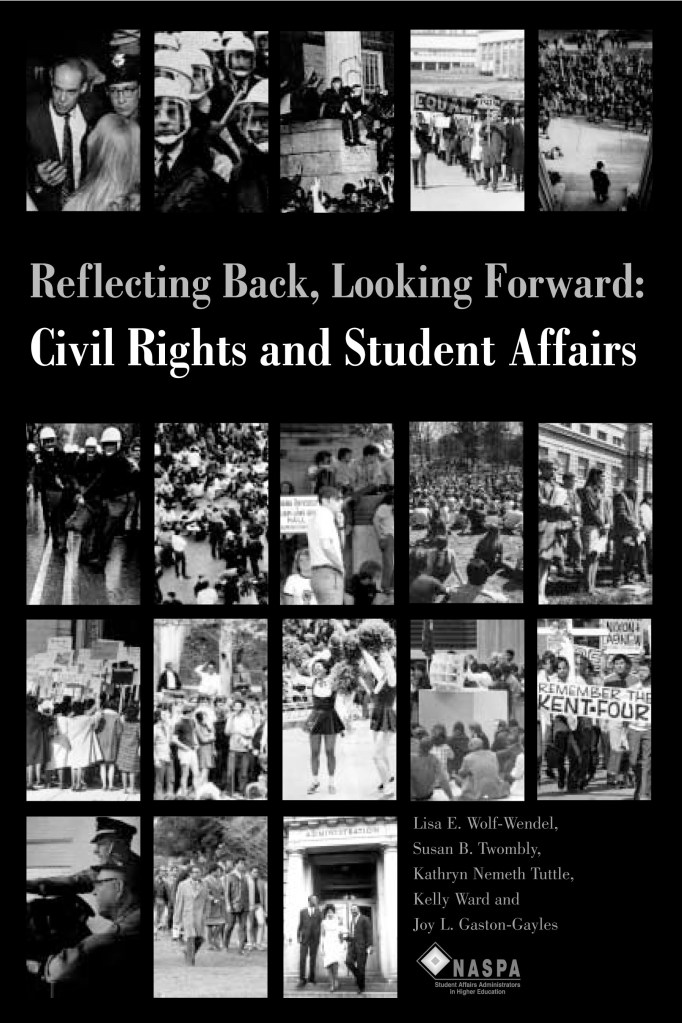
With a lot of hope, faith, and hard work on the part of the authors and others, three years after my phone call on May 3, 2000, the book, Reflecting Back, Looking Forward: Civil Rights and Student Affairs was published by NASPA in 2004 marking the 50th anniversary of the landmark Supreme Court decision to outlaw segregation in public schools.
This historically rich and relevant book includes 18 first-person narratives from senior student affairs administrators, current and retired, from all over the country and from all types of colleges and universities.
In addition to recording the history of the remembered experiences of Student Affairs professionals, the hope was that there would be lessons learned that would be helpful to Student Affairs professionals today and in the future.
Even though the political and judicial environments are different in many aspects today, there are lessons to be studied and learned from the narratives in this book. An example of the climate in which student affairs professionals are working today is the court decision to charge Oberlin College and Conservatory $36.59 million for punitive damages as a result of a 2016 protest that Oberlin students staged at a local bakery. The College argued unsuccessfully that they should not be held liable for failing to censor the speech of its students.
I sincerely appreciate all those who made contributions to this work through sharing their personal experiences related to student activism. And I will be forever indebted to Lisa Wolf-Wendel who took the lead in working with her co-authors—Susan B. Twombly, Kathryn Nemeth Tuttle, Kelly Ward, and Joy L. Gaston-Gayles*—and for the entire team’s incredible contribution to higher education. I also appreciate the team’s pressing the project forward with the urgency necessitated by gathering the stories from these student affairs leaders while they were still here to tell them first-hand. In addition to the passing of so many of those featured in the book, we also lost co-author Kelly Ward to a tragic accident in 2018.
The lessons I learned from this experience are, first, to dare to take the initiative to pursue your ideas and, second, to have faith that your power of will can motivate others to share your dream and make it a reality.
* Lisa Wolf-Wendel is currently Associate Dean for Research and Graduate Studies and Professor of Higher Education Administration in the School of Education at the University of Kansas. Susan B. Twombly is Professor and Chair of the Department of Educational Leadership & Policy Studies in the School of Education and Human Sciences at the University of Kansas. Kathryn Tuttle is Associate Vice Provost Emerita at the University of Kansas. At the time of her passing, Kelly Ward was Vice Provost for Faculty Development and Professor of Higher Education at Washington State University. Joy L. Gaston-Gayles is Professor & Senior Advisor for the Advancement of Diversity, Equity, and Inclusion at North Carolina State College of Education.
The book is available for purchase through the NASPA bookstore.


 Gwen Dungy