
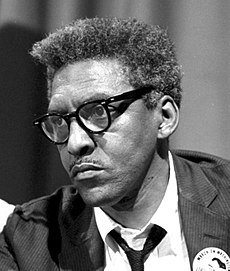
My hope is that more people will see the new Barack and Michelle Obama-produced Netflix biopic Rustin. The titular subject of the film is the too-long unsung hero who was the strategic genius behind the 1963 March on Washington for Jobs and Freedom.
While the film centers on the March, there is so much more that Bayard (BYE-urd) Rustin did to advance the movement for civil rights. Hopefully, this film is an introduction to a courageous activist who was vilified for being Black and gay during a time when being gay was not only seen as morally wrong but was also against the law. His sexual orientation kept him in the background among Black leaders when his contributions to civil rights should have made him a central figure.
More than a civil rights activist and a brilliant organizer, Rustin’s unwavering belief in nonviolence as the most effective strategy for social change was the scaffolding upon which Martin Luther King, Jr. built his leadership and for which King devoted and ultimately sacrificed his life.
In addition to introducing Rustin, a civil rights hero who never got his due during his lifetime, the film brings to the forefront other Black leaders who in their respective communities and leadership positions helped to usher in significant legislation on civil rights.
The courage Rustin showed in being his own person, despite judgments from other Black leaders and harassment from politicians and the FBI, reminded me of remarks former President Barack Obama made in accepting the 2017 John F. Kennedy Profile in Courage Award, in which he spoke of the courage “to challenge the status quo, to tackle the big challenges, and to keep fighting the good fight.” (Read full transcript; view full speech)
What’s more, the citation for the Presidential Medal of Freedom that President Obama posthumously awarded Rustin in 2013 read as follows:
“Bayard Rustin was an unyielding activist for civil rights, dignity, and equality for all. An advisor to the Reverend Dr. Martin Luther King, Jr., he promoted nonviolent resistance, participated in one of the first Freedom Rides, organized the 1963 March on Washington for Jobs and Freedom, and fought tirelessly for marginalized communities at home and abroad. As an openly gay African American, Mr. Rustin stood at the intersection of several of the fights for equal rights.”
Without the courage and genius of Bayard Rustin, we would never have heard and been inspired by King’s I Have a Dream speech. We would never have believed that more than 250,000 people could gather in a nonviolent protest after only eight weeks of organizing. We would never have believed that passion for justice and freedom could bring together a coalition of organizations and individuals who would ignite a movement that continues to serve as a beacon of hope to this day.
I’m grateful for the glimpse this film offers into the history of the March and into the life of another inspiring Black American.

 Gwen Dungy