After September 11, 2001, everyone had a story about where they were, the efforts they made to get home, and what they did to connect with loved ones upon hearing the devastating news about the attacks made on American soil by foreign terrorists. The senseless tragedy was almost beyond comprehension.
After September 11, 2001, I witnessed a NASPA staff that was shaken but not defeated. Although there were a multitude of anxieties, such as fear of being in Washington, DC, doing work on Capitol Hill, taking the Metro to and from work, flying on behalf of NASPA, and even opening mail because of anthrax, staff members adapted and redoubled their efforts in support of student affairs professionals who were needed more than ever on their campuses.
After September 11, 2001, student affairs professionals served as navigators and provided safe harbors for all members of their campus communities. Using their skills of empathy, understanding, and knowledge of crisis intervention, they were the first responders for students, faculty, and staff. They did what they were trained to do and shared strategies with colleagues across the nation on how best to respond to these unprecedented times, and the increased needs of the student and campus community amidst fear, uncertainty, and a range of reactions, including the bizarre and self-destructive.
After September 11, 2001, NASPA leaders looked beyond the tragedies of the day and sought ways, where possible, to reduce risk on campuses and, unfortunately, to prepare for the aftermath of future senseless tragedies.
After September 11, 2001, what did NOT—and never should—go unnoticed is the commitment of student affairs professionals to working with campus communities to create a climate that promotes learning and a sense of security and belonging in the face of adversity.
Elation for Zaila and her family and what this means for her future.
Collective pride, along with other Black Americans, that her hard work was rewarded.
Shame that the screaming headlines that highlighted the fact that Zaila is Black may cause some to draw the illogical conclusion that what Zaila did was extraordinary because Black Americans don’t usually have the intellectual capacity for such a feat.
Sadness that so many other young people who could have competed for many years were unable to do so because of the expense associated with the contest.
Resentment that the United States is still recognizing “the first” among Black Americans.
Anger because “until the passage of the Civil Rights Act of 1964, Black children were routinely banned from participating in spelling bees. All winners were White until Puerto Rican Hugh Tosteson Garcia was named champion in 1975.” (Shalini Shankar, “Zaila Avant-garde’s Spelling Bee win sends exuberant message,” Opinion, CNN online, July 9, 2021)
Disheartened that “Indian American winners who have steadily won since 1998 have endured a litany of racism on broadcast and social media for not being ‘American’—code for not being White. Seen by many as outsiders, and as part of communities subjected to waves of anti-Asian violence, they are left to make sense of negative reactions to their success in the form of calls for ‘real Americans’ to regain control of this contest.” (Shankar, “Zaila Avant-garde’s Spelling Bee”)
Despite my mixed emotions, I’m glad that Zaila received so much attention because her success will alert other families and their children that they, too, can have the kind of success that Zaila, the scholar-athlete, has achieved.
I recently had the opportunity to talk with David Keymer, who served as a chief student affairs officer at SUNY Utica Rome; California State University, Stanislaus; and Zayed University (Dubai and Abu Dhabi) from 1983-2004. This is the final installment in a seven-part series in which I shared some of the wisdom gleaned from David’s experience in student affairs across these varied institutions.
Different people have different strengths. You need to look at the institution really hard and find what your own strengths are within that context. Figure out what the institution is for. And what your role is in that. And don’t forget that.
It doesn’t come from the mission statement and it doesn’t come from any of the “official language.” It’s more like Cardinal Newman’s idea of the university in an ethical framework. What kind of a universe is a university or a college? What is it there for? What does it do for our society? What does it do for the people who go through it? What does it do for the people who work there?
And you need to remember that it is a community. It may be dysfunctional at times but it’s a community. Communities are good. We live in communities. You need to make your community work.
If you can keep a clear focus on what’s important, you’ll avoid the trap of slipping into a kind of imperial boat mode: “This is our Student Affairs Empire. Don’t you touch it because we’re in a pond of our own.”
We’re not in separate ponds, we’re all in one big pond (that connects to the larger world in myriad ways). And if you think that way, you have a better chance of understanding the concerns of the other players, and what language they speak. That’s something you run across in higher education frequently: barriers that are there because we don’t learn how to talk to players in the other boats in our common pond.
I recently had the opportunity to talk with David Keymer, who served as a chief student affairs officer at SUNY Utica Rome; California State University, Stanislaus; and Zayed University (Dubai and Abu Dhabi) from 1983-2004. This is the sixth in a seven-part series in which I will be sharing some of the wisdom gleaned from David’s experience in student affairs across these varied institutions.
One of the things I like about academics is that they tend to respect evidence. It doesn’t necessarily change their prejudices, but they do respect it. So, if you can get a large enough evidentiary base through student interviews and so on, and if your questions are consistent so you can kind of plot things, you’ve got exactly the type of evidence that academics will listen to. And it’s being presented in their language, not your language.
I think anything a student affairs professional can do to document the success of their endeavors is worth doing. Sometimes, student affairs professionals are so busy on the front end, providing service, that they don’t stop to think of documenting their successes and their issues. We need to supply evidence to other people that our services make a difference. Like it or not, you have to sell yourself all the time.
We all have our own focuses. And we all want the thing we’re focused on to do well, and that’s one of the reasons for having a senior student affairs administrator on the President’s Council. The Provost is interested in students, too, but the Provost has the faculty, which is the 500-pound gorilla in the room. Faculty issues and concerns occupy 80, 90% of the Provost’s time. And when the Provost goes to the President’s Council to talk, that’s what the Provost will focus on.
Business and Finance offer a lot of services. But while they offer them so students can be there, students aren’t their primary focus.
The Chief Student Affairs Officer does two things. One is overseeing a lot of services that make it possible for students to get into the university, through the university, and do better. The second thing is being the voice for the students, for student concerns and issues, to make sure they’re heard at the highest level.
It’s a matter of focus: The Provost talks about faculty; I talk about students; the business and finance person talks about building plans or money; and the advancement person talks about university development. To do my job well, though, I’ve got to listen really hard to the other people at the table. Listening is a paramount skill—and if you do listen, and show them you’re trying to support them as well, you have a decent chance of being heard yourself.
I recently had the opportunity to talk with David Keymer, who served as a chief student affairs officer at SUNY Utica Rome; California State University, Stanislaus; and Zayed University (Dubai and Abu Dhabi) from 1983-2004. This is the fifth in a seven-part series in which I will be sharing some of the wisdom gleaned from David’s experience in student affairs across these varied institutions.
I never intended a job in Student Affairs. I’d been a professor. My specialty course was on Machiavelli and More: Political Thought on the Eve of the Reformation. It’s hard to get more un-Student Affairs-y than that.
I moved into an administrative job at SUNY—the State University of New York—and moved through four jobs in five years on the way up. Basically, I was a jack-of-all-trades, trying to be useful at whatever the college needed me to do. And I wound up—with no prior experience in student affairs at all— the college’s first Dean of Students. I didn’t think of the job as a detour. I was still an educator and at the schools I’d attended and worked at, the dean of students was a real player. I found I really loved the work. For one thing, it got me back to students again and I’ve always loved working with students. That’s part of the reason I left full-time teaching because though I was good at researching, I didn’t like working in a room alone. I’m not a monk, I’m a people person.
Then I moved to California, where I was the first vice president for student affairs at Cal State Stanislaus. I’d done eight years as dean of students in New York, nine years as VPSA in California, and then I moved to Dubai, and for three years was the first dean of students at Zayed University, a public university for Emirati women. Until it was done, I didn’t realize how remarkable my career in Student Affairs had been. In all three schools where I’d worked, I was the first true chief student affairs officer the campus had had, which meant, among other things, that no one else really knew what I should do and so I could do as much as I could convince other people was needed to be done. I loved it. I really loved it. It was the perfect job for me.
But I didn’t come in with any expertise in any of the fields that constitute student personnel administration. I wasn’t a counseling guy or a student life guy or a res hall alum; I’d never worked in financial aid or educational opportunity or the registrar’s office…or athletics. I supervised athletics, too, at SUNY Tech, and if you knew anything of my history with Phys Ed courses, you’d know what a stretch that was.
I didn’t find it a problem though because the job of chief student affairs officer is so different from any of the subordinate jobs. Well, maybe not if you’re associate dean or something like that. But if you direct an office, you basically have expertise in a functional area and you know how people operate in that. And you have much more direct control over the product you turn out. If you’re director of counseling, you have a counseling staff with whom, you meet, you can set up counseling standards, everything will be fine. But if you’re a chief student affairs officer, you have a panoply of offices under you. I had 12 directors reporting to me in California and they ran the gamut from student recruitment, admissions and registration, financial aid to residential life, student life, the health center and things like that, various academic success and assistance programs, counseling, and various special entry programs.
The people who worked in these offices—really, really nice people—often didn’t see what they had in common because their particular professions came with a focus. That’s one of the first things that anyone who moves to a top or near-top job in student affairs has got to learn. All of a sudden, what you’re doing is outside the grasp of your own hands. And it may be outside the grasp of your own expertise. What you’ve got to do is persuade the people who work for you that they’re all in the same business, with the same ultimate end. The person who’s doing financial aid is helping students get into school and stay in school just as is the person who works in the residence halls. Students need many services and supports in order to succeed. Our job is to create the conditions that make it easier for students to pursue their educational goals.
Students don’t come to our campuses because we have good dorms. They’re not there because we have financial aid. They’re there because, ultimately, even if they don’t know it, they want power over their lives and to achieve that, they need to be educated. It’s our job to help that happen. If you can get that message across, instead of just talking about your expertise and your services as though they were stand-alone treasures, you can persuade everyone, even faculty, even other administrators who are competing for resources with you that there’s a value in supporting you.
To: Ida B. Wells-Barnett Date: July 15,2021 Subject: Update
First, the good news:
A ceremony to dedicate a monument to journalist, educator, and civil rights leader, Ida B. Wells is held on June 30, 2021 in Chicago, Illinois. The monument, created by artist Richard Hunt, stands where the Ida B. Wells public housing complex once stood in the Bronzeville neighborhood. (Photo by Scott Olson/Getty Images)
Your family’s love for you and perseverance has finally come to fruition with a national monument dedicated to your spirit and to your vigorous crusade for the dignity and equal protection of Black people and all women. The monument in your honor was revealed on June 30, 2021, in a Chicago neighborhood where everyday people can be inspired by your legacy.
Now, some news that is not so encouraging:
In the 245th year of the United States, there has been some real progress in moving our nation closer to noble ideas about living in a democracy. However, the atmosphere and tenor of the current time tends to overshadow the good that has been accomplished.
You probably will not be surprised that it is because of the glimpses of progress of the overcomers that the backlash against marginalized people in general, and Black people in particular, has been swift and unrelenting. The biggest and harshest blow is the effort to silence the voices of those of us who have only recently been allowed to be heard through our right to vote.
While the current fundamental instrument to achieve equal rights and protections is the vote, the effort to distract our attention from this prize is effective, indeed. The distraction is disguised as genuine concern about the negative impact on White people if the history of Black people and White people in the United States that led to a culture and laws that presupposes superior and inferior people is mentioned, taught, or discussed.
Oh, how we wish we could read one of your fiery columns about what is going on now. Barring that, we need only reread what you have written and be motivated to keep our feet straight on the path to achieve what all people deserve in a democratic society and as human beings.
Those of us who are inspired by your legacy will continue to remind all of our brothers and sisters, regardless of race, that our only shield, staff, and way forward is through the vote.
Luevinia, Altoria, and Vidella were my best friends in the sixth grade at Melrose School in Memphis.
The scene was on the playground at recess after lunch. I won’t go into the pretend marriage between a boy I liked and myself, but it was on this occasion that my three friends—who were getting me ready for the pretend wedding—decided that the clothes that I was wearing were just “too ugly” for the “wedding.”
Vidella decided to lend me her pink sweater to cover up what I was wearing. I had never had such a soft lovely piece of clothing that I could remember. I felt beautiful in the sweater. The photo that resulted showed me posing as if I were a movie star, with head thrown back to highlight the grin on my face and one hand behind my head for good measure.
Another photo that reminds me of how clothes can be an uplift or a downer was taken when I was fourteen. Although I had moved to live with my mother in Chicago two years earlier, my brother had stayed with my dad. So, on the occasion of my brother’s seventh birthday, my mother and I traveled back to Memphis.
The birthday party was something of a reunion, in that the kids I had played with when I lived in that neighborhood were there. My living in Chicago would have been something to increase my status among the kids if it had not been for what I was wearing.
Cute shorts and tops with sandals were the expected standard for the girls. Why, then, was I wearing my one-piece green gym suit from school with the elastic waist and elastic mid-thigh? I had no cute shorts and tops. The gym suit was my only option to keep cool in the heat of August in Memphis. Needless to say, I tried to stay out of sight as much as possible.
During the time when I was applying to colleges, my mother was losing jobs. She told me that there was no money to pay for my senior pictures. Understanding the situation, I told her that I would take the pictures and, if there was money when it was time to pay for the pictures, we would buy them.
The instructions for the photos was that the girls were to wear a black sweater and white pearls. My only sweater was a drab, olive-green, nubby-like sweater that looked as if it needed a clothes shaver. It was totally wrong for the picture. I didn’t have pearls either. My mother had some gold-painted beads that I paired with the ugly sweater.
When it was time to buy the pictures, my mother had the needed money. It was later that I found out that she had pawned the treasured wedding rings that my stepfather had given her in order to have the money for my senior pictures. With new eyes, I not only felt bad that she had pawned the rings; I felt even worse than bad because I had complained about not having a black sweater and white pearls.
Clothes don’t make the person. It’s not what you wear it’s who you are.
My mother’s parents probably used similar words and sentiments when she asked for new clothes.
My mother and a boy named Wesley Lee were the only students in the school that the teachers thought were ready to take the exams required to graduate from the eighth grade. The exams were given at the Sunflower County Seat in Mississippi (M-i-crooked letter-crooked letter-i-crooked letter-crooked letter-i-humpback-humpback-i) rather than at the school.
This trip was a very special occasion and a testament to the accomplishments of these students. My mother’s Aunt Alma (by way of marriage to my mother’s daddy’s brother) promised to get her the white dress and shoes that girl graduates were required to wear. Instead of buying new clothes and shoes, Aunt Alma gave my mother one of her old white dresses that she often wore to church and a pair of her white, old-lady, blocky-heeled shoes. The shoes were so much larger than my mother’s feet that she had to wear them with socks instead of nylons.
My mother was so embarrassed about how she looked in Aunt Alma’s clothes that, for the first time that she could remember, she was nervous and scared. Thinking about how awful she looked caused her baking soda deodorant to stop working. She could smell her sweaty underarms and was sure everyone else could too. Although she passed the exams, the memory of the shame about how she looked and felt in those clothes lasted.
Words and sentiments thought to teach and appease get passed down through generations when parents can’t afford or won’t buy their children the clothes they need and want.
I was living with my dad; my mother was living in Chicago. When my dad didn’t buy me clothes, I would write to my mother to ask her to buy me what I wanted or needed.
When all the other kids in fourth and fifth grades were wearing penny loafers, I was still wearing the scuffed white and black Oxford shoes that had been popular in previous years. The really cool kids put a nickel or dime in the slot where the penny was supposed to go. I really wanted penny loafers! I even sent my mother a picture of the shoes in case she didn’t know what they were. I never did wear penny loafers. I didn’t feel that I belonged.
When it was time for school pictures, I wrote my mother to ask her to please send me a new coat. I told her that when I took school pictures the year before, the sleeves on my coat were too short and kids laughed at how I looked. My sleeves were even shorter in the next pictures since I was wearing the same coat. I was ashamed and felt ugly.
Clothes may or may not make the person.Clothes may or may not cause others to prejudge based on what one is wearing.Clothes may or may not have an effect on one’s behavior and level of confidence.However, from my personal experience, how I think about myself in particular clothes impacts my feelings of self-confidence and ultimately how I perform the task at hand.
Dr. Patricia Telles-Irvin assumed her position as vice president for student affairs at Northwestern University in 2011—the same year that she began her term as president of the NASPA Board of Directors. As executive director of NASPA, I was aware of the difficult decisions that she had to make and the many responsibilities that she carried ever-so-thoughtfully and gracefully in both of her leadership positions.
When I think of the year that I spent close to her as a colleague, friend, and confidant, I realize even more in retrospect that she was the epitome of love, kindness, and compassion. She was amazing grace, a gift to the world. I am privileged and honored to have known her and to call her friend.
Other times, you get a pie in the face when you think that you can tell your boss and colleagues that you’re ready to seek other employment.
Things start to happen…sort of like eating pie outside at a picnic table. Like a fly buzzing your pie, you fan away the rumors you hear about why you’re really looking for another job.
Then there are a few more flies, but you think you can still swat them away because your boss has just given you an evaluation so flattering about your accomplishments that you’re embarrassed.
Because of the increasing number of flies, you cover your pie carefully and put it in a safe place.
You tell your boss that you are a finalist in your search for a new position. You are asked to withdraw your application and stay one more year because you are needed. Your boss – who said that they would help in your search – tells you that the higher-ups are questioning your commitment to the institution.
You forget about the pie completely.
You make an appointment with the higher-ups. When you enter the office to attest to your commitment – WHAM! The pie you forgot about smacks you right in the face.



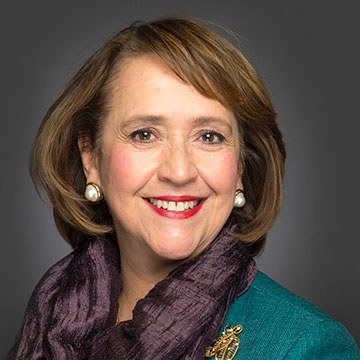
 Gwen Dungy