Category Archives: reflection

Broken Promises, Shattered Lives, and the Pursuit of Happiness

On September 15, 2023, Supreme Court Justice Ketanji Brown Jackson spoke at the 16th Street Baptist Church in Birmingham, Alabama, to commemorate the 60th anniversary of the church bombing that killed four Black girls–ages 11 and 14–and caused another 12-year-old girl to lose her eye.

Some of Justice Brown Jackson’s remarks were particularly poignant for me because I had listened to a Smithsonian Associates lecture just the day before entitled, “The Pursuit of Happiness,” by Dr. Richard Bell of the University of Maryland.

Justice Brown Jackson said, “Yes, our past is filled with too much violence, too much hatred, too much prejudice, but can we really say that we are not confronting those same evils now? We have to own even the darkest parts of our past, understand them, and vow never to repeat them.”

In his lecture, Dr. Bell recounted the shattered lives of Black people who pursued happiness during a time of great discontent. He gave numerous examples of the struggles of formerly enslaved Black people who were used as pawns by the British and slaughtered by the Patriots of the American Revolution. Broken promises by the British who changed terms of agreements on certificates and rewrote laws that disenfranchised the freedom seekers resulted in unmitigated violence and treachery and needlessly ended the lives of our ancestors who fought for freedom. It’s asking a lot to understand these dark parts of the past.

Black people who in good faith pursued their freedom by fleeing the slave holders and siding with the British became refugees of the Revolution while fighting to create a post-slavery society. Between 1775 and 1808, freedom seekers continued to petition and pursue their liberty even while fleeing from New York to Nova Scotia to Sierra Leone. Given the magnitude of their sacrifice and the depths of their despair, I don’t think they would see cause for our celebration of what Justice Brown Jackson described as “great strides that have been made since 1963.”

The bombing of the church came just two weeks after the March on Washington and the Rev. Dr. Martin Luther King’s “I Have a Dream” speech—a speech in which King spoke of the “promissory note” spanning from the Declaration of Independence that still had not been made good even 100 years after the Emancipation Proclamation. The bombing—and perhaps tellingly the two boys who also were killed in the chaos of that day in Birmingham, but who are largely still unknown outside of the Black community in that city—reinforces the pattern that our destination to freedom invariably takes us back into the caves of those who seek to enslave us.

Sadly, recurring attitudes of supremacy make the lure of freedom ever so elusive.
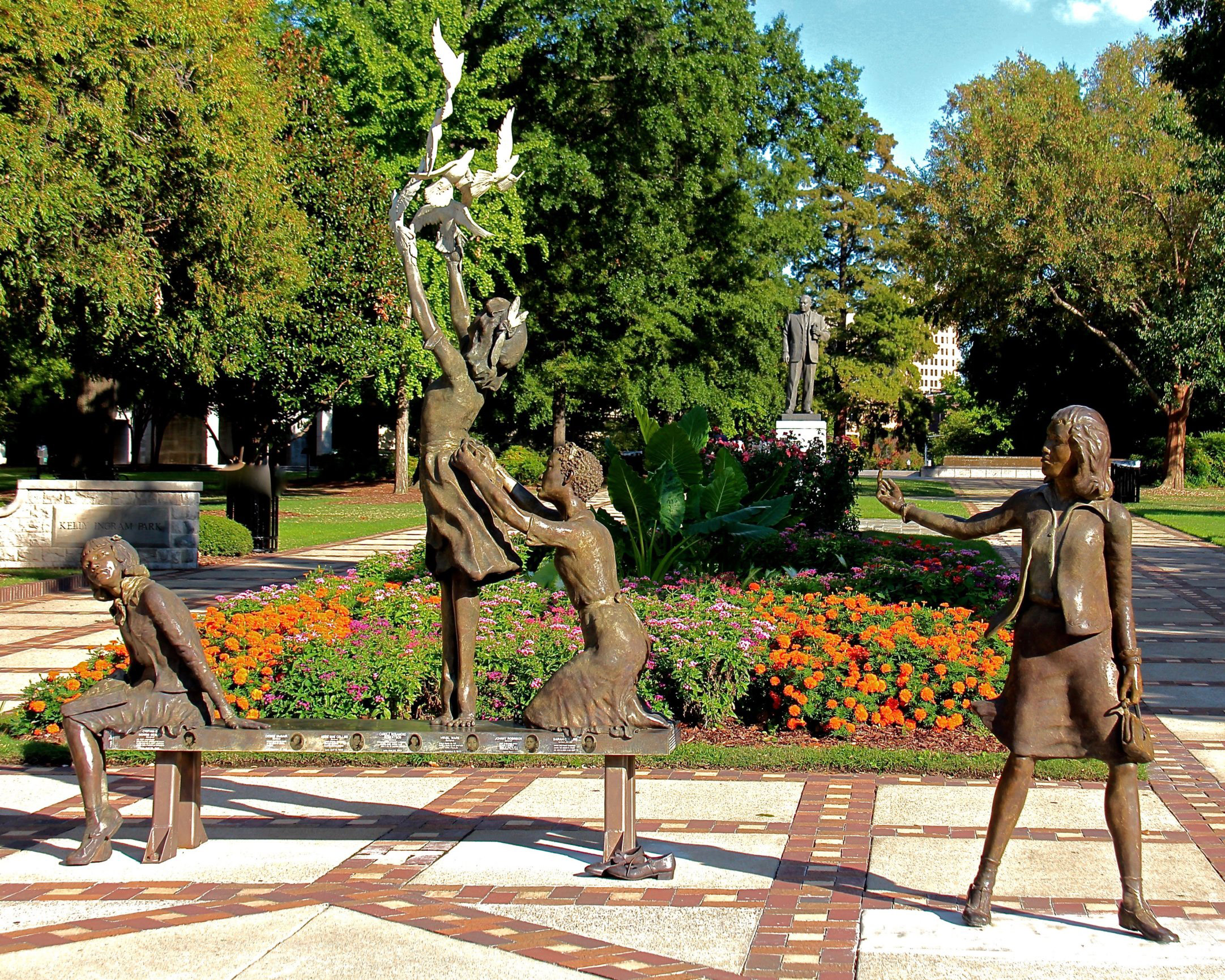
bronze art installation at Kelly Ingram Park representing the four girls killed in the 16th Street Baptist Church bombing on September 15, 1963, in Birmingham Alabama. The girls are depicted in play with one reaching for a group of ascending doves.

The public memorial for the children killed on September 15, 1963, sits across from the 16th Street Baptist Church in Birmingham, Alabama, at an entrance to Kelly Ingram Park.
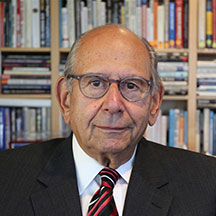
Mr. Fantastic

Laurence N Smith

Once in a lifetime, if you’re lucky, you will know a Mr. or Ms. FANTASTIC!

Laurence N. Smith is my Mr. Fantastic! He was the vice president for University Marketing and Student Affairs at Eastern Michigan University from 1975–2000.

I give him this title because he stands out from the rest in every way. He’s always the tallest in the room and the smartest in the room. And when asked how he’s doing, invariably, he responds, “FAANTASTIC!”

Leadership in a volunteer organization based in higher education can be a different experience than what a leader might be able to do in a top-down organization where the people responsible for making the trains run on time are paid and can be released at-will.

When I was in such a leadership position, willing volunteers were the key to success. Many stepped forward to let me know that I could count on them to help me achieve the goals of the organization. They used words like “help you,” “support you,” “here when you need me.”

In my imaginative recall, Larry Smith, towering over the heads of his colleagues, fixed his eyes on me, made a beeline to me, and asked, “What is your vision for this organization?” With confidence, I summarized my mandate from the volunteer board of directors and added my own vision, which could be described as fantastical given the structure and history of the organization. Mr. Fantastic’s eyes communicated, “Are you sure?” The gaze I returned indicated that I was.

Lyrics from songs best describe his response: “Come along with me,” “I’ll take you there,” “I believe I can fly!” My leadership vision was the perfect vehicle for Mr. Fantastic to test drive his ideas about what student affairs administration in higher education could “truly be.”

On the journey with Mr. Fantastic, it was obvious that when we were talking about using listservs to bring our members together in conversation from various locations, he was already thinking about what we now call Zoom meetings. When we were talking about Palm Pilots, he was envisioning what is now Chat GPT. Always looking toward the possibilities for the future, never fearing failure, and always optimistic is my Mr. Fantastic.

And I’m not the only one that found Larry to be fantastic. In 1999, he was named a NASPA Pillar of the Profession, and in 2002, he was the recipient of the Fred Turner Award for Outstanding Service to NASPA. The equivalent of a Lifetime Achievement Award, the Turner Award recognizes NASPA members who have brought honor and dignity to the student affairs profession and to NASPA as an association for a sustained period. Among Larry’s extensive activities, he was founder and chair of the NASPA National Academy for Leadership and Executive Effectiveness and executive editor of NASPA’s online management magazine.

I spoke with Larry recently and told him that to have him as a colleague and friend during my time at NASPA was a blessing of pain and glory. The pain was tempering the projections of where the organization could go and modulating the speed of change in order to be in sync with the volunteer leadership. The glory was the innovations NASPA achieved through its volunteers when we were flying with Mr. FAANTASTIC!

Thank you, Larry. I am truly grateful for your colleagueship and friendship.

A Philosophy of Sorts

Guest blog by David Keymer

Over time I arrived at something like a philosophy to govern my work in student affairs and higher education. Ultimately, all of our expertise points back to a vision of what college and university life should be like, what it should do. Universities and colleges are a special kind of community—a community of learners. The emphasis should be on both words: “community” and “learners.”

The ideas, then, are simple…nothing complicated:

First and foremost, I was there for the students, and the students were there to get an education. In this exchange, then, it was the students who were paramount. If it was about empowering students, it was simply a matter of service for me. That meant that…

  • students should always be able to reach me;
  • it was important that I give good value in whatever I did; and
  • ego was less important than results.

Using power gratuitously is not only wrong, it’s counterproductive. The power I held was the position’s and there for a purpose. It was not mine and, just because I had it by way of the position did not mean I had to use it.

This was especially true as I realized that everyone on campus needed to be in the same business of helping students succeed, academically as well as socially. Parents or prospective students didn’t come on campus and ask where the Vice President for Student Affairs’ office was. They talked to whomever they met. It might be a worker planting flowers in the flower beds outside a classroom building, or a campus police officer passing by, or a stray faculty member or student on the way to class. As a result, I did a lot of walking around talking to colleagues and students to ensure we got our message out that we had the same ends and were serious and proud of our commitment to student success.

Everything I managed to do required other people. It was important, then, that I listen to EVERYone, not take others for granted, and recognize others’ contributions and let them know I appreciated them. That being said, an important piece of effectively working with people is to cooperate, but “never give up your teeth.” The work is too important, and every so often, you may have to take a bite out of someone to convince the other person you’re not kidding.

Relatedly, developing people is as important as spurring them on to work well. It takes time, money, and effort to find and hire someone new for a position. If there were difficulties initially, it wasn’t a matter of giving up, but needing to find out what people did well and what inspired them, then leveraging those strengths and interests.

After all, work should be fun as well as work.


David Keymer served as a chief student affairs officer at SUNY Utica Rome; California State University, Stanislaus; and Zayed University (Dubai and Abu Dhabi) from 1983-2004. For more wisdom gleaned from Keymer’s experience in student affairs across these varied institutions, check out the seven-part series published in 2021 from a set of interviews.

Illusion of the “perfect, fulfilling” career

I don’t watch much television news these days because I’m just too busy. However, I do continue my habit of catching Fareed Zacaria on CNN’s Global Public Square (GPS) on Sunday mornings. I take time to listen to the five-or-so minutes of “Here’s My Take,” Fareed’s commentary at the beginning of the show. After Fareed’s comments, I begin preparing my Sunday morning breakfast with one ear to the conversation that he has with his guests.

On last week’s show, one of Fareed’s guests was the author of a new book about careers. I only heard the author’s last name and some of what he said in the interview. Some of the comments he made piqued my interest because I’m a certified career counselor, and I’m always interested in hearing different perspectives on this complex topic.

After breakfast, I went to Google to try to find the author’s name and the title of the book but initially had no luck.* What I did find was a whole patch of books on careers and even a blog titled 16 Best Career Books to Read in 2023.  The statement introducing the list of books noted that they were about “finding the perfect job and cultivating a fulfilling career in the modern workplace.” I shudder at the use of words like “perfect” and “fulfilling” when it comes to choosing a career.

Ideas about career choice and career change are often generated by people who have a bright idea and a catchy title for a book. In my graduate research on career choice, however, I found nothing to support the idea of being able to methodically find a perfect job and fulfilling career.

I didn’t need research to know that people’s desires and life circumstances are not static and what seems perfect and fulfilling at one time in life is not necessarily going to be what is fulfilling at another time. In other words, career satisfaction and fulfillment have a “shelf life” and “sell-by” date for most people.

Those who can accept the fact that the job or career path chosen at the age of 19 or 20 will, in all likelihood, not be what brings satisfaction at 35 and beyond are realistic. Lucky and rare are those who know in their hearts and minds what they want to do from an early age, follow that path, and receive the proverbial gold watch and plaque at the end of a fulfilling career. This may have been the Hollywood ending generations ago, but it’s not the likely ending for those who are entering or are now in the early stages of their careers.

The world of work is changing so rapidly that it’s almost impossible to plan for a career. What seems satisfying and passion-fulfilling this year may not even be an option by the time you finish preparing for it. It can be a frustrating journey searching for one’s passion. In my experience, the most successful and satisfied workers have been those who became passionate about their work. Passion was not the draw. Passion was the reward.

I hope that those who are feeling pressure to decide on a career will just think about preparing themselves for a job that they can do well and to plan on using the experience to test the waters to see what makes them feel good and satisfied with how they are situated in their world. I hope that they will go into these different jobs looking for gold, and if the gold is not there, the experience is one more clue to where they can discover the gold. 


*Later searches found the GPS guest to be Bruce Feiler, whose latest book is “The Search: Finding Meaningful Work in a Post- Career World.”

Hmmmm…

We’ve heard the expression that actions speak louder than words, but what of the sounds we produce with our breath and closed mouth that can also speak? 

Sometimes there are no words to describe our jumble of thoughts and feelings, so we just express our sentiment with what sounds like hmmmm

  • When I smell brownies baking, catch the scent of fresh flowers, see something pleasing, I say hmmmm with a smile. 😁
  • When I hear something that I can’t immediately nod in agreement with and yet don’t want to disagree just yet, I say hmmmm with a question mark. 🤔
  • When I witness something or hear about something that is achingly sad, I moan my hmmmm like the Mothers and Deacons of the church, and like Al Green moans at the end of his song, Love and Happiness. 😩

Here are just a few of my recent hmmmms and what elicited them.

  • The movie, “Barbie” made over a billion dollars in 17 days. Hmmmm 🤔
  • On the parking lot, sitting next to my little car, was a stunningly beautiful Bentley in Barbie hot pink. Hmmmm  😁
  • My water softener box developed a hole and the salt ran out. I contacted the company. They told me that it was still under warranty. Then they said that I would have to bring it to the manufacturer 20 miles away. The box is really large and there is no way I can maneuver it out of its place and put it in my car to take it to the manufacturer. They told me that they can come to my place and replace it for $90. Hmmmm 🤔🤨
  • A long-time family friend turned 100 last month. He got his driver’s license renewed recently. There are stipulations and he really doesn’t need to drive, but having the license is great for self-esteem. Hmmmm 😁
  • River Dock brawl in Montgomery, Alabama. Hmmmm 😩😭
Image

No Context and No Analysis

Doing Unto Others

Temperatures of 116 degrees Fahrenheit couldn’t scorch the magnificent tapestry of my birthday. Just being alive and in good health was enough, but my cup ran over with well wishes from friends and family near and far. Thank you all.

It’s not the same for everyone, but I appreciate being remembered on my birthday. However, I’m learning that what pleases me may not please someone else.

Like me, you might think that everyone wants to be remembered on their birthday. I have discovered that this is not true. This discovery makes me think that it’s not always best to “do unto others as you would have them do unto you.” Instead, I read somewhere that we should “do unto others as they would have you do unto them.” This is an acquired skill that I’m attempting to master.

I wish you everything that makes you happy.

Ultimate (and Unanswerable?) Questions

white outlined questions marks on dark blue background

In the introduction to her Selected Poems, former Poet Laureate Rita Dove posed the following “ultimate—and ultimately unanswerable—questions” regarding the “mystery of what destiny boils down to”:

  • How does where I come from determine where I’ve ended up?
  • Why am I what I am and not what I thought I’d be?
  • What did I think I’d be?
  • Where do I reside most completely?

It is at this stage of life that I have time to search for answers to these heretofore unanswerable questions and to begin the task of solving the mystery of my own destiny. I invite you to take the journey with me.