Category Archives: Student Affairs

Practical Competence

As I read this week’s The Chronicle of Higher Education front-page article by Sara Lipka and Eric Hoover about a developmental or remedial English class at Montgomery College, a two-year college in Maryland, it was as if I were there in that classroom. I felt the near helplessness of the dedicated faculty member, and I felt as if I were there as a student because I know what it’s like to have to separate your head and academic learning from the rest of your life. The article is titled “The Second-Chance Club,” and I think it would have unfolded as a second chance if Kenneth Okorafor, a Nigerian immigrant student, had miraculously passed the course.

As the narrative progressed toward the final decision about each student’s fate in meeting the requirements to go on to college-level English, it seemed as if Kenneth would certainly pass because he wanted to pass so passionately and he is a good person. As I read the narrative, I felt as if the music was about to swell for a happy dramatic ending since Kenneth was the last student to see the instructor about his course standing. I was really surprised at the final result because even his friend gets the green light to go on to the next level of English, and when he exits the meeting with the faculty member, he says, “Kenneth, don’t worry man, I’ll see you there OK?” Kenneth is so visibly nervous about his time with the instructor that one of the other students tells him, “Just know that, whatever happens, you’re smart.”

I think Kenneth is smart, but he did not pass the developmental course in English and he knows why. He allowed one of his essays to be published in The Chronicle along with the article, and he titled it, “My Two Greatest Obstacles.” In his essay, he admits that he allows himself to become distracted in class and he does not pay attention. He also realizes that he does not manage his time well. He stays up late watching television and he comes to class late. His realization of what may be hindering him from passing the course has come too late.

Having to retake a non-credit course puts Kenneth in the risky position of dropping out of college completely. Students such as Kenneth and some of the other students described in the class lack a critical skill for success in college and beyond, and that skill is practical competence. Practical competence is one of the seven student learning outcomes in Learning Reconsidered, a 2004 publication by ACPA and NASPA, two professional associations for student affairs.

Too many students like Kenneth can break the hearts of many faculty who feel helpless in moving them forward. I propose that student services work with faculty to offer what I call a cocurriculum laboratory that is connected to the class (read more on cocurriculum laboratories…).  In this laboratory, the objectives of the course are reinforced and there is a strong emphasis on helping students communicate effectively and manage their own affairs. Students who do not have role models who demonstrate these skills are at a disadvantage in meeting the requirements of a college education. Student services staff are trained to help students through the developmental phases of self-efficacy.

Faculty cannot do it all and could welcome the assistance of their student services colleagues who can work with students in a laboratory, of sorts, where the emphasis is on adjusting to college life and making connections with students and the student services staff on a deeper and more personal level. These students will share their stories, encourage and support one another, all the while being guided by a highly skilled student services staff member who will move students towardaccomplishing the goals of the course and the skills that all college graduates should attain. One of these skills is practical competence.

Competencies and a Cross-Cultural Perspective

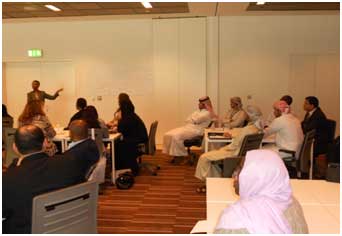
gwen dungy at nissiThe second day of the Institute was divided into two sessions. During the morning session, we reviewed the lessons from the previous day and the goals the participants had for the Institute. Most of the goals not met on the first day were going to be addressed on this day. Our topic was the competency Advising and Helping.  Before giving an overview of the session, participants also shared what they saw as the most pressing concerns their students had. We would plan to use the list of concerns for role playing during the Advising and Helping session.

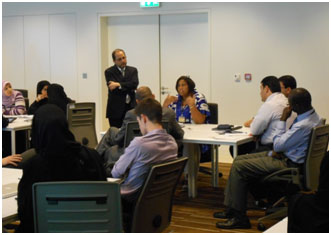
We learned that some of the participants had had some training in active listening skills, and we asked them to demonstrate some of the skills of active listening for the entire group. During the role play, one person was the student with a concern, one person was the helper, and the third person was the observer. The role play was videotaped and played back for all to see and share in discussing observations related to active listening skills. There was enthusiastic participation, and the exercise seemed to be quite effective.

oscar felixThe afternoon session was the Host Country Session on culture. What began as an information session became a lively discussion among nationals who had different perspectives on traditions and customs. This session is an invaluable part of the NASPA International Student Services Institute, and the only thing we would change about it is where we place it on the schedule. In the future, we will do the Host Country Session earlier in the program in order for non-nationals to have this information as the competencies are reviewed since the competencies were created from a U.S. perspective.

Dr. Oscar Felix, Dr. Courtney Stryker, and I think the participants learned and were satisfied with the Institute. In a cursory review, the evaluations were extremely positive.

NASPA International Student Services Institute

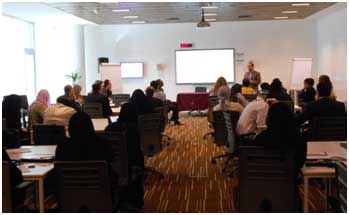
The first day of the NASPA International Student Services Institute (NISSI) was attended by forty participants, ten of which were undergraduate students. The five male and five female undergraduates were an interesting and thought-provoking addition to the Institute. As we student affairs practitioners talked about students, these students were able to interject the student perspective as they were living it.

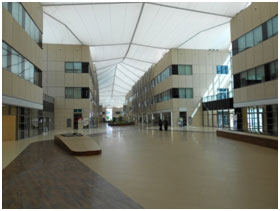
courtney strykerDr. Courtney Stryker, student affairs administrator at Zayed University, Abu Dhabi, hosted NISSI at Zayed University’s Abu Dhabi campus. Some photos of the convention center where the Institute is being held speak volumes about the AAA facility with so much space and architectural interest. The facility is impressively beautiful, comfortable and quite practically useful.

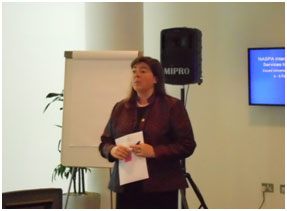
Zayed UniversityFrom 2:00 p.m. to 5:00 p.m., Dr. Oscar Felix and I shared a sketch of student development and learning theories. I talked briefly about the evolution of student affairs, the purpose of the publication Learning Reconsidered and how the publication has redefined learning.

oscar felixDr. Felix gave an introduction to various student development theories. Participants were engaged throughout the session and had quite a bit of discussion on Sanford’s challenge and support theory.

It was interesting to see the different perspectives of students and student affairs educators on whether or not students were more challenged than supported. Baxter-Magolda’s theory on self-authorship caused several participants to recall conversations with students who were at the threshold of making the decision to take responsibility for self authorship or sacrifice their own independence for the sake of tradition and family pride.

Tomorrow as we discuss and practice using the basic skills of advising and counseling, we might explore how the helpers would guide a student who is in-between.

Shangri-La


Had a really fine dinner and discussions with colleagues last night at an Indian restaurant in a shopping arcade next to the Shangri-La Hotel. Yes, it really does look like it should be called Shangri-La.

After dinner, sleep did not welcome me with open arms. Writers have described the sound of the wind during the night as howling, haunting, or even mournful. As I lay awake last night, because my body has not adjusted to the new time zone, I likened the sound of the wind to an ensemble of wind instruments, especially the flute. The sound was lilting and soothing, and for that, I am grateful.

In just a few hours, Dr. Oscar Felix and I will meet the participants who are attending the first NASPA International Student Services Institute (NISSI) in the United Arab Kingdom (UAE). This NISSI is a collaborative program created by Colorado State University Student Affairs in Higher Education program, Zayed University, and NASPA.

I could not be more excited about the Institute and future possibilities!

Oscar Felix, Colorado State University; Courtney Stryker, Zayed University;  Karla Fraser, American University of Afghanistan, Gwen Dungy, NASPA

Oscar Felix, Colorado State University; Courtney Stryker, Zayed University;  Karla Fraser, American University of Afghanistan, Gwen Dungy, NASPA

Dreaming While Awake – International Student Services Institutes

It’s 1:00 a.m. here in Abu Dhabi and 4:00 p.m. on the East Coast of the United States.  I left my house at 2:00 p.m. on Friday, February 1, for Dulles airport to take British Airways to Heathrow in London and from London to Abu Dhabi. I lost a day, so to speak, in travel. As soon as I finish this message to you, I will finally go to bed since I’ve not been prone since Thursday night, January 31. 

I’m surprisingly alert and have such a sense of well-being. Perhaps it’s because I’ve been so thrilled that the vision Kevin Kruger and I had about ways to fulfill the NASPA Board’s international objective is coming together on several fronts much sooner than either of us expected. One dream was to offer student services institutes internationally. We had our first one in December in collaboration with the Hong Kong Student Services Association. Speaking of collaboration, a partnership with Colorado State University’s SAHE program working with Dave McKelfresh, Jody, Donovan, and Oscar Felix is a fantastic dream as well.

I’m also pumped because Courtney Stryker, Zayed University in Abu Dhabi,  and I had an impossible dream to have a NASPA International Student Services Institute (NISSI) this February despite some setbacks along the way. The potential success for the Institute is beyond what either of us dared hope. I will give a better account of attendance and response after the first day of the Institute.

Last year, Denny Roberts, gave me an opportunity to represent NASPA in the Region III 6th Annual Gulf Conference program as a panelist along with Greg Roberts and colleagues from Hamad Bin Kalifa University in Doha, Qatar, or Education City. This year, Courtney Stryker and the Conference Planning Committee are giving me an opportunity to keynote the NASPA-ACPA Gulf Conference following the NASPA International Student Services Institute. It’s all coming together beautifully, and I am going to get some sleep now to continue the dream.

NASPA in Hong Kong!

I didn’t sleep well on Monday night the 10th; I guess I was anxious about getting to Hong Kong. I left my house for the Thurgood Marshall Baltimore-Washington Airport at 7:30 a. m. on Tuesday the 11th. I landed in Hong Kong at about 8:15 p.m. on Wednesday the 12th.  After 16 hours in flight to Hong Kong from Newark, I’m pumped and eager to meet Dr. Jody Donovan for our NASPA International Student Services Institute in partnership with the Hong Kong Student Services Association.

When I arrived at the airport in Hong Kong Wednesday evening, I was greeted by “Deck the Halls with Boughs of Holly,” followed by “Silent Night” and many other Christmas carols. As I write this message while in the lobby of the hotel, I hear more Christmas carols. Everything is beautifully decorated in celebration of the Christmas holiday.

Leaving the airport on the Hong Kong side and coming across the Victoria Harbor Causeway to Kowloon to the hotel, I was struck by all the cranes and containers in the harbor and all the high rises surrounding the bay with lights on in the apartments and condos. The city is alive and electric with stores everywhere. Not just any stores, but there are designer stores jammed in every place.

With so many opportunities for conspicuous consumption, I wonder what college students in Hong Kong and the surrounding region envision for their future. Do they see themselves as financiers, CEOs of start-ups, or are some of them considering education, nonprofit work, or even student affairs. Tomorrow when I speak with the participants in the Institute, I will encourage them to consider becoming mentors in the Gwen Dungy NASPA Undergraduate Fellows Program.

Have a great holiday!
Gwen

Stronger Emphasis on ‘Soft Skils’

I’m serving on a Commission on the future for our very fine local community college, and I was at a meeting with business people and community college faculty, staff, and administrators.  In his closing remarks, the business man who is chairing the Commission reiterated what the various groups were saying about the needs of college graduates.

He said that the college needed to pay attention to ensuring that more students are preparing themselves in the STEM majors, but that they also needed to be prepared with what are sometimes called “soft skills.” Expecting to hear reasons why there is not more emphasis on those skills that student affairs works to encourage students to acquire, this very wise man made the following statement:

Soft skills may not get college credit, and they might not be accredited by the people who evaluate college courses, but we need to say, ‘The hell with that!’ We need to do what we know is right for students because it’s about learning and getting the skills students need to be successful.

If I had been in church, I would have said, “AMEN!” In my speeches and presentations, I’m focusing on what skills our graduates and alumni need in order to be prepared both for careers that currently exist and those that do not yet exist, and some of these skills are those skills called “soft skills.”

When I talk with employers, they say that college cannot prepare students for the specifics for most jobs, but they can give students the foundation that will be used in learning how to learn the specifics of the job. What students do not always have is the foundation that enables them to be excellent communicators across cultures. The employers are saying they need managers, and without the intercultural communication skills, our students will not be equipped.

These skills can be learned if student affairs will collaborate with faculty in offering what I call cocurriculum laboratories.

I will write about these in subsequent blogs and will respond to any questions or comments.