The following was a talk given at the 100th Anniversary Convention of the Association of College Unions International (ACUI) on April 7, 2014.
View video: https://vimeo.com/98677025/90a771a248
She was born a year before the official end of WWII…
 and her survival was a kind of war itself. While she was struggling for life in a freezing room in a boarding house sleeping in the top drawer of a tall chest of drawers that served as her baby crib, personnel in college unions in the U.S. were concerned about the survival of the founding vision of their being.
In a manner of speaking, they were also babies struggling to help others see and appreciate the significance of the arts, concern for social issues, and the need to help students become good citizens.
They were also threatened. Threatened by the mass usage of the telephone
 and the radio.
 They were concerned about college unions losing their purpose as a gathering place when automobiles became commonplace for the masses.
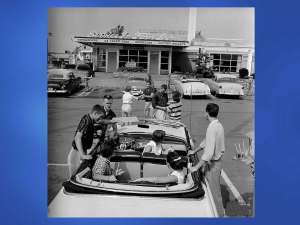
With time union personnel stopped catastrophizing and began to reflect on their evolution up to this point, and they took heart
 because they had faced challenges before and they had adapted.
The little girl would adapt as well. She had no choice. How could she not survive when the struggles she would face in the 1940s and 1950s were nothing compared to the hardships that her grandparents faced when they were one generation removed from slavery and sharecropping was their bitter freedom.
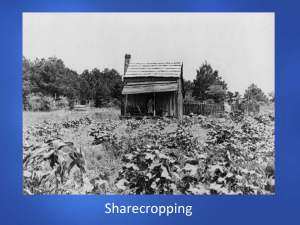
The little girl whose crib was one drawer in a chest of drawers would be blessed to always enjoy soft hands and soft feet instead of bloodied hands from picking cotton and cracked and blistered feet
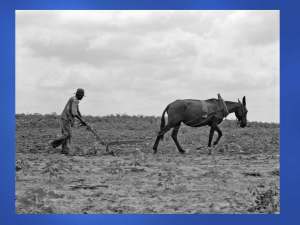 from walking from sun-up to sun-down behind a broken down plow and mule that would never be called one’s own. Such was the early life of her grandparents.
Looking way back to the first decade of the 1900s,
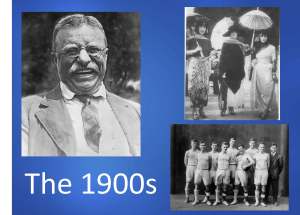 college unions continued to move beyond the debate societies
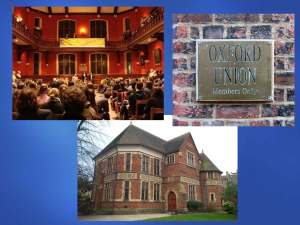 of Oxford and Cambridge though, in some quarters, the nostalgia of the men’s clubs and smoking lounges after a dinner of roast beef and Yorkshire pudding was a reminder of the good old days of the leisure class.
 1914 Speaking of the good and acknowledging the bad, for the U.S., there were two significant occurrences 100 years ago. It was the tragic beginning of the first World War, and, for the good, we celebrate, here, the triumph of seven students in that same year.
These seven students, exhibiting the culture of the United States as observed by Alexis de Tocqueville, had the urge to organize and create an association of volunteers. They may not have understood the need for a formal organization to support the efforts of professional staff in college unions, but somewhere in the recesses of their urge to organize, they had the foresight to know that in order to have continuity of purpose and to preserve the union as the hearthstone of the college, there must be a designated group of associates. This designated group of associates included the staff and volunteers of what became the Association of College Unions.
In carrying on the vision of these students, and in keeping with the significance of student leadership,
 ACUI is one of the few international professional associations that has a student member on its Board of Trustees.
After the end the first World War around 1918,
 Unions stood as Memorials to those who had given their lives for their country and for those who survived and were entering colleges as veterans, unions adapted to their needs by providing amenities similar to the canteens of which soldiers were familiar. They also provided recreation facilities for their leisure time.
In the 1920s, women’s suffrage had an impact on the college-going population and unions adapted to the change.
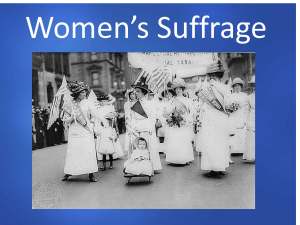
Though the men’s clubs were not as prevalent, there was still a distinction among students based on gender and class.
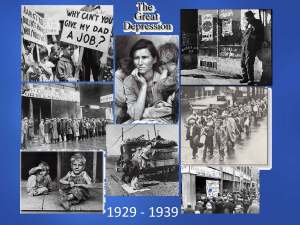 The Great Depression, 1929-1939 began to level the playing field for students in regard to class. The distinctions began to fade because students of this era had a common goal– moving beyond the devastation of this long and deep depression.
Moving beyond the depression, college union personnel concentrated on their responsibility to educate students for responsible citizenship
 because just as our recent history demonstrates,
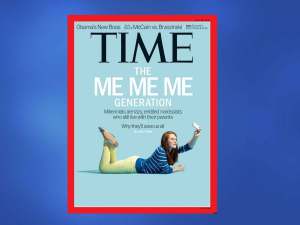 many students were behaving as if a college education was a private good rather than a public good.
 By the mid-1950s, college union personnel championed the goal of developing whole persons as well as intellect.
 And it was in 1955 that ACUI helped to insure that Unions were included in the new federal college -housing program which made unions eligible for federal construction loans.
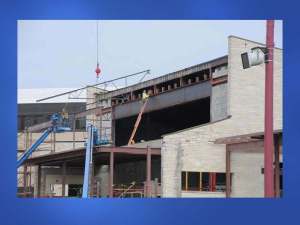
This was an incredible accomplishment in that many colleges were now able to obtain loans in order to construct the buildings that would become the “living rooms” of a college student’s home. 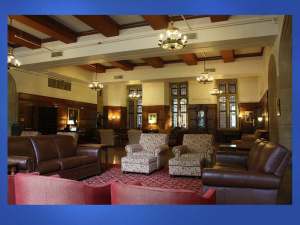 Unions came into their own with this confirmation from the federal government that unions were, indeed, educational facilities.
 The 1960s. The little girl who slept in a drawer and whose grandparents were near descendants of slaves began to read about an unknown world that she would like to discover. It was in her junior year of high school that a door-to-door salesman knocked on her door, and she helped him sell her mother the World Book Encyclopedias
  that her mother paid for with a few dollars a month for years to come.
These books meant so much to the teen. She loved the gold on the edges of the pages, and she positioned these precious white, green, and gold books so that any one who entered the front door could not help but see them. The pride in these books was the beginning of some big dreams that included college.

A snapshot of the 1960s is complex because it depends on who you are, where you stand in the cultural hierarchy, and the lens you use to see what the 1960s were all about. Leaders of colleges and universities and college union leadership had a rough time because of student disruption that often ended in violence. Students destroying property and police using unnecessary force.  This was one perspective.
Standing up for what one believed in regard to the Vietnam War,
 Civil Rights,
  and the Women’s movement
  was another perspective.
The little girl who had faced challenges her entire life and always looked for the humor in the sad, with a scholarship in hand headed to the university where she faced the biggest challenge of her life. She was like a fly in buttermilk on this white campus because she never sat in a class where she was not “the only.”
She joined the handful of other black students and met with the president of the university who invited the group to talk about the climate of the campus. Following that meeting, the group of black students left with a goal to reach out and become a part of the campus community and not to live on the margins.
The first meeting of this little handful of black students was held in the student union. A courageous young man who must have thought he was the future Jesse Jackson  took the floor and strongly encouraged his brothers and sisters in the struggle to get involved in the campus.
The little girl who realized her impossible dream of becoming a college student 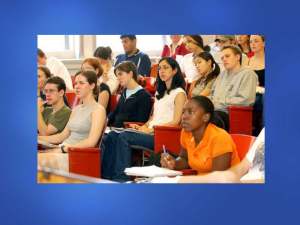 was so grateful for the opportunity to go to college, wanted to realize the full promise of a college education. So she said, “Yes,”
  when she was assigned the task of becoming involved with student activities.
Just walking into the union was terrifying! It was so large and open and there were so many white people!  This little meeting of a handful of black students was the first time she had set foot in the union. And, now, she is supposed to just make a cold call on the staff in the union and say what?
Because she had no money, she didn’t live in the dorm; they were dorms then, not living/learning centers or residence halls that students enjoy these days.  She lived off campus in a small house with six other black girls who were also beginning college and feeling like flies in buttermilk. The rent was $28.00 a month.
The girls could have made some money for sure if Bravo had made this house of girls a reality show.
In the converted front room of the house there were two sets of bunk beds and a single bed and a much smaller room off the kitchen had twin beds. All of these girls shared a small kitchen and a small bathroom.
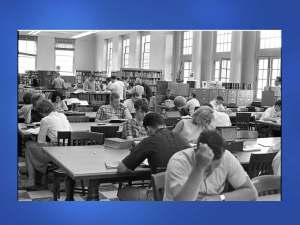 The little girl with the big dreams spent a lot of time on campus because there was no place to study in the little house. When she came to campus, she went to the buildings where her classes were held, to the library, and to her job as a switchboard operator
 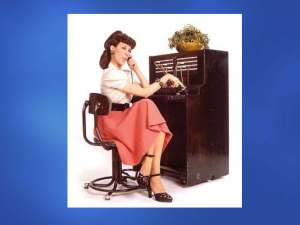 for the college and back to the little house on Second Street.
The day that she was to make her cold call on the union staff was sunny and the sun 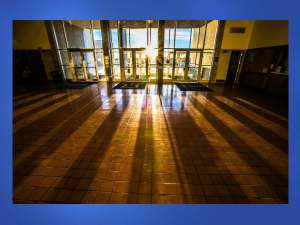 was streaming through the glass wall on the right side of the ballroom. The staff’s office was just off the ballroom. The staff was welcoming as if they had been awaiting her arrival. She was so nervous she didn’t really hear what they said to her.
All she could remember was the time and place of the meeting with the other students who would be working in programming. Later, when she arrived at the appointed time for the meeting, no other students were there. It was just the union staff and her. She knew why.
The staff, bless them, said that this was an opportunity for her to take some leadership responsibility. She would be responsible for all the planning and logistics of the weekly film series, and she would work with the staff in selecting some acts for the college community. Say what!
Selecting the films from a universe of films was an awesome responsibility!  She was so careful with every detail. She used the catalogue to select the films; she ordered the films; she ordered the tickets; she made sure there was someone at the ticket window to sell tickets; she was accountable for all the cash, and she had to make sure that the films were mailed back on time. She wanted to make sure that the tickets sold and cash reconciled because she did not want to be accused of cheating or stealing.
When she had an opportunity to select performers for concerts, she selected Johnny Mathis 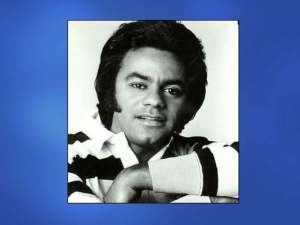 and Marian Anderson.
 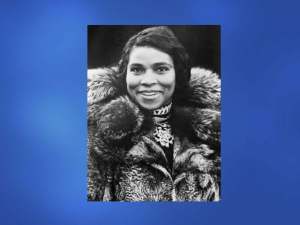 The attendance for these brilliant performers was small, but the experience for the girl was large.
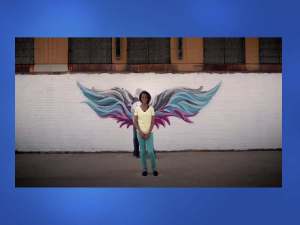 Working with staff in the union in the 1960s was the most significant period of growth in the life of this little girl who slept in a drawer for her crib and her great grandfather who she met before he died at 105 had been a slave.
Though none of the white students would work with the girl, the union staff stayed true to its philosophy of “recognizing the primacy of student leadership” even when the student was just a skinny-legged black girl.
By the 1970s, the little girl was a woman with a career and a family. Because of her coming of age experiences with the union, she set working at a college as a goal. Community colleges
 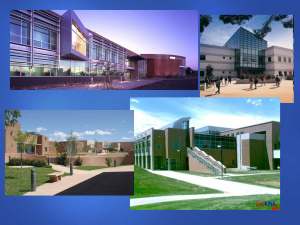 were the innovations in higher education in the 1970s, all sparkling new and overflowing with students who were more diverse than the college leaders ever expected.
All college campuses and unions, in particular, were dealing with demographic change 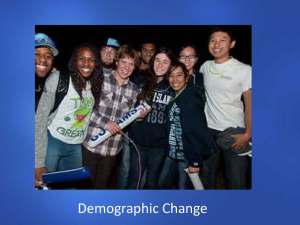 and ongoing student activism. Unions hosted open discussions on all issues. They became one of the most important teaching and learning sites on college and university campuses.
Unions attempted to stay ahead of the crises but students were holding sit-ins 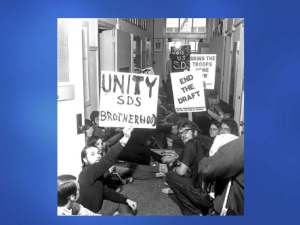 and often being forcibly removed from unions and offices. Unions adapted by providing meeting spaces for student groups such as the Black Student Union
  and other groups and continued to host dialogues and teach-ins.
These forward-looking union staff belonged to ACUI and as an association they in the words of today’s leader, Marsha Herman-Betzen, were always  “willing to buck tradition and welcome women, ethnic minorities, and those with various sexual orientations long before many of the sister associations.” (Marsha Herman-Betzen, incomparable Executive Director, ACUI, 2014)
Adapting to changing behavior of students was a huge adjustment for colleges and universities. With the influx of veterans from the Vietnam War, you can still see some of them now on their Harleys,  the black students who all fashioned themselves as civil rights activists,
 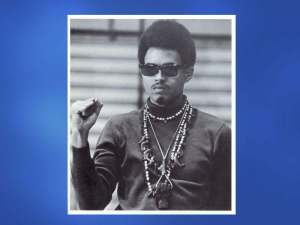 students shouting for divestment
  in South Africa, and the women
 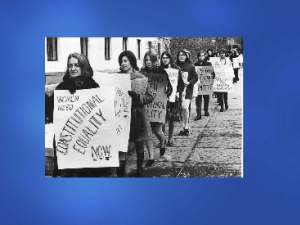 who were never again going to wear a bra or high-heeled shoes, union staff had their hands full.
The little girl who became an educator was always called to intervene  when black students were part of any contention on campus, and the disruption usually occurred in the union. She would have to hold her breath as she walked through the union because the vapors from pot
  would have given her a contact high. The staff in the union was so accustomed to weed being smoked in the union that they just smiled and enjoyed it.
 These were not the only issues union staff were dealing with. The college administration began to put more and more pressure on the unions to generate revenue.
  Union purists, on the one hand, were torn between upholding the basic assumptions of the union’s existence as the meeting ground and a place for students to learn important interpersonal skills and practice citizenship, and, on the other hand, using the building as a convenience for service needs that would generate revenue.
 The decade of the 1980s, saw educators in unions providing programs that would counter high tech with high touch.
 They worked to bring a humanizing aspect to students’ lives. Students were numbing themselves by abusing alcohol and the concept of multicultural was broadened beyond race and gender to include able-body bias and LGBT students.
Unions collaborated with other departments and with students to encourage those difficult dialogues.  It was tough love and bitter medicine, but as educators committed to helping students develop cross cultural understanding and increase their interpersonal skills, this was an obligation. The beauty of what unions did was that all students, faculty, and staff participated in the sensitivity awareness campaigns.
 Perhaps because their skills had been tested to their limits and because more graduate students were going into student personnel programs, the 1990s was a period of extreme professional development where union and all personnel in student affairs were accepting and announcing the fact that they were, indeed, educators in the cocurriculum. They were experiential educators.
The little girl who became an educator found her utopia in the 1990s and became executive director of NASPA,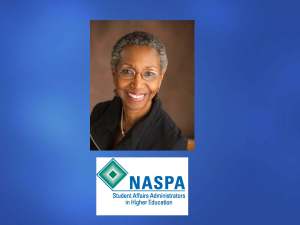 inarguably one of the largest and most respected associations for student affairs world- wide.
She didn’t know it until it happened, but her dream was to work for and support these experiential educators. She felt that she could have a greater positive impact on students if she could help student affairs educators access the professional development  they needed in order to hone their skills in touching the lives of so many students.
It was during the 1990s, when researchers, sociologists, and folks who wrote books and articles began to make projections about what the generation would be like following what they called Generation X. The assumptions were on each end of the continuum from being the greatest generation since Tom Brokaw’s greatest generation to the worst generation. What union staff experienced from the students they were already seeing was a greater demand for convenience, service, and more variety in social experiences.
They also saw a continuing decline in students who were available to work in the union putting more pressure on the professional staff.
 By the 2000s, new buildings were coming on line and the philosophical concept of the union was being challenged by centers
  that were popping up throughout the campus. Because the unions had been so successful in its auxiliaries, there was increasing competition for student dollars from quarters within and beyond the campus.
(“Happy” music) College union administrators and educators continued to evolve with the changing demands. Their flexibility continues to be a strength. Holding onto the idea of serving the entire campus and serving as a gathering place for healthy exchange through dialogue, the educators in the union are preparing to adapt and innovate in a manner that reflect the changing models of higher education.
The little girl who came so far from her roots can see into the future  for college unions, and she is very optimistic. College Unions did not allow the advent of the telephone, radio, and automobile to make them obsolete and neither will online learning, social media, and the increasing appeal of interactive entertainment make their role irrelevant.
 Like beacons in the night, unions remain the locus of community whether they are tangible buildings or whether they float on the strength and ether of the very human urge to connect and to satisfy the need for community, the idea, concept and purpose of college unions will thrive, flourish, and remain vital to colleges and universities.
Like time  unions do not stand still. Like time- pieces, unions adapt to the way the college community wants to access them. The early debate societies preferred pocket watches,
  the boomers loved their wrist watches,
  the Gen Xers didn’t care what time it was, no watches,
  and the millennials prefer their cell phones.
Tomorrow will bring another innovation. Innovations will not disrupt  the steady forward movement of the college unions that embody the spirit of community and learning.
  At this place for this momentous occasion, we honor and celebrate all that has come before, and we enthusiastically anticipate what lies ahead!
Special thanks and appreciation to Zack Wahlquist, Marsha Herman-Betzen, and the editors of the Second Edition of The College Union Idea, ACUI.

 I showed a visual of young athletes running and jumping hurdles in a competition and then I began the story: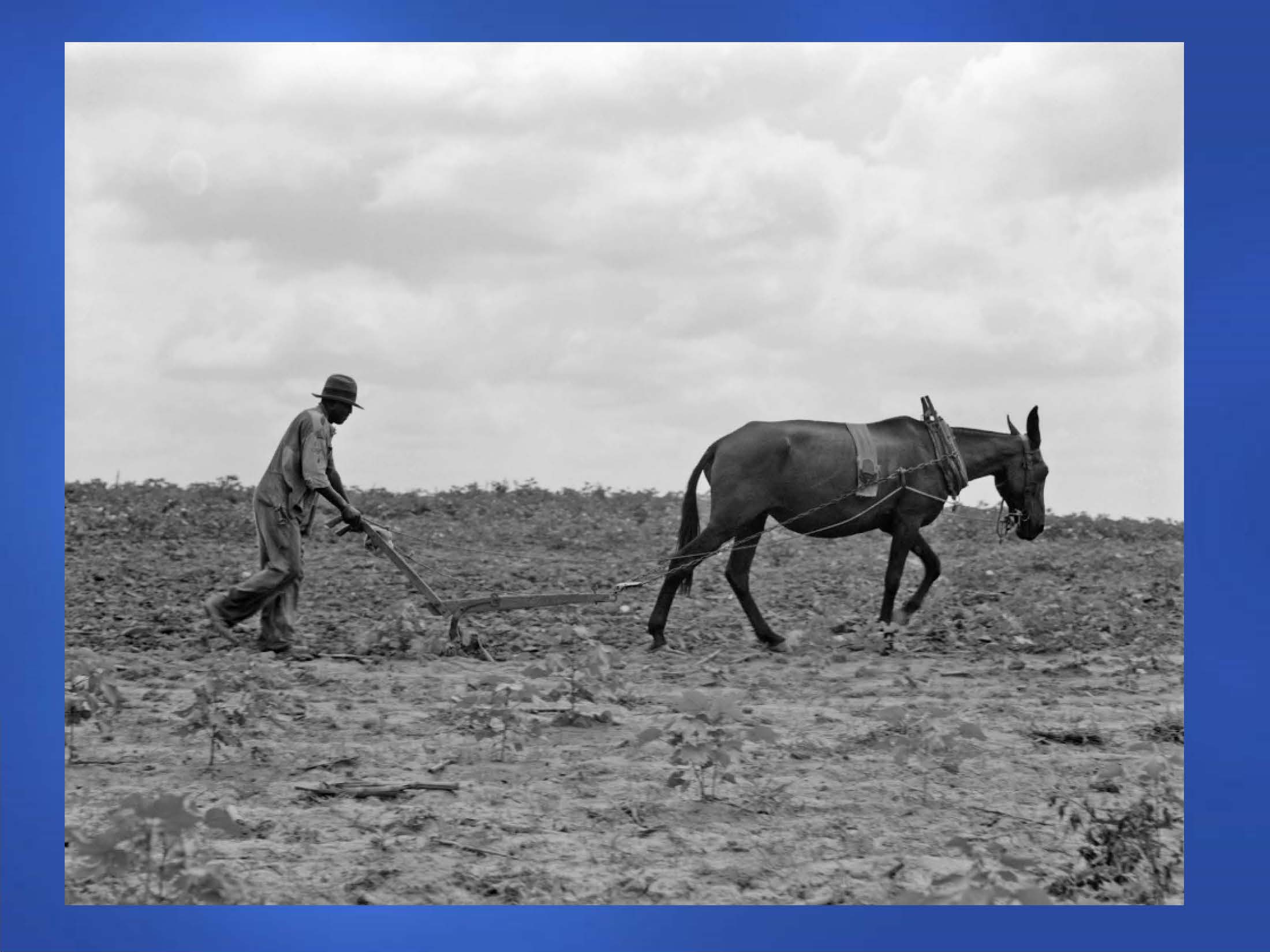

 Gwen Dungy