Category Archives: Students

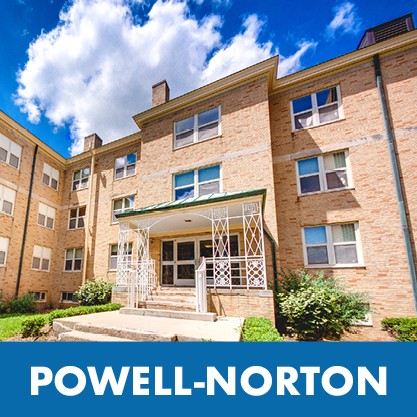
Powell-Norton Hall

Many thanks and praise to Chris Hanlon, former professor at Eastern Illinois University (EIU) and then at Arizona State University. In 2010, he brought the idea of a name change for Douglas Hall to EIU President David Glassman, who in turn asked the Board of Trustees to consider the idea of changing the name.

Located in proximity to one another, Douglas Hall for men and Lincoln Hall for women were so named to memorialize the fact that Abraham Lincoln and Stephen Douglas held one of their debates in Charleston, Illinois, where Eastern Illinois University is located. The famous Lincoln-Douglas Debates were part of the campaign when both men were running for the Illinois State Senate. A point of contention regarding honoring Douglas is the fact that he was a strong advocate for slavery.

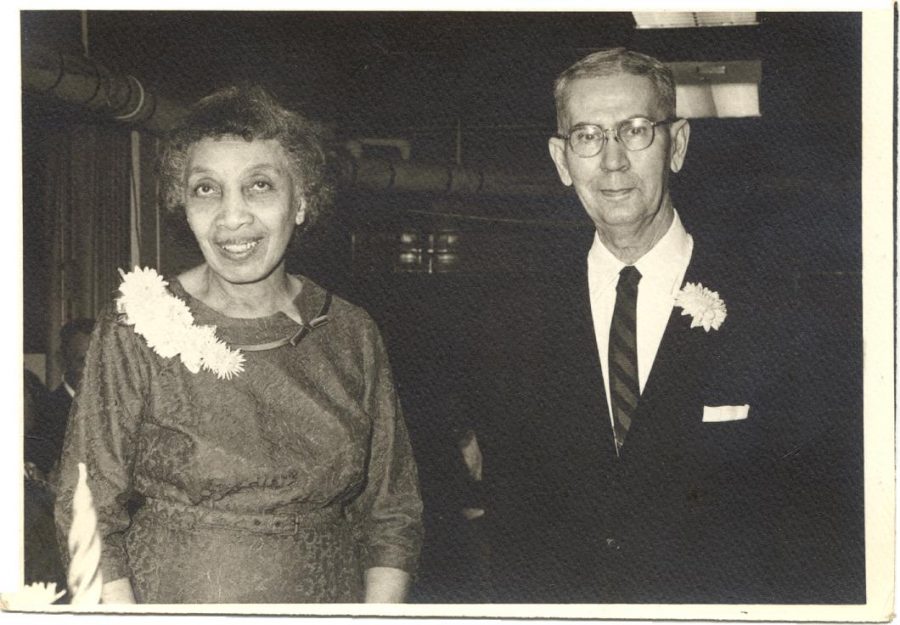
When the reconsideration of a name change became known, some African American alumni gratefully reached out to some of us to write letters of recommendation to support a proposal for having the residence hall named Norton in honor of Ona and Kenneth Norton. When the 10-year campaign and deliberations ended and a vote was before the Board of Trustees, the Nortons received more letters of recommendation than the other worthy candidates.

The competition to be so honored was stiff with the 205 names submitted including notables such as a former Governor of Illinois, a student-athlete and Tuskegee Airman, a former student and later President of EIU, a Black professor who became the first director of the Afro-Studies Program, and Zella Powell, who is believed to be the first Black graduate of EIU. Ultimately, the Board of Trustees voted unanimously to rename the residence hall Powell-Norton Hall.

Powell-Norton Hall

Powell graduated from EIU in 1910.  Her family lived in Mattoon not far from Charleston. One of only two Black families in Mattoon, her family had means to afford them middle-class status. Nevertheless, the family suffered the indignities common then in small rural towns of the United States. Enduring the stress of being the only Black student on campus and then graduating is a victory not many can boast. Powell taught in Mattoon before moving to Chicago, where she continued her career as a teacher and raised a family with her husband.

By appearance, Ona Norton and her husband Kenneth were not apparently Black, but they apparently were considered to be Black in their community. Their involvement with EIU began in the 1950s when they were asked to “open their home to Black athletes who could not find housing on campus” (The Daily Eastern News, November 24, 2021).

Providing housing for athletes who were Black led to Mrs. Norton becoming the go-to person for other Black students who found their way to EIU. The Nortons rented two modest houses to accommodate Black students—one for women and one for men. I was in the group of Black women who lived in a Norton House on Second Avenue. If it were not for the agency of the Nortons, I would not have been able to attend the university. I didn’t have money to live in the residence halls and even the $28 a month that the Nortons charged was often hard to come by. Some of the other women were in similar circumstances, but I never knew of anyone who was asked to leave the Norton house for lack of funds for rent.

Although Mrs. Norton has been honored for other acts of charity, and EIU has a scholarship in her name for Black students, the honor that she shares with Powell is the most fitting because of its connection to housing students who, without her help, would never have had the opportunity to attend EIU.  

Ona and Kenneth Norton

On being transgenerational

What I fear about aging is becoming conspicuously and stereotypically old. I’m not talking about the natural physical and mental changes that accompany aging. What I fear is the calcification of my attitude and outlook on life. I want to avoid falling into the trap of thinking according to a generational divide and believing that I must stay on my side of the generation gap.

Each generation has its place in the continuum of time, and unfortunately there are negative comparisons coming from both directions. Past generations create myths that support their belief that they were stronger, smarter, bolder, cooler, braver than succeeding generations.

The younger generations, because they are more technologically advanced than previous generations, see a mirage that indicates to them that they are more savvy and capable than the generations that came before them.  

I want to know what I need to do to continue to be relevant and engaged in the continuation of human prosperity for all generations. I want to take a walk in the athletic shoes of younger generations to try to feel what it must be like to be facing an uncertain economic and social future in today’s world. I want to meet younger generations where they are in their interests.

I feel extremely lucky when I have the privilege to have conversations with the newer generations. I’m eager to understand their views on representation and culture; family and values; work and play; politics and human interactions. If they want to hear my perspective, I’m happy to share. However, I do not believe that because I’ve lived longer and have more experience in some things that I, and others like me in older generations, have the insights and knowledge to change the trajectory of the future. As in all things, I believe that shared knowledge among diverse groups is essential for optimal outcomes.

I do now believe–and always have–that our upcoming generations are our hope for the future. My hope for myself is that I can be a help and not a hindrance to the work that they must do. One way that I plan to avoid being conspicuously and stereotypically old is to be transgenerational. I want to cross the generational divide by accommodating to the new order of things. I want to lessen the distance of the generational gap by being in the moment with what’s happening now.

Let Go

A few years ago, I moved into a smaller space, and I had to make judgments about what of my accumulations from over the years to keep and what to let go. Recently, I looked for a favorite fall jacket and when I couldn’t find it, I realized that it didn’t make the cut when I decided what to let go.

During the process of downsizing, I was faced with decisions about clothes, furnishings, and tchotchkes. I also had a huge store of files with articles and papers that I had accumulated over a 50-year career. Two large storage cabinets and five upright file cabinets were full of what I thought were important pieces of information that I might want to reference at some time in the future. At the time that I stored these items, I thought that they were too important to let go.

The files were alphabetized, from the first file cabinet on the left to the fifth cabinet on the far right. When I would pull out the top drawer of the first file cabinet, the first quarter of the drawer held folders that were all labelled affirmative action. The folders held articles that I had written about affirmative action starting in graduate school, as well as many articles written by others that I collected over the years.

Recently, when I heard news about arguments on affirmative action at the Supreme Court, I was prompted to go to my new downsized file cabinets to review some of the papers and articles on affirmative action.

I was stunned to find that I had let go of every single folder labelled affirmative action! In fact, it was a surprise to me that in the top drawer of my new alphabetized first file cabinet there were no folders containing topics beginning with A, B, or C. With the first folders now beginning with the letter “D,” I found “diversity” folders in the place “affirmative action” folders had once been.

This single word—diversity—and its many connotations has been the single thread and lifeline to maintain the spirit of affirmative action, particularly, in selective colleges and universities. In making the argument for the value of diversity for all students, colleges and universities had to let go of race as a prominent qualification in admissions considerations.

With the anticipated decision of the Supreme Court on affirmative action, I want to believe that there is no entity more capable of finding a way to keep the original intent of affirmative action/diversity alive than higher education. To let go of diversity—not only as a compelling interest for all students, but also as a way to ensure that Black students, faculty, and staff are well-represented participants throughout higher education—has huge current and future ramifications for the whole of U.S. society.

Notwithstanding the probable decision of the Supreme Court, let’s hope that colleges and universities will not let go of the spirit of affirmative action/diversity with the construct of race at its center.

Intent vs. Impact: Educational Access and Opportunity

Guest post by Shannon Ellis

I need your help.

Gwen has offered me this platform to speak up in defense of a post-high school education, especially for Black students. Right now, increasing numbers of students of all colors (and their parents) are being sold on the idea that education just isn’t worth the time and money.

They would be wrong.

A recent Chronicle of Higher Education article by Oyin Adedoyingave us all the dismal report. “Black enrollment grew from 282,000 in 1966 to more than 2.5 million in 2010 but from 2010 to 2020, as overall enrollments fell, the number of Black students fell even more sharply, to 1.9 million.” 

Adedoyin cites a number of very valid reasons for this decline including the rising cost of college, skepticism about the value of a degree, economic hardship in many Black communities, and Black students not feeling welcome on campuses. I wish this were not true but on any given day at predominantly white institutions (PWI) this is the experience of many of our Black students.

Many of us who are White work to understand the experience of isolation and even hate that a Black student may experience at PWIs. I work with colleagues in the field of student services who face the truths of such experiences and embrace the mission to create a more welcoming and supportive climate for Black students and others who have been historically marginalized, excluded, and discriminated against. I am not alone. Staff and faculty of all colors with vast life experiences stand ready to work with Black scholars to make the leap into a PWI classroom, Western curriculum, loan debt, and a predominantly White surrounding community.

It is no wonder that historically Black colleges and universities are seeing record numbers of applicants in the midst of decline everywhere else. Yet we know that this is not an option for many Black students who want or need encouragement to pursue a post-high school skill and degree. PWIs struggle, have successes, hire more Black faculty and staff, engage in successful and unsuccessful recruitment and retention efforts, and continue to move forward even with setbacks. PWIs strive to be better places for Black students who want to pursue a vocational, community college, or university degree.

As institutions find effective ways to market themselves to Black communities, we need to acknowledge the realities many Black students experience. We need to assure Black students and their families that we mean it when we say we will put the time and money into change. Many of us commit to be leaders and allies, but no one more than Black students stands to suffer lifelong setbacks if we do not succeed. Put in a more positive way, compared with other historically excluded groups of people, Black students stand to gain more from American higher education in economic gains, generational wealth, career advancement, and health. Maybe even more than White students.

While attending a college or university is not essential for all, providing the opportunity for everyone to realize their potential is. Do you have a relative, coworker, neighbor that someone talked out of pursuing a post-high school vocational program or community college path or four-year degree? Maybe you know someone who expressed an interest in pursuing an educational program after high school but also expressed a lack of confidence. Well-meaning people often believe they are doing the right thing by affirming that self-doubt instead of working through the many ways to address each worry (money?) and set back (tutoring?). In my experience, it is often a loving and well-meaning friend or relative who affirms the fear, uncertainty, and lack of confidence that often surfaces when someone talks about “going to college.” If we think we are saving someone from debt or racism or frustration or even physical and mental harm, let’s stop.  We are not.

College graduates earn a million more dollars over a lifetime than those without a degree. Taking on loan debt is only a mistake if you allow yourself to drop out with no degree and increased earning power with which to repay the debt. View it as an investment and exhaust every scholarship application easily found online and in the brains of professionals in an institution’s financial aid office. Sticking with a full-time course schedule designed to get a scholar out in two or four years saves money in the long run (tuition goes up every single year) and gets a student out into the workforce with a salary and benefits.   Remember, we are playing the long game here – one for a lifetime.

Who do you know who could use that nudge, affirmation, and encouragement to sign up for a class? Did you support someone’s decision to abandon such a step in their life? Would now be a good time to go back and offer guidance and support? Maybe it’s you who told yourself that higher education wasn’t for you. Can I give you that gentle push to take classes, apply for financial aid, and connect with someone in the campus multicultural center?

Let’s be unrelenting in our campaign to create access and opportunity for Black students in the world of higher education. Regardless of a student’s academic record, there is an available community college, vocational program, or four-year school. The payoffs occur over decades of career advancement and earnings that are also associated with better health and longer lives.  At any age, Black students should create a lifetime of opportunities through education, so no door is closed.


Shannon Ellis is Vice President for Student Services at the University of Nevada, Reno. Ellis has served as president of NASPA–Student Affairs Administrators in Higher Education, and has published numerous articles and chapters in professional journals and books. Her ongoing research focuses on organizational transformation and the role of student services in tomorrow’s college and university.

Off to College: Student Imaginings and Creating an Aloha Spirit

I’m 18 and about to go off to college. I think I’m supposed to see this moment as an opportunity to refresh, to become untethered from my life before college. In other words, find my personal identity.

What I hope will happen in college is that I will find a core group of friends who are similar to me in some ways.

What makes me anxious about going to college is that the academics will be more challenging than I might have imagined.

People ask me if I’m excited about starting college. Although I say that I am, I don’t want to have expectations that are too high and be disappointed.

I think it will be an adjustment to have roommates.

Because my parents have taught me well, I’m confident that I will have good judgment about right and wrong.

I can’t wait until I’ve completed my first semester and I’m comfortable in the environment and with my routine.

I think my parents are as anxious as I am because they don’t know how well I will adjust.

I would love it if I can be the best version of myself and college proves to be a positive and inspiring experience.

It may be too much to wish for, but after the isolation of the COVID pandemic, I want my college experience to be an adventure full of fun encounters that I will always remember.


I’m 24, the single mother of a 4-year-old and I’m about to start college. I see starting college as a key and pivotal moment in which my life will finally come into focus.

What I hope will happen in college is that I will discover and develop talents that I never realized I had.

What makes me anxious about going to college are the challenges of doing well in school and being a good mother to my child. I will need to balance my life in a way that I’ve never had to do before. I’ve been successful in working and taking care of my child, but the addition of college courses will test my ability to do it all well. I’m fortunate that my parents are willing to be a back-up for taking care of my 4-year-old’s needs.

People ask if I’m excited about starting college and I tell them that it’s exciting and terrifying in many ways. My greatest fear is that the courses, faculty, and collegiate environment won’t live up to my high expectations. I’m willing to take out the loans and to continue working and doing whatever is necessary to go to college, so I want to know and feel that it is worth it.

I think it will be an adjustment to be in a classroom with students who are just finishing high school and with people much older than me. I don’t fit with either group. Although I’m relatively young, my experiences as a single mother have made me more mature in many ways.

Because my parents have taught me well, I understand that sometimes sacrifices must be made in order to accomplish your goals. I have the resilience to stick to my plan, barring negative circumstances beyond my control.

I can’t wait until I actually have my books and can begin my journey to reach my potential. I feel like I postponed my life by not going to college immediately after high school, and now I have a chance to fulfill my highest goals.

I think my parents believe in me and that makes all the difference. They have always had my back, and that fact gives me confidence that I can succeed.

I would love it if I could accelerate the time to complete my degree requirements and find a group of folks with whom I can develop friendly relationships.

It may be too much to wish for, but I hope that someone such as a mentor or teacher will help me discover what I know is waiting for me and will help me use my education as a perch from which to soar!


Though these future college students are in different stages of their lives, they both are hesitant to allow themselves to feel the true excitement of attending college. Why might this be the case?

Storybook and movie versions of college often depict an environment in which people are interacting and having fun together. Also, in imaginings prior to college, individuals cannot help but feel that this is an opportunity and time when they can be all that they can be.

These expectations can be shattered when in a classroom, residence hall, dining hall, or just walking across campus if they feel as if they are in the wrong place or that they are unexpected visitors. When one feels like this, headphones and text messages are a refuge. The student doesn’t have to look at those who won’t acknowledge them. They don’t have to risk looking at someone who won’t look back. They don’t have to feel the sting of being invisible.

College and university staff, especially in Student Affairs, understand the need for a welcoming campus climate and they provide resources for students to be involved or to get help when needed. However, it takes initiative on the part of the student or someone close to the student to move toward what is available to help students feel as if they belong at this college.

Many students genuinely don’t want to be involved in any prescribed activity. However they do want to be in a warm and friendly environment.

I think colleges and universities with students on campus ought to require everyone to do their part in making the environment welcoming. In short, everyone should contribute to an Aloha Spirit throughout the community.

I’ve seen the idea of creating an aloha environment work. Dr. Doris Ching, a highly respected administrator for years at the University of Hawaii, was president of the NASPA Board of Directors during 1999-2000. Traditionally, the annual conference is the culmination of the term of the board president and a showcase for their leadership. How well the conference was attended and feedback on the quality of the speakers and programs often served as measures of the success. 

Having no control over the conference’s location, which often drives attendance, Dr. Ching decided that the conference marking the end of her term would be one where every person attending would feel more welcomed than they had ever felt at any conference before.

Dr. Ching made it a thing that not just NASPA staff and volunteers, but every single person who attended the conference was given the duty to contribute to the Aloha Spirit. All the nametags had some kind of message such as “Happy You’re Here” or “How can I help you?” Dr. Ching, herself, was the role model, for there simply is no more gracious and welcoming person. She modeled how everyone was to contribute to the spirit of aloha.

In every way possible, Dr. Ching conveyed the message that everyone was responsible for making everyone else feel welcome. People got the message. Although it sometimes seemed that people were self-conscious about their active role in creating this warm and welcoming environment, they wanted to do this because Dr. Ching asked them to.

As we traversed the hallways, it seemed that everyone was smiling, nodding, and in some way greeting others. As we passed one another on escalators, we were waving and smiling as we greeted people. In the conference program spaces, people were introducing themselves to the persons sitting near them. I’d never seen anything like it. I observed and was part of this experiment that proved that an aloha spirit can be created when everyone takes responsibility for making all in the community feel welcome.

At the end of the conference, it didn’t matter how many people had attended. The point Dr. Ching wanted to make was realized. Everyone was an ambassador and felt personally responsible for creating an environment where everyone else could feel that they mattered.

Simple gestures such as looking at someone, perhaps smiling, or saying hello are small acts of kindness when encountering other humans, especially those in your college community.   Speaking and smiling when encountering a fellow human being is not just about manners. It’s all the other things that these gestures represent.

Constant and pervasive messages about everyone’s responsibility to create a positive and welcoming environment is worth a try. I saw it work at a conference where people were only together for a few days.

What effect might it have if the college environment is a mirror that reflects and reinforces the positive self-image that these students have of themselves as they embark on their college careers?

Why

Two weeks ago, Buffalo
Two days ago, Uvalde

??????????????????????

Why are active shooter attacks increasing?
Why does this keep happening?
Why can’t we stop this?
Why do people kill?
Why is enough not enough?

Why do all the questions begin with WHY!

Unsung Hero

One of my happiest memories was when my mother and I studied together. I was in high school and she was working days and attending Marion Business College on Madison Avenue in Chicago in the evenings. It was quite a hike on foot, but she made the trip with a spring in her step. She wanted to acquire secretarial skills in order to be qualified for an office job.

To study, we would close the door to the kitchen to lessen the sound of the television in the living room. In my memory, my grandparents were always watching the western, Gunsmoke.

Sometimes my mother and I would sit at the kitchen table next to a cold radiator because, more often than not, there was no heat. This inconvenience did not deter us from studying, however.

We would turn on the gas for the stove, strike a match, and light the oven. We would keep the oven door open to try to keep warm.  When it was too cold to study in the kitchen even with the oven door open, we would take our books to my mother’s bed and wrap ourselves in blankets and enjoy the warmth of our shared body heat. Rather than complain about the cold, we sometimes would exaggerate the chatter of our teeth when we tried to talk and laugh so hard that our eyes would water.   

Muhdear, as my siblings and I called our mother, was her best self when she was learning. She was excited about learning the Gregg Method of shorthand. I would quiz her by reading sample passages typically used in a business office and she would rapidly transcribe them into shorthand. I was fascinated at how easily and quickly she learned. She was so smart.

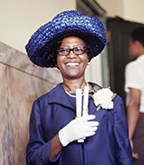
This photo of her as she exited the school with her certificate of completion captures her joy of achievement against so many odds.

I am so proud of her.